
When we begin as podcasters, its easy to become mired in the logistics, the admin, the perfection and optimisation of equipment, structure, distribution… It takes a unique individual like Mason Amadeus to remind us to ask, “Where has the creativity gone?”
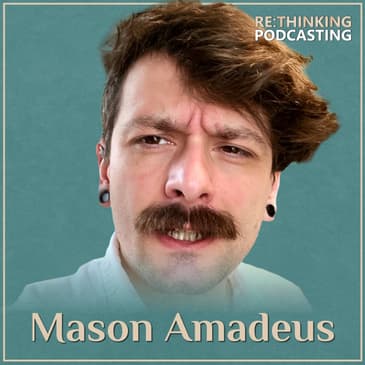
This week I’m joined by Mason Amadeus: Creative Director at 8th Layer Media, Expert Audio & Broadcast Engineer, and self-proclaimed All-Terrain Professional Bodge Technician.
I first met Mason through a podcasting Discord Community, and found that he and his good friends had made PodCube - a sketch comedy audio-only podcast that is soundscaped to perfection. That perfection shows in everything he does, and since we met I’ve watched him create Digital Folklore with Perry Carpenter and more recently, The Bug and Moss Telephone Show.
Its not just my delight in chaos and whimsy that brought me to his inner circle. He is a creative without peers, an audio expert without measure and has such a deep curiosity about the world that learning could almost be his full time job.
In our chat, we talk about making podcasting a thing you enjoy, art as a reflection of the world - not to save it, that creativity is your unique talent in podcasts and the key to enjoying your work is to satisfy your curiosity and learn constantly!
Check out Mason's work:
- "PodCube" Podcast
- "Digital Folklore" (8th Layer Media)
- "The FAIK Files" (8th Layer Media)
- "The Bug & Moss Telephone Show"
Let's Start a Dialogue
The Socratic Method is best done in dialogue, so if you'd like to respond to one of my episodes or send through an idea of your own, send it to:
📧 podcast@rethinkingpodcasting.com
🎤 rethinkingpodcasting.com and select "Send a Voicemail"
Make sure you share the name of your show, so I can include it in my response!
Support this Podcast:
Here are some of the services I use to create this show. Sign up for these services with the links below to support the podcast:
Use Brain.FM to stay focused while you podcast (30 Day Free Trial)
Sign up for Artlist.io to add Royalty Free Music to your Podcast (2 Months Free)
Use Captivate.FM to host & distribute your Podcast (30 Day Free Trial)
Create your Episode Transcript with GoodTape.io (€5 off when you sign up)
Chapters:
- (00:01) Introduction: Where Has the Creativity Gone?
- (02:19) Mason Amadeus Joins the Conversation
- (02:25) The Origin of “All-Terrain Professional Bodge Technician”
- (04:09) From Breaking a Server to Building Software
- (05:14) Working with Perry Carpenter and 8th Layer Media
- (06:22) Mason’s Networked Audio Setup Explained
- (08:09) Why Signal Processing Is So Fascinating
- (09:48) Learning Audio Through Trial and Error
- (12:12) Fundamentals of Audio and Active Listening
- (12:38) How PodCube Was Created and Why It Works
- (14:19) Podcasting as a Creative Labor of Love
- (17:00) Playing With Time, Place, and Audio Lore
- (19:39) Editing to Capture the Live Improv Energy
- (21:00) Audio-Only Podcasting vs. The Pivot to Video
- (23:32) Redefining What Counts as a Podcast
- (24:47) Collaboration and Shared Creativity in PodCube
- (26:15) The Power of Audience Activation and Patreon
- (29:11) Building a Universe: Little Rubber Men & Corn Urns
- (30:17) Making Podcasts as a Labor of Love, Not Obligation
- (31:37) Success, Privilege, and Redefining Podcast Value
- (35:07) Why Authenticity Always Wins in Creative Work
- (36:47) Defining Podcast Success Beyond Downloads
- (39:02) Art as Rearranging the Broken Pieces of the World
- (41:07) Make Something for Yourself — and Your Friends
- (43:06) From Alabaster’s Haberdashery to PodCube
- (44:00) The Role of Improv in Creative Podcasting
- (46:29) Why Copy-Paste Podcasting Doesn’t Work
- (47:25) Learning Fundamentals Instead of Quick Fixes
- (50:19) Be Curious: Learning as a Creative Superpower
- (54:10) Understanding Waves, Phase, and Audio Effects
- (55:12) The Value of Creative Time vs. Deep Work
- (57:08) Digital Folklore and Soundscaped Storytelling
- (58:37) Creativity, Generalism, and Learning by Doing
- (59:49) Podcasting for Happiness and Creative Fulfillment
- (1:00:01) Closing Thoughts & Next Episode Preview
#PodcastGrowth #CreativePodcasting #PodcastSoundDesign #PodcastContentStrategy #IntentionalPodcasting
This podcast uses the following third-party services for analysis:
OP3 - https://op3.dev/privacy
When we begin as podcasters, it's easy to become mired in the logistics, the admin,
Speaker:the perfection and optimization of equipment, structure, distribution, and
Speaker:It takes a unique individual like Mason Amadeus to remind us to ask, where has the
Speaker:gone?
Speaker:Welcome back to Rethinking Podcasting, where I take a Socratic approach to reflect
Speaker:podcasting world and help you build your own podcast philosophy.
Speaker:I'm Matthew Bliss, and this week I'm joined by Mason Amadeus, creative director
Speaker:at Eighth Layer Media, expert audio and broadcast engineer, and self-proclaimed
Speaker:professional bodge technician. Don't worry, we'll get into what that means in a moment.
Speaker:I first met Mason through a podcasting Discord community, and found that he and his
Speaker:friends had made PodCube, a sketch comedy audio-only podcast that is soundscaped to
Speaker:perfection. That perfection shows in everything he does,
Speaker:and since we met I've watched him create Digital Folklore with Perry Carpenter,
Speaker:The FAIK Files, also with Perry, and more recently, The Bug & Moss Telephone Show.
Speaker:It's not just my delight in chaos and whimsy that brought me to his inner circle.
Speaker:He is a creative without peers, audio expert without measure, and has such a deep
Speaker:about the world that learning could almost be his full-time job.
Speaker:In our chat, we talk about making podcasting a thing you enjoy, art as a
Speaker:not to save it, that creativity is your unique talent in podcasts, and the key to
Speaker:work is to satisfy your curiosity and learn constantly. Whenever we jump on a call, they
Speaker:always last three or more hours, so suffice to say that we don't cover nearly as much as
Speaker:conversation. Keep an eye out for more episodes with Mason in future and check out
Speaker:the show notes if you're already curious. Enjoy. Mason Amadeus, welcome to Coffee with
Speaker:Matthew Bliss, thank you for having me.
Speaker:Can you tell me what an all-terrain professional bodge technician is?
Speaker:Uh, not exactly, but if you point me at a task, I'll probably figure out a way to do
Speaker:That turn of phrase was something that my friend Eamon, I think I had tweeted
Speaker:Help.
Speaker:And Eamon tweeted back.
Speaker:They sent this like paragraph that was really fun.
Speaker:I wonder if I can find it in its entirety.
Speaker:I think I have it saved somewhere.
Speaker:It was really sweet and it meant a lot to me.
Speaker:I think I made it like my banner photo on Facebook.
Speaker:Homegrown DIY anti-corporate ADHD overachieving abstract public domain
Speaker:all-terrain professional bodge technician was what Eamon said to me in that tweet.
Speaker:And I was like, that is the most flattering and like aspirational way
Speaker:to describe the things that I do.
Speaker:And so I guess I just kind of adopted that as like a title
Speaker:because I dabble in a little bit of everything.
Speaker:Like I'm trained as an audio engineer, uh, and in, in broadcast engineering.
Speaker:Oh, thanks beans.
Speaker:My wife has brought me a bagel with sausage and cheese, which is always good.
Speaker:Thanks honey.
Speaker:Delicious.
Speaker:I'll have one.
Speaker:Thanks.
Speaker:Um, I've done a lot of hosting.
Speaker:I do graphic design.
Speaker:I've done 3d animation, 3d art, web design coding.
Speaker:I got a job as an it manager at one point because I broke us an old server, uh, by
Speaker:it.
Speaker:If you know, you know, and and then I had to it was running this
Speaker:program oh man I always try and shorten this story way too much and then I end
Speaker:up blathering I'll just tell the story very quickly so I read I power cycled
Speaker:this old ass server that was running this AP news software that our newsroom
Speaker:used to present which basically would just pull down stories from the news
Speaker:wire and it would have little inline audio cues so they could present the
Speaker:news and click the cue to play you know like a school bus caught on fire this
Speaker:morning and the mayor was on the scene click
Speaker:like to be able to drop in your news clips and make a cool broadcast all in one that
Speaker:bricked that software doesn't exist they had a new product that costs thousands of
Speaker:subscriptions uh but they were pissed they were like i can't believe you broke our
Speaker:we have to use microsoft word and like a playlist uh and i was like i'm so sorry let
Speaker:that program and so i learned c sharp and i recreated a version of that program, but
Speaker:specifically for our station, it's called News Jock.
Speaker:It is kind of a mess under the hood, but it does still work.
Speaker:You can download it off GitHub if you want it.
Speaker:If you're hearing this at your radio station, you probably don't.
Speaker:Get the parrot one.
Speaker:I forget the name of it, but that one's good.
Speaker:It's expensive, but it's worth it.
Speaker:I've got a feeling I know what that one would be too, but I can't remember the name.
Speaker:Newsboss?
Speaker:Is it Newsboss?
Speaker:I feel like Newsboss is overpriced, but that might be outside of the scope of this.
Speaker:Well, that's great.
Speaker:Yeah, I was kind of leaning into that's your job title for life.
Speaker:At the moment, your job title is Creative Director at 8th Layer Media with Harry
Speaker:Who is the bomb?
Speaker:Harry's so cool.
Speaker:I think that's why you two are a match made in heaven.
Speaker:The way that you work together with stuff, particularly at the moment, the FAIK Files,
Speaker:that you both have depths that no one would possibly anticipate.
Speaker:And I feel like hanging out with you every day for a month would be discovering several
Speaker:things new every day about you that you couldn't possibly have inferred.
Speaker:Well, dang.
Speaker:Thanks, Matt.
Speaker:I feel like that about Perry, because he's like, yeah, I was there when Evanescence
Speaker:Bring Me to Life or whatever.
Speaker:Like he heard like a demo version.
Speaker:Like Perry's got all these crazy stories like that.
Speaker:Yeah.
Speaker:He's always throwing stuff at me.
Speaker:Like he's a metalist, magician, metal singing, podcast, creating,
Speaker:cybersecurity evangelist slash C-suite.
Speaker:Yeah.
Speaker:Got a huge list of stuff to his name.
Speaker:And he won't walk up and be like, I am all of these things.
Speaker:You'll just find out one day that like, oh yeah, so he was doing metal vocals
Speaker:for something and you're like, what do you mean?
Speaker:Yeah.
Speaker:He's got the voice for it.
Speaker:And you also have the voice, which is what we're listening to right now on what is
Speaker:probably an inordinate amount of audio equipment that you've accrued over your
Speaker:Would that be right?
Speaker:Uh, yeah, some of it stolen, some of it bargained, some of it bodged and some of
Speaker:it broken, but yeah, a lot of it.
Speaker:And there's, I don't, uh, do you want me to say exactly how this audio is reaching
Speaker:you right now?
Speaker:Cause a little bit crazy.
Speaker:If you want to, for sure sure i'll do it in brief uh i have a an audio console
Speaker:with like 16 faders on it and then that is being it's plugged into a third computer in
Speaker:that is garbage but all that computer is doing is serving this audio interface over
Speaker:dante audio over ip network uh so that me and my wife can take advantage of this
Speaker:she also works in audio so all of our stuff routes centrally through that. And then
Speaker:But it's been a pet project I've done lately because I used to work as a broadcast
Speaker:And I helped with building out audio over IP into our facilities when we made that
Speaker:And it's so freaking cool.
Speaker:Networked audio is so cool.
Speaker:Networked video is cool, too.
Speaker:But it's just I'm slowly edging into that.
Speaker:But yeah.
Speaker:No, I get that.
Speaker:Like as someone with an IT background myself, thinking of Cat six wires as just
Speaker:pipes are just for water. Like you can put tons of stuff through there. There was even
Speaker:time when I was younger, that's networking over the electrical network in your house
Speaker:And I think it even still is a thing. It still is, which is just like modulating a
Speaker:signal above the 60 Hertz or 50 Hertz AC signal.
Speaker:And the capacity of the network is related to the frequency of the wave.
Speaker:Yeah.
Speaker:Sort of, you can, however you want to multiplex the, that signal on top of the
Speaker:Um, and then, yeah, your bandwidth is going to be determined by however you're choosing
Speaker:to carry that.
Speaker:All sorts of trade-offs.
Speaker:This, that's my shit.
Speaker:Signal processing really is like the core of it.
Speaker:That's where I get super excited because everything's a signal, you know?
Speaker:That's it.
Speaker:Now, obviously this is a podcasting podcast, but I think it's really
Speaker:important to say all of that in case we've either got audio techs salivating or people
Speaker:familiar with the technology behind audio kind of switching off and going, why would I
Speaker:and listen to this? Please hang around. We're going to get to the creative stuff
Speaker:Oh, and it's so cool. It'll be so cool. Also, I really hope there's at least one
Speaker:So that the moment I say one wrong thing, they are ready to email you because I
Speaker:I'm going to just like fumble something or say something unconsciously wrong. So that's
Speaker:that's my call to action for the audience. Growth mindset. Uh, we'll make that the sub
Speaker:subtitle of this, this podcast, but I think that all that's really important because you
Speaker:of aspirational to me in terms of, uh, my audio production journey in being a podcast
Speaker:people that you can talk to and follow that give you exactly what you need to get the
Speaker:But there are also people that you can listen to that give you the little things
Speaker:experience of going with the car metaphor with driving, but that improves your fuel
Speaker:gives you those little things that gradually build and build and build into
Speaker:more impressive than it could possibly have been before. And with audio particularly,
Speaker:a fog of war sort of thing. You can't see the direction you're going when it comes to
Speaker:quality and production quality. You kind of have to experience what is bad until you
Speaker:it becomes good.
Speaker:And then even realizing what you thought was bad is actually good in a different way
Speaker:it was bad.
Speaker:You know, you can see where I'm going with this.
Speaker:I think so.
Speaker:One of the major things you said to me recently was if I wanted to understand audio
Speaker:from the wave form in a much better way is to look up electrical engineering and
Speaker:with a lot more similarities than you'd think there'd be differences completely mike
Speaker:how my career progressed from uh from audio mixing to like working on rf transmitters
Speaker:this like the same principles it's an oscillating waveform when you look at a
Speaker:on a computer you're looking at a graph of voltage over time. The vertical axis is
Speaker:already doing electrical engineering. Understanding that allows you to then look
Speaker:that underlie electrical engineering and apply them to audio. I mean, also like all
Speaker:used to be discrete outboard hardware, right? So it was made of discrete electrical
Speaker:You can build high-pass and low-pass filters using capacitors and inductors
Speaker:way that those components interact with the circuitry, which you can
Speaker:understand from an electrical engineering end, or you can come at it from an audio
Speaker:But yeah, I'm really about the interdisciplinary bits here because I think
Speaker:that underlie things that are what gives you those fuel efficiencies, those boosts
Speaker:mentioned. I think it genuinely, I really think it comes from understanding from the
Speaker:what you're doing. I feel like we don't do that a lot, and particularly with something
Speaker:Hearing is a sense that you typically only
Speaker:use reactively. The most active listening the average person does is when you can't
Speaker:phone and you're like calling it, even though it's on silent and you're trying
Speaker:the vibrations. That's like the most an average person is actively like, think of
Speaker:trying to hear. Most of the time, ears are just, you just hear things and react to
Speaker:not trying desperately to hear things. So that's already a perceptual shift when
Speaker:visual arts there's no feedback except for your ears so you have to learn how to read
Speaker:have to learn how to read graphs and just the more you lean into the fundamentals of
Speaker:your experience is going to be but because most people get into audio engineering as a
Speaker:of production because most people are just like i want to make a podcast and by virtue
Speaker:have to learn some audio engineering i think that's what leads to a lot of
Speaker:at least in the circles that we're running in. Yeah, that's it. And let's keep it to
Speaker:just keeping people enticed into finding those 1%s for themselves as the conversation
Speaker:In particular, audio, because a lot of the creative efficiencies lead to some of the
Speaker:awesome stuff that you do with one of your podcasts called Podcube, which has been
Speaker:It's a sketch comedy, very short sketch comedy kind of, actually, I should just get
Speaker:explain it because I think it's one of those things where for everybody, it's a
Speaker:bit different, but it's one of those meta stories that has built both over time from
Speaker:a previous podcast into PodCube in addition to layering on itself so many times, it's
Speaker:of paper 10,000 times and you just end up with like so many layers. It's crazy.
Speaker:It's my favorite thing I've ever worked on. And like, I love all of the things that I'm
Speaker:on. Um, but there's just a special place in my heart for that stupid show. I think it's
Speaker:for me to Homestar Runner, which was like a universe that existed online. I don't know
Speaker:I wasn't, unfortunately.
Speaker:It's like a, it's a universe.
Speaker:The podcast is just sort of one of the like avenues into it.
Speaker:Pretty much the main one,
Speaker:because that's like what it was conceived as.
Speaker:But PodCube itself, it's so much bigger.
Speaker:We have so much lore.
Speaker:We actually just brought on a new team member
Speaker:doing sound design so that I can focus
Speaker:on doing some of the more ambitious,
Speaker:weirder stuff we're doing with that show
Speaker:and also sound design.
Speaker:But yeah, it's like an audio cartoon, but it's also a universe.
Speaker:So today, what I really want to talk to you about is the creative stuff that you put
Speaker:this work, which really is a labor of love.
Speaker:I think a lot of people look at podcasts as a way for them to talk at people and get
Speaker:their ears and sell their products or share their opinions or get feedback and be
Speaker:confirmed of whatever beliefs they have or whatever they've achieved it's just a way to
Speaker:create a road to something like that but for you podcube has and for you and i should
Speaker:tucker and jordan it almost feels i feel bad talking about podcube just to you
Speaker:other two of the present but we'll bring them them back. We'll bring them in for a,
Speaker:for a larger discussion about it at some point. Oh, that'll be extremely fun and
Speaker:if you get all three of us together. Yeah. Yeah. I mean, the views expressed by me are
Speaker:views of PodCube LLC, which is a real, it's like a real company. It was for, it forms in
Speaker:obviously anything I say is just speculative, but that's okay. Especially
Speaker:here. But I think this, this speaks to the project. So we, I feel like I still need to
Speaker:to PodCube yet, that the idea of it being like a cartoon, like Homestar Runner, that
Speaker:is a designed product that's intended to enable people who have one to listen to
Speaker:happened in the known universe at any space or time or place, I think is what you put in
Speaker:little tagline. Yeah, I'm so glad you said it. Audio from anywhere in space or time or
Speaker:Yeah. The idea, it's kind of like those portrait picture frames, those digital
Speaker:you can get people, you know, how you can just like drop photos to your grandma that
Speaker:she has like a digital picture frame or whatever, Podcube is kind of like that. But
Speaker:you buy a Podcube from Podcube and you tell them where you want it sent. And then
Speaker:will, they will send it to that place and you will start receiving a live audio feed
Speaker:request it.
Speaker:And the podcast feed, a part of the terms of service of that with PodCube is that they
Speaker:have the right to any transmissions that come back.
Speaker:So they maintain this podcast feed of like curated transmissions that are particularly
Speaker:funny or particularly interesting or that they particularly like.
Speaker:And that's what the podcast pod, the PodCube podcast feed is.
Speaker:Yes.
Speaker:Which, you know, for time dilation enthusiasts would be an interesting backdate
Speaker:for a product created in the future, licensing access to things from the past
Speaker:for permission. And I could see what you want to talk about it. I'm going to stop you
Speaker:because we don't want to go too much into the law. I'd love to hear more about the
Speaker:creative side around it. So this is part of that because there's a little Easter egg.
Speaker:When you mentioned that I'm curious if you've ever noticed the date of the first
Speaker:episode that is published on the PodCube feed.
Speaker:I did.
Speaker:I can't recall the date, but it is well before podcasting and RSS feeds were around,
Speaker:Before the internet existed, I believe.
Speaker:Yeah.
Speaker:Yeah, yeah.
Speaker:I think it came out like on the Linux epoch.
Speaker:I set that as the publish date or something like that.
Speaker:Yeah, you had UTC on it somewhere, I think.
Speaker:But it shows up as having come out in...
Speaker:Okay, let me just grab it real quick. But it shows up as having come out in, uh, okay.
Speaker:Let me, let me just grab it real quick. It, it, okay.
Speaker:January 1st, 1990.
Speaker:I experimented to find the earliest date that, uh, Apple podcasts would list.
Speaker:Cause I had started with like the 1800s, the earliest one I could like type in.
Speaker:Yeah.
Speaker:And then I just worked up from there.
Speaker:But it all lends to the universe that you're trying to build.
Speaker:But the thing about PodCube is every episode is a little bit different.
Speaker:So the, the general arcing theme is that you're listening through your Podcube to
Speaker:Could be in 1800s medieval England with wizards curing villages and it being a scam.
Speaker:Or it could be, what was his name?
Speaker:Tommy Birthday, I think.
Speaker:Oh God.
Speaker:Singing themes for Rusty's Burger Trough.
Speaker:It could be going number three in a weird Russian bath in the middle of New York.
Speaker:Like there are so many different scenarios that you can do.
Speaker:And the three of you together, you, Jordan and Tucker, you play different voices and
Speaker:different characters in each of these sketches, but it's all improvised for the
Speaker:In the post-production, it's not, at least not in the sense that you can edit on the
Speaker:fly, but you kind of come in with a prompt, like an improv group would create
Speaker:the scenario and spend a bit of time putting that together into a scene and, uh,
Speaker:with hilarious results.
Speaker:Thank you.
Speaker:Sometimes you've live streamed them, which is why I know how it happens.
Speaker:And that sometimes the funniest stuff is being able to see how you put these episodes
Speaker:as a sketch comedy group.
Speaker:Yeah.
Speaker:Doing the live streams was a blast.
Speaker:Uh, and we want to get back to doing that again we've recently
Speaker:pod you had to take a hiatus well all three of us went through some pretty big
Speaker:life changes yeah so we've recently started bringing it back and we're gonna
Speaker:bring back those live shows but yeah it's it's entirely improvised and then
Speaker:edited and most of the time we try and keep it the way I've described it is
Speaker:that it's the editing isn't so much to make it funny the editing makes it feel
Speaker:like it was when you were watching it live. You know what I mean? Because when you're
Speaker:there's like a different expectation
Speaker:for spacing and timing
Speaker:because we're all dealing with the internet lag
Speaker:between all of us.
Speaker:Sometimes you do a few different takes of-
Speaker:Yeah, of a line or something.
Speaker:Yeah.
Speaker:But the overall impression that you're left with
Speaker:from that context is,
Speaker:oh, that was funny.
Speaker:It was really fun.
Speaker:But if I take that and I upload it without editing it,
Speaker:that context doesn't come across
Speaker:because when you're listening to something presented as a finished product that was
Speaker:Like all takes aside, even if we did a beautiful one take through sketch where the
Speaker:So a lot of the time, the editing, tightening up those gaps and stuff, I think
Speaker:over-edit it. Yeah. So what we're talking about there is like the top layer of how you
Speaker:PodCube episode. Like you get together, together you record it. There's like a
Speaker:created kind of like watching an improv group on stage. Like you kind of capture
Speaker:the movements and, uh, you know, the emergent themes that come about as a result
Speaker:Oh, the visual, even though that's not included in the final thing is very fun.
Speaker:Yeah.
Speaker:That's it.
Speaker:Cause this is an audio only show, except for some of the reels you've created, uh,
Speaker:some of the episodes during the recording, which are just as funny or funnier by the
Speaker:way.
Speaker:Yeah.
Speaker:We're going to figure that out.
Speaker:The content strategy is, is weird.
Speaker:It's tough.
Speaker:It's a lot of work.
Speaker:Well, I think that the state that we're in audio only as a podcast is still like
Speaker:listening experience as audio dramas tend to, and that's where you sort of
Speaker:lean towards with the way you put these together, but I think you've kind of
Speaker:jumped the zone where video was creeping up and I think this year, 2025 at the
Speaker:time of recording, everyone's going like nuts for video and they don't really
Speaker:need to, and the reemergence of audio as a rebellious phase in podcasting is going
Speaker:to be the thing that emerges, but I hear a hot take coming.
Speaker:Yeah.
Speaker:I take issue with that because everyone's been crazy for video since the pivot to
Speaker:video killed cracked.com in like 2012.
Speaker:Like this is, this is one of those cyclical things.
Speaker:And I think it's only because podcasting is still RSS based and decentralized.
Speaker:I feel like every three years, we're going to alternate between talking about
Speaker:everyone pivoting to video and then rebelliously just doing audio because this
Speaker:happened like three times.
Speaker:So we're still on the surface with it.
Speaker:Like, like I mentioned, you doing being the improv group, we're going to talk more about
Speaker:that in a sec, but the idea that video rolls back around or sorry, has emerged as
Speaker:to rolling back around again.
Speaker:It's just a, it's a meme.
Speaker:It's a group think about the approach to things and it's driven by, you know,
Speaker:people watching other people be successful, at least in podcasting with it.
Speaker:And they correlate that success with having video on top of YouTube and
Speaker:TikTok and other video based platforms, incentivizing people to have video so
Speaker:that they can continue to market their product to people.
Speaker:You are absolutely right.
Speaker:It is, it is something that successful shows have because it often requires more
Speaker:work, or at least, you know, that was kind of what kicked off the cycle.
Speaker:And then we, yeah, we get into the cycle of like, to be successful, you must have
Speaker:video because the successful shows have it and it's just, yeah.
Speaker:Yeah.
Speaker:But there's like a, there's always a splinter group talking about something.
Speaker:Uh, I think with podcasting, it's particularly hard to penetrate the walls.
Speaker:Like the, the demilitarized zone between areas of podcasting are expansive and very
Speaker:Like with podcasting, there's a phenomenon I'm still trying to find a good name for,
Speaker:Which is why I find Podcube a really interesting uh prospect as a podcast because
Speaker:of a podcast they don't think of podcube no not at all not usually what we're doing
Speaker:guess you know just an interview on audio and or video and uh having a chat about
Speaker:where i think podcube excels though because the editing you mentioned before, like, you
Speaker:It is much, much more than that because you create soundscapes for what are essentially
Speaker:And the amazing thing is that all three of you edit these together sometimes.
Speaker:Like one of you will take one and one of you will take another.
Speaker:And yet the quality doesn't seem to change or dip between them.
Speaker:And I think that shared collective experience of like an imaginarium
Speaker:as you unpack the scene together kind of allows you to do that
Speaker:along with the technical skill that we kind of covered earlier on.
Speaker:So I think it's really great.
Speaker:I mean, that's kind of emergent from, I guess, just as friends, like the three of
Speaker:Gosh, I don't know how actionable this would really be for other people.
Speaker:We just have very like divided strengths and we're really good at just helping each
Speaker:So for me, it's particularly like technical audio production and stuff.
Speaker:Tucker is extremely just a genius when it comes to like world building and lore
Speaker:Jordan, I don't even know where to begin describing jordan the funniest
Speaker:person i've ever met yeah that's probably it also they're both also phenomenal at
Speaker:so like yeah we're just really good at teaching each other and and sharing things
Speaker:occasionally i will come in with like a technical fix if something we had like some
Speaker:wasn't quite good or something was a little harsh or like well we're always pitching
Speaker:forth the same thing is when you see us performing live and we like pause the scene
Speaker:like, wait, your character should say this right now, because that would be funny,
Speaker:of traditional improv. That same kind of thing happens behind the scenes for like,
Speaker:if we added this? What if the time travel sequence in the Circle Day episode ended
Speaker:surrounding farts? And then like, you know, so it's just very much, it's a product
Speaker:and joy. It's not something that could exist if we weren't having fun making it.
Speaker:an interesting thing. It's not a show we could force. It just has to stop if we're
Speaker:make it. Like if we're not able to have fun with it, which is also different from pretty
Speaker:other show I've worked on. Yes. Because I feel like we've all done an episode where
Speaker:I need to publish. I'm burnt out. I'm tired, but I need to get something out
Speaker:I hate that. I don't think that's good. And we like when things are your job and when
Speaker:of income that becomes a lot more complicated but podcube sits in this weird
Speaker:couldn't exist that way it needs to be something that is done as a labor of love
Speaker:work if it wasn't it but the way that you set it up to your benefit is that it's a
Speaker:for you guys to do what you love doing and creating a thing and And the other thing
Speaker:and it's a bit hard when you look at the numbers for that to think that that's the
Speaker:you tend to attract people who are there for what you're giving. You're not going to
Speaker:Rogan listener who's just been through the entirety of some bloke talking about the
Speaker:and what it means about the existence of Jesus and suddenly stumbling upon mystical
Speaker:I mean, they may enjoy it.
Speaker:I imagine I would probably be that kind of person that would do that.
Speaker:But the people that are there for PodCube are the ones who are going to stay.
Speaker:It's funny for people who are more like KPI or metric brains, our audience activation.
Speaker:So like when we put out a call to action the percentage of our audience that will
Speaker:participate in that is close to 20 which is insane yeah because typically you look at
Speaker:or two percent for of like your total audience as like the activated base that
Speaker:participate in an ad be more likely to pursue this go to your website or whatever
Speaker:is crazy high not that we ask a lot but like our patreon we have a very small
Speaker:immediately grew like people are just immediate i'm phrasing this poorly and i
Speaker:data pulled up because i wasn't super ready and we shouldn't talk too long about this
Speaker:it is close to a 20 activation rate for surveys for like filling out responses
Speaker:asked for something and that is i i am floored and honored by it and i think it is
Speaker:it is like like attracts like like you get back what you put out in some ways.
Speaker:And I think there's a very specific kind of person who really likes PodCube.
Speaker:And I, and we only make it for that person.
Speaker:Yeah.
Speaker:It's you.
Speaker:It's me.
Speaker:It's Jordan.
Speaker:It's Tucker.
Speaker:It's Perry.
Speaker:Yeah.
Speaker:That's it.
Speaker:It's for a very specific person and we love it and we make it because we love it.
Speaker:And I think that comes through so much that people are like, I'm willing to like, oh,
Speaker:I want to see this website.
Speaker:I'm excited to see what other stuff is coming from this.
Speaker:That's how I feel about the things that get me really excited.
Speaker:Like as a kid, I spent my days taking homestarunner.com URLs, changing.html to.swf
Speaker:like their flash file and take it apart and play with it.
Speaker:Like people are always asking like, how does it work?
Speaker:How is it put together?
Speaker:Yeah, I've lost the thread a little bit, but we have a really high activation rate.
Speaker:I can only assume it's because of the fact that it's a labor of love.
Speaker:But it's the creativity too.
Speaker:of love. But it's the creativity too.
Speaker:Like me saying before that you've built a universe that you can kind of build as you
Speaker:go.
Speaker:The fact that it can be at anywhere in space or time or place means that you can
Speaker:a sketch from anywhere.
Speaker:So if you think it's funny, you don't have to check the law documents to see if you
Speaker:about a guy who murders geese and is being fired or something.
Speaker:I think that was one of your early ones, whether that fits.
Speaker:Because of course it fits.
Speaker:A meeting about, uh, I'd actually forgotten this until now.
Speaker:The Little Rubber Men was, uh, one of the, one of the key themes across plenty of
Speaker:episodes, you know, corporate meetings about the, the, the returns of Little Rubber
Speaker:What are they?
Speaker:You don't really explain it.
Speaker:Well, no, because you're listening into the meeting and everyone at the
Speaker:meeting knows what they are, right?
Speaker:So.
Speaker:Yeah, they turned up.
Speaker:knows what they are, right?
Speaker:Yeah, they turned up. A guy rocks up with a tin or a bag of creamed corn
Speaker:and he's just eating that for some reason.
Speaker:Specifically an urn.
Speaker:An urn it was, sorry.
Speaker:I need to listen more attentively.
Speaker:Oh gosh.
Speaker:But yeah, literally anything can happen.
Speaker:And I think as a creative pursuit for you guys,
Speaker:the fact that you enjoy working together,
Speaker:that you work together when it works for you, that it enables your
Speaker:creativity. You're all in board for the same thing and you have fun together when
Speaker:a shared vision when it gets to the stage, when you're editing it together to a
Speaker:soundscaped environment in most cases. All of that together, I think just shows as the
Speaker:I don't know.
Speaker:We're going basic here.
Speaker:Living your best life, you know, like.
Speaker:So this is like the crux of what I've been thinking about first for, uh, and I think
Speaker:what I put on the Google form when we were setting this up, people are always like, how
Speaker:do I get people to watch or like, listen to my thing?
Speaker:And like, the answer has to be because you are making something you are excited about.
Speaker:if you are like doing something because you think it fits an audience niche or you think
Speaker:perceived need is obvious. It does. Like there's lots of YouTubers that I watch who
Speaker:also. And like, I can tell when they're not enjoying it. I think like we focus far too
Speaker:on things that don't matter. And what actually matters is that you are going to
Speaker:You are going to die someday.
Speaker:And right before that happens, you're going to look back and think, how did I spend my
Speaker:And like, what, what did that achieve me?
Speaker:And for me, I think the more time you spend on things you actually care about and
Speaker:The happier you're going to be that moment before you die, because like, even if you
Speaker:political daily YouTube talk show, if you hated that and you like thought that that
Speaker:you rich, you're going to be unhappy even if it makes you money. Like it's stop trying
Speaker:stop trying to make a podcast and start trying to make art, start trying to make the
Speaker:to make and use whatever tools and whatever medium you want. Like, I think people are so
Speaker:outcome focused and this is me too. This is me at me in the future and in the past and
Speaker:but myself, make good stuff,
Speaker:make the shit that you actually care about.
Speaker:I feel like we so often don't,
Speaker:or we start with something we wanna do
Speaker:and then we slowly pervert it
Speaker:into whatever we think the audience expects
Speaker:or some imaginary need is.
Speaker:Every time I have done that in my life,
Speaker:I'm only 31 years old.
Speaker:And so I've only done this like three or four times
Speaker:and never at any large scale,
Speaker:but everything I've ever worked on that felt that way
Speaker:kind of ended up going poorly.
Speaker:And everything I've ever done where I felt invested
Speaker:and excited about like the core concept
Speaker:and the process of doing it has gone extremely well,
Speaker:both in terms of like reception
Speaker:and just like being the person
Speaker:who is living and doing it, I guess.
Speaker:Yeah, I can hear the person listening to this
Speaker:asking themselves, well, what have I been looking at?
Speaker:Like, I want the outcome.
Speaker:Why can't I do this? And if they've paused this discussion, had to listen to a couple
Speaker:PodCube episodes and come back. They're going to be like, who the fuck is this guy
Speaker:shit? He just made an episode about farts. Well, in fairness, I think Jordan is the
Speaker:proponent of a lot of fart content. About 90% of the time that there's a fart, it was
Speaker:it was a Jordan, Jordan Reed idea, which is amazing by the way. Love it.
Speaker:Um, but like it's, it's a really, it can sometimes be a really long, hard journey
Speaker:to get to the stage where, like, uh, I guess for lack of a better term privilege.
Speaker:Of being where you are to sit back and go, Hey, I have been a radio
Speaker:broadcaster, an audio engineer and technician, programmer, general,
Speaker:you know, bodge technician stuff that kind of builds to this moment.
Speaker:I will say, I found often it is the people with the same privilege as me that I
Speaker:You're 100% right to call that out. I have a ton of experience and knowledge that makes
Speaker:easier and more possible for me. Plus I'm white. I live in America. I'm a male.
Speaker:My life has been very easy comparatively, but like,
Speaker:if we go too far down that road, we'll lose the thread of everything.
Speaker:Yeah. And there's a whole socioeconomic climate that we could assure as, you know,
Speaker:the drive to make money is made by people who make a lot of money and then tell
Speaker:other people how to make money the way that they made it and then more people
Speaker:tell more people because they made money the same way, but it's the bottom 10%.
Speaker:And the other 90% lose out and then they get disheartened and trusting that the
Speaker:audience implicitly and like understands that we, and them are on that same page.
Speaker:About that. I have found that it's the are on that same page about that.
Speaker:I have found that it's the people with the same amount of privilege or similar
Speaker:amounts of privilege as me that are often more distressed or complaining about
Speaker:like, how do I reach these numbers?
Speaker:How do I get a bigger audience?
Speaker:How do I do that?
Speaker:Whereas like the scrappy younger artist type kiddos without the technology or
Speaker:the training or the equipment or the money or the budget or anything are the
Speaker:ones putting out these like cool ratty, weird art things that are getting
Speaker:attention and doing well on YouTube.
Speaker:And I, it really comes from a place of authenticity, which has just been this
Speaker:growing craving that we have societally for authenticity.
Speaker:Yeah.
Speaker:Not the synthetic stuff that we see.
Speaker:Yeah.
Speaker:Authentic, authentic authenticity, not synthetic authenticity.
Speaker:You're absolutely right.
Speaker:Uh, I think people not doing what they want to do is a big
Speaker:barrier to being successful.
Speaker:But I think success in podcasting is starting, at least the perception that I
Speaker:is before it even gets to the audience, where the experience of interviewing has
Speaker:the connection has been excellent. You can, I guess, repurpose content from the
Speaker:podcast, a networking connection, collaborative opportunity. There's just, for
Speaker:business, you can get clients by interviewing them for your podcast. Not as
Speaker:you know, method, but that's the value that you want to get from the show. And that's
Speaker:you. Not a million downloads that you see lining up on your podcast host. I mean, it's
Speaker:how you define success, right? What are you shooting for? Yeah. What is your KPI?
Speaker:What are your KPIs? The cool thing that you guys do is that because what you do is
Speaker:are performance to some degree, but what you do is for an audience of yourselves, but
Speaker:it's for an audience. So it gathers that audience, even though you've had a great
Speaker:you do as a passion project. Like if you had zero listeners, it probably wouldn't be
Speaker:same. But again, going to what we talked about before, you attract the people who are
Speaker:So the audience that are there, they're going to enjoy what you're doing because of
Speaker:Like it all just kind of synergistically fits together.
Speaker:That's the sweet spot, right?
Speaker:Because something interesting just happened in my brain when you said that.
Speaker:I think that's how most people just say, I just had a thought.
Speaker:It is made for an audience.
Speaker:And like our show,
Speaker:like the value is like the entertainment
Speaker:and like the escapism
Speaker:and like the payoff you get
Speaker:from like when we reference the established lore
Speaker:that builds up over time,
Speaker:like whatever.
Speaker:The value is very much an entertainment value
Speaker:with this show
Speaker:as opposed to like any kind of sales funnel type thing.
Speaker:So looking at it from that lens,
Speaker:we do make it for an audience,
Speaker:ostensibly.
Speaker:It is released for an audience.
Speaker:What I am thinking when I put it together
Speaker:is how am I going to make Jordan and Tucker laugh? How am I going to make Brooke and
Speaker:am I going to make my friends I send this to laugh? Because the idea is just like, in
Speaker:and this will apply to a broader point, we are making it for each other. It really is
Speaker:other. And just what happens is like we're sitting around a table giggling about this
Speaker:people are walking up and we're like, oh,
Speaker:this is what we're giggling about. And then the people who want to join in sit around
Speaker:with you. It's sort of the virtual equivalent of like, that's what's happening
Speaker:is to like community building, providing entertainment value, you should be doing it
Speaker:for yourself, like first and foremost, because, you know, it's infectious. I think
Speaker:an artist, gosh, this is going to be a two pronged thing that maybe you'll poke holes
Speaker:i see a lot of discussion online where people seem to feel like artists job is to
Speaker:and i feel like an artist's job is to pick up the broken pieces of the world around
Speaker:rearrange them into ways that make different kind of sense or make different
Speaker:the role of an artist like the function of an artist in community from like thinking
Speaker:creations. So fans of, I don't know, Eragon or whatever, there is an Eragon fandom.
Speaker:and bond over shared interests all the time. Like that is one of the things that
Speaker:as society is shared interests. And those can be things from hobbies to jobs to
Speaker:But one of them that is not specific to any other traits besides taste is a shared
Speaker:or a show. So I think in large part, an artist or any kind of public figure in the
Speaker:community's role is as a signpost carrier for other people to gather around where
Speaker:this is the thing. If you like this thing, come stand by me and we can all talk with
Speaker:about this thing we like. I find that to be just a more apt or a more useful way to
Speaker:Because instead, if I was standing there going, who wants to laugh? Who wants to see
Speaker:funny? What do you think is funny? Hey, what's funny right now? I don't know. That's
Speaker:different energy than standing there laughing and drawing people in.
Speaker:Yeah. So I think that is a very visual, but very compelling way to describe the kind of
Speaker:advice that people throw around podcasting circles,
Speaker:make the thing that you want to make, but also make it for yourself before someone
Speaker:That advice, it's, I don't think I can re-explain it the way you explained it. It
Speaker:I think the core, I think what I said was a bit word soupy. The core of what I wanted to
Speaker:is like, maybe make it for yourself, but also make it for your friend. Like make it
Speaker:of close friends, make something that you think is really cool that you have to share.
Speaker:Yeah. Because like, it's really easy to say, you know, be yourself, make it
Speaker:like these, these really abstracted things. But I think you just focus on what you're
Speaker:you focus on how it's impacting anybody else, you know? Yeah. Make a thing that
Speaker:fandom of, you know? And it doesn't mean you have to know the whole thing, like the
Speaker:of the thing from the outset, because that's something you can get tied up into.
Speaker:There's a lot of playing to find out what happens.
Speaker:There's a lot that happens on the road and in, in travel.
Speaker:You don't have to have a perfect plan or like wait either.
Speaker:Think less.
Speaker:Which is a great time to mention that it actually started with
Speaker:Haberdasters, no Alabaster's Haberdashery.
Speaker:Yes.
Speaker:With you and Jordan, right?
Speaker:The, uh, the first PodCube spinoff came out before PodCube was a podcast.
Speaker:Makes sense. PodCube is a spinoff of that way more obscure at this point show,
Speaker:about. We told like a couple of people. We would send episodes here and there. And then
Speaker:noticing that like I think some people found it because the downloads started
Speaker:But that was a similar thing where it was just Jordan and me at the time. We would
Speaker:sketches where he was Alabaster who ran a haberdasher shop in the 1800s. It was
Speaker:That was our just like framing justification for that show.
Speaker:And we just made episodes in that haberdashery forever.
Speaker:And then one day Jordan was like,
Speaker:what if we did just like a variety show?
Speaker:And then we ended up coming all the way.
Speaker:We went full on.
Speaker:I was like, we were pitching names.
Speaker:I had like a terrible name I loved called Biscuit Gantry.
Speaker:I was like trying to pitch like a,
Speaker:like a second city style improv troop vibe.
Speaker:And we came all the way back around and landed on PodCube.
Speaker:So like, it's the best.
Speaker:Yeah.
Speaker:I don't think there's anything to extract from that though.
Speaker:But that was, that's like part of your journey.
Speaker:Like it, it started and that had very specific constraints that I'd apply to other
Speaker:who play with constraints for their own podcast as well, that, that either works or
Speaker:work.
Speaker:Yours grew from creative stuff, but I think you had three minutes per episode.
Speaker:Yes.
Speaker:For The Haberdashery.
Speaker:Yeah.
Speaker:The first episode of that show, he sets up the PodCube as it arrives, and you hear him
Speaker:go through the setup process, and the PodCube suggests 30 minutes, and he just
Speaker:at it, and the PodCube says, okay, three minutes.
Speaker:And so now it just records three-minute episodes at random.
Speaker:That was the premise of that show.
Speaker:Yeah.
Speaker:And you timed yourself when you recorded it, and then soundscaped it the same way?
Speaker:Three minutes and six seconds on the phone timer, and go.
Speaker:Yep.
Speaker:But that's like you slowly building, not just just story-wise like you mentioned with
Speaker:ended up in the podcube universe but also for yourselves recording the episodes it was
Speaker:you and jordan and three minutes and six seconds and that has grown into whatever
Speaker:that was uh practice for the skills of of improv which is like i almost i don't you'll
Speaker:improv is not anywhere in the branding of podcube because improv leaves a bad taste in
Speaker:People hear improv and they think, oh, you just made it up and didn't put effort in.
Speaker:And there's a lot of reasons for that. We don't have to get into it. But good improv
Speaker:good. And I love improv, dude. The art of it. I read Del Close's book ages ago and got
Speaker:hooked on it. I want to do Heralds. I've structured out a whole podcast format for
Speaker:is essentially like an expanded Herald. We could talk about that some
Speaker:other time though. But that was great practice for skill building. You're right.
Speaker:for me to not say that I have practiced. I have spent hours and hours and hours. I used
Speaker:in radio as a host. I used to read like five radio ads a day into a microphone, cut
Speaker:throw music under them. I have a lot of experience. It feels weird to imagine anyone
Speaker:but if anyone is like, oh man, you, they make it, you seem so easy.
Speaker:It's practice.
Speaker:Anything that seems easy is practice.
Speaker:I see you raising your hand, Matt.
Speaker:That's crazy.
Speaker:No, it's not crazy because you've done it.
Speaker:So I don't have to, like, I, I kind of, I'm the Ben Affleck reverse engineering,
Speaker:the product that you make so that I can bet more easily put it together and,
Speaker:you know, do it for myself.
Speaker:Is that something Ben Affleck does?
Speaker:A paycheck, I think was the film where he was someone who was paid by businesses to
Speaker:businesses' products, reverse engineer how they're put together, but I've never seen
Speaker:Oh, that's funny.
Speaker:This is one of the things we might get into one day that my memory for movies,
Speaker:television is so immaculate and connected, but I can't get up and take a shower every
Speaker:day.
Speaker:Like that's, it's probably another good example of why we as humans are really, you
Speaker:someone who has an immense skill.
Speaker:That is not the entirety or the full story of how they got to where they are.
Speaker:Which is what you're trying to get at there.
Speaker:And I think the important thing that anyone, well, the person listening to
Speaker:this right now should take away, isn't that you're like the goal, like they
Speaker:shouldn't just go and get a radio job.
Speaker:No, don't get a radio job, dog.
Speaker:Stop.
Speaker:Don't do it.
Speaker:Not today.
Speaker:No.
Speaker:You'll end up very quickly at the full circle where you end up making a podcast, I
Speaker:That's where a lot of radio is going.
Speaker:But you can't, like, you can't walk into podcasting, load up those stories by
Speaker:of Podcube and feel like you're ready to do that kind of thing.
Speaker:That's why I think, like, you are someone who people should look to knowing what you
Speaker:can do.
Speaker:See it as something aspirational, but to take what they want. I don't think the
Speaker:have at the moment to carbon copy people that we aspire to, to be able to do the
Speaker:can do is healthy. I really don't think it leads to the fulfillment that you talked
Speaker:comes about as a result of Podcube as well. It necessarily leads to the product that you
Speaker:love making and you'll continue to make it regardless of the level of success,
Speaker:whatever that success is, but also that you are the kind of person who's built to create
Speaker:product at this time with your skills, with these people that you love hanging out with.
Speaker:It's okay to bask in the confluence of all those things to create the thing that you
Speaker:but I don't think it's beneficial for people to look at that and go,
Speaker:I can do that by doing all these things. It's just, be your own podcaster, create the
Speaker:you want to make. We can't just listen to this advice and then
Speaker:completely ignore it by going like you know ctrl c ctrl v i can do it you know no but if
Speaker:want and like we always seek prescriptive paths right we are always and this is the
Speaker:encounter the most when i'm working with people on like audio everyone is just says
Speaker:your compressor what are your compressor settings i can start by being like okay well
Speaker:depends on like what what are we driving it what what is
Speaker:driving it what's the input level what kind of a signal is it what do we want to achieve
Speaker:everything is case by case you don't achieve anything by just following
Speaker:the real if you want something actionable understand what you're doing from the bottom
Speaker:up try and break it to the most basic component of what you're looking at if
Speaker:that you do that you don't understand what it is you don't you can't describe or tell a
Speaker:what it is that it does or how it works,
Speaker:learn it, Google it, like dig in.
Speaker:That feeling you get when you're overwhelmed
Speaker:by something you don't know goes away.
Speaker:You can push through that.
Speaker:And that is like a skill, just like exercising a muscle.
Speaker:And that is something I don't hear talked about a lot
Speaker:is overcoming that initial learning resistance.
Speaker:If there is one skill that I have as a person, it is that,
Speaker:because I will sit down and hit my head against something until I get it. And I
Speaker:can do that. I don't think that that is unique to me, but it is uncomfortable until
Speaker:So like, if you can't, if you encounter something, I'm trying to think of like,
Speaker:what is an actionable axiom someone can take? I guess if you encounter something and
Speaker:think you could explain it to a five-year-old, figure it out until you can,
Speaker:And like, you'll be surprised at all of the connections you draw. The thing I'm most
Speaker:for in my life is the variety of like career experience I've had in such a short
Speaker:because I've, the thing that I think is most important is cross-disciplinary
Speaker:It's so easy to get stuck in a lane. So just understanding the fundamentals, man,
Speaker:it is. Yep. And to illustrate that, like, I'm not sitting here trying to be you,
Speaker:secrets to tell other people, but also replicate myself. Like my, my approach to
Speaker:different that you even came on at the beginning before we started recording and
Speaker:what you do, Matt. I just can't, I can't do it. Then the thing that I do is probably
Speaker:in front of interviews and just editing and gradually getting, you know, better and
Speaker:and improving and continuing to press that in the same way that you press against
Speaker:learning how, you know, the CL dash two way. I can't remember the name of it now. I
Speaker:they're trying to flex my name of compressors that I've been to a, everyone
Speaker:It's, it's a good compressor. Um, it's fine. It's a, it's a dangerous space in
Speaker:to start talking about plugins, but what they do, I think, cause the people who like
Speaker:understand it, get it, but then also want to get in the
Speaker:weeds about it.
Speaker:Because like, who else do you have to talk to about that?
Speaker:But then so many people who don't understand it weigh in and it's exhausting.
Speaker:And I don't, yeah, we don't need to go there.
Speaker:Yeah, no, they don't need to.
Speaker:Not for podcasting.
Speaker:Like it doesn't make sense.
Speaker:But exactly.
Speaker:Like you shouldn't seek to imitate anybody else.
Speaker:But like, I think just going deeper on anything you're into, like learning, just
Speaker:learn voraciously and be curious. I, I, I, I can't do what you do in the sense of like,
Speaker:I really struggle with, um, I'm going to call it a context window. Cause I've been
Speaker:fairly often, not as often as you, but if I had to do what you do, I'd go crazy. I can't
Speaker:enough context in my brain at one time of like, okay, how does this tie back to like,
Speaker:when they mentioned this, will the, is this presented does this tie back to like when
Speaker:the right order for like the listener to follow along? Like I get really caught up in
Speaker:aspects and like there's all like skills and things that I'm sure anyone could
Speaker:but I just, yeah, I don't think I could do it the way you do it. It takes me so much
Speaker:And that's what I was leading into, like to explain my background to getting to
Speaker:People might look at me the same way that they look at you. Like, oh my God, how is he
Speaker:How does he get all that stuff together?
Speaker:Why does his voice sound the way that it does?
Speaker:Yeah, it's not fair.
Speaker:No, sometimes it's not fair.
Speaker:Like sometimes it's an, it's a natural talent, but, um, you know, I was, I've
Speaker:been in the education system, parents were teachers, so I've got a strong
Speaker:learning development background and also a performative learning background.
Speaker:I'm a trained teacher.
Speaker:So I know how to adapt and formulate information in different ways.and doing that
Speaker:Like Coffee with a Podcaster was previously solo episodes, now it's interviews because
Speaker:out that being in concert with other people that I enjoy talking to is the important
Speaker:But yeah, that swirling space of adapting, holding ideas that have just been said so
Speaker:without processing them, like pushing the onus on the other person to think more about
Speaker:that I've just picked out that you said 10 minutes ago that you forgot about that I can
Speaker:push at you again. I guess I haven't thought about it that way before, but it
Speaker:the interview as well that I edit. No, that's what I was talking about was the
Speaker:cutting it down and trying to keep that in mind. I love doing interviews.
Speaker:I love interviewing people.
Speaker:That part's fun.
Speaker:It's the editing that you do that would drive me crazy.
Speaker:Yeah.
Speaker:And to, you know, to be perfectly honest, I'm trying to do less of it these days.
Speaker:So, you know, millions of downloads guys, let's go, let's get sponsors.
Speaker:Um, but yeah, no, yeah, absolutely spot on, but everybody's background is a
Speaker:little bit different being aspirational to someone is different than copying them.
Speaker:But I love the idea of researching, Googling, AI generating ideas, all that
Speaker:stuff, that, that kind of self push to try and discover instead of having it delivered
Speaker:to you.
Speaker:That's the super important part.
Speaker:Understanding the, like the lowest level moving parts that you can, like for me,
Speaker:the biggest unlock in audio was when I connected it to electrical engineering, but
Speaker:wave interactions, like the very basic idea that if you have one wave going positive and
Speaker:another wave that is going negative at the same time, adding those together cancels
Speaker:if two waves are added together that move positively at the same time, they add up
Speaker:simple cancellation and then starting to learn about phase when the same signal
Speaker:unlocked in my brain as far as understanding like not just how these
Speaker:flanger is just introducing like a very small delay to create phasing issues which
Speaker:different frequencies to be sort of filtered based on additive and subtractive
Speaker:between the two signals like it helped me understand how every effect works it helped
Speaker:me understand what i was looking at on the waveform graph. When you see like a big
Speaker:slow wave that is made up of a bunch of tiny high frequency waves, the fundamentals,
Speaker:fundamentals, fundamentals, like learn what the learn. If you are looking at something
Speaker:realize, I don't actually know what I'm looking at, learn what it is and you will be
Speaker:That has been the most, yeah. I just want to beat that drum one more time.
Speaker:Yeah. But the other question that comes up for me with regards to that particularly,
Speaker:especially from a creative pursuit is to not be afraid to not waste time,
Speaker:but spend more time than you expect.
Speaker:Like I think a lot of people think about creative time as deep work, but they're
Speaker:And for different people,
Speaker:creating that space is important for yourself to be able to do it.
Speaker:But the thing for podcasting, like part of the, for me,
Speaker:the audio improvement thing was exploring hearing more, unveiling that fog of war on
Speaker:could see more of what was going on.
Speaker:But then you eventually arrive at a place where you understand way more than you need
Speaker:for what you're doing.
Speaker:But that's okay.
Speaker:We are too focused on optimizing everything at the expense of learning and being able
Speaker:to add knowledge that creates that foundational layer that you're talking
Speaker:The discipline of audio engineering in general is, I would say, something I'm super
Speaker:but it came from doing something creative. So I guess there's two prongs to what I
Speaker:the most successful way to learn stuff for yourself. And the first one is, if you can't
Speaker:explain it to a child, you don't understand it. But you can use Google, use the
Speaker:You can do it.
Speaker:You are smart enough and you can figure it out.
Speaker:Nothing is that complicated.
Speaker:Everything is just a lot of simple systems on top of each other.
Speaker:That's what complexity is.
Speaker:It's all simple stuff just stacked up.
Speaker:And then the second thing is don't learn this shit in the abstract because it's never
Speaker:Have a project that you're trying to do because then you have like a goal.
Speaker:And like that is one way of being, I guess, outcome oriented, but not quite the same.
Speaker:Just have something you want to do. And then as a byproduct,
Speaker:you have to learn some skills, but go deeper on that than you might be first
Speaker:Really try and get what you're doing. It just makes it so much easier.
Speaker:I'd love for there to be an audio engineering episode that we can go into in a
Speaker:There's a whole world of it. Yeah. And we've been dancing on the edge of it,
Speaker:but I think this is, you're right. This is not the time to get deeper into it, but
Speaker:I do recommend it.
Speaker:It's very.
Speaker:But it does give you the excessively strong, natural musculature to flex
Speaker:your creativity in a way that allows you to realize a vision like Podcube,
Speaker:like Alabaster's haberdashery, and also we should say like digital folklore.
Speaker:Um, Perry Carpenter that you mentioned earlier.
Speaker:Yeah.
Speaker:That was two seasons of scripted, soundscaped, hour-long episodes with
Speaker:Which we brought you on to edit partway through because I couldn't do it on top of
Speaker:And I feel so terrible that I was still on my audio engineering journey at that stage.
Speaker:And there are some interviews that I could redo for you today that would sound a lot
Speaker:It was a godsend at the time.
Speaker:And like, that's what matters you know yeah uh and also matt don't
Speaker:kid yourself you are not off your audio engineering journey you are never off of it
Speaker:is changing around us constantly uh like new technologies are emerging yeah there's
Speaker:lot i'm going to bring you and perry back i think for an episode to talk about ai in the
Speaker:podcasting because i think the two of you would be incredibly equipped to talk about
Speaker:can deliver it in a way that people do understand and isn't just like a groupthink,
Speaker:ick that we get for people who just use it for show notes. People who want to listen to
Speaker:that you do should listen to PodCube, which has recently come back with a bunch of brand
Speaker:episodes. They should listen to The FAIK Files with Perry Carpenter and yourself,
Speaker:And trying to make it understandable for normal folks.
Speaker:And often with hilarious results, as the most recent GROK AI example showed you.
Speaker:I got cyberbullied by a robot on the show.
Speaker:You should check it out.
Speaker:It was a lot of fun.
Speaker:It was fun.
Speaker:And be aspirational, search, be creative, find out more, build your foundations learn
Speaker:yes and don't be afraid to be a generalist i mean that's another drum that's being
Speaker:but you know hyper specialization on one thing or the business orientation for
Speaker:outsource to other people but pay a pittance for it as well that's kind of been
Speaker:for the last little while too but don't be afraid to learn cool new stuff and create
Speaker:creative project like Podcube. If something interests you, pursue it and get better at
Speaker:You'll just be happier. I am at a stage in my life where I feel confident that I can do
Speaker:want as it pertains to audio, anything. And that is a really nice feeling because it is
Speaker:to create in that space. Engaging your technical skills and building them just
Speaker:and you can do it. You don't have to be like a super genius or wicked smart. You can
Speaker:it. I think that's what I want everyone to feel smarter. I want everyone to feel like
Speaker:understand stuff because they can, you can, you're not stupid. I hate that. So many
Speaker:stupid. Anyway, podcasting for happiness, podcast for, yeah, for happiness, podcast
Speaker:and then go and listen to the pod cube and laugh at some farts. Thank you so much for
Speaker:Mason. Really appreciate it. And
Speaker:we'll see you again in another episode. Thanks for letting me rant, Matt. Great,
Speaker:Thank you.
Speaker:This conversation only skimmed the surface of what a full in-depth session with Mason
Speaker:So we'll definitely have him back again. As an aspiring, creative and constantly
Speaker:audio engineer, he's always teaching me a ton, even if he doesn't know it. If you've
Speaker:at rethinkingpodcasting.com or head to rethinkingpodcasting.com and send a
Speaker:via the prompts. If you'd like to work with me to produce and edit your podcast,
Speaker:or just have a chat about where you're going as a podcaster, head to mbpod.com and
Speaker:consultation. In the next episode, I'll be musing on an interesting contrarian theory
Speaker:up online recently, a live internet theory. Struthless on YouTube
Speaker:brought it to my attention, and I think it's a great prompt for us podcasters to
Speaker:thinking on what podcast analytics mean to us. Thanks for listening, keep rethinking,
Speaker:and I'll see you in the next episode.