
A few years ago, you never would have thought that talking to a YouTube professional would make sense for a podcast about podcasting. With many of us pivoting to video, all the YouTube stuff has become more relevant than ever. And who better than a YouTube expert AND podcaster to set our expectations, and our minds at ease, for this new direction.
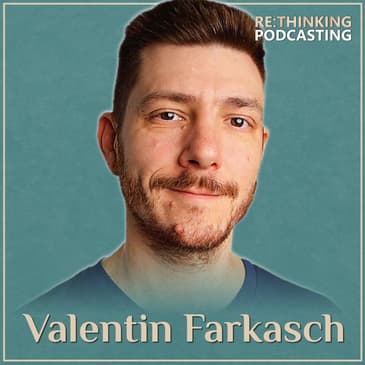
This week I’m chatting to Valentin Farkasch - a YouTube Creator from Vienna who makes his living supporting Small YouTube Creators to make their way in the wild west of the algorithmic medium.
One of the ways he does this is with his podcast: Orbit For Creators, and a community by the same name. Far more than just a YouTuber proclaiming his content a podcast, Valentin’s approach has been deliberate and intentional by marrying his expertise with what we commonly understand podcasting to require.
His podcast about Content Creation has been through three seasons and grown each time, but more importantly he has grown to understand what can reasonably be expected of us as podcasters on YouTube with some sound advice about how to manage those expectations of ourselves.
His reflective and ponderous nature is why I wanted to bring him on for a chat, and also why our conversation started with his advice and journey through creating the podcast, and became a reflection for both of us on where we are in podcasting and where to go next. I think you’ll really like it.
How to get in touch with Valentin Farkasch:
- Follow his LinkedIn: linkedin.com/in/vfarkasch/
- Visit the Orbit For Creators website
- Subscribe to his YouTube Channel: youtube.com/@orbitforcreators
Let's Start a Dialogue
The Socratic Method is best done in dialogue, so if you'd like to respond to one of my episodes or send through an idea of your own, send it to:
📧 podcast@rethinkingpodcasting.com
🎤 rethinkingpodcasting.com and select "Send a Voicemail"
Make sure you share the name of your show, so I can include it in my response!
Support this Podcast:
Here are some of the services I use to create this show. Sign up for these services with the links below to support the podcast:
Use Brain.FM to stay focused while you podcast (30 Day Free Trial)
Sign up for Artlist.io to add Royalty Free Music to your Podcast (2 Months Free)
Use Captivate.FM to host & distribute your Podcast (30 Day Free Trial)
Create your Episode Transcript with GoodTape.io (€5 off when you sign up)
Chapters:
- (00:00) Why a YouTube expert for podcasters? Intro to Valentin
- (02:24) Press Publish in NYC: closing the loop, community, connections
- (06:35) Orbit for Creators — Season 1: from studio tours to remote
- (12:31) Season 2: remote unlocks, growth & longevity
- (19:59) Season 3 experiments: retention-first intros & packaging
- (21:27) 100 views vs 100 million: reframing success
- (24:40) Money, ads, and realistic monetisation
- (30:28) Packaging for YouTube when it’s a conversation
- (37:21) Newsletters: why they matter—and rethinking consistency
- (47:03) Reflective practice, goals, and sustainable change
- (59:55) Solo essays vs conversations: what should this show be?
- (1:21:23) Industry reality check + Bartlett takeaways (pre-release testing)
This podcast uses the following third-party services for analysis:
OP3 - https://op3.dev/privacy
A few years ago, you would never have thought that talking to a YouTube
Speaker:make sense for a podcast about podcasting. With many of us pivoting to video, all the
Speaker:stuff has become more relevant than ever. And who better than a YouTube expert and a
Speaker:to set our expectations and our minds at ease for this new direction? Welcome back to
Speaker:Podcasting, where I take a Socratic approach to reflect on the podcasting world,
Speaker:philosophy.
Speaker:I'm Matthew Bliss, and this week I'm chatting to Valentin Farkasch, a YouTube
Speaker:Vienna who makes his living supporting small YouTube creators to make their way in
Speaker:wild west of the algorithmic medium.
Speaker:One of the ways he does this is with his podcast, Orbit for Creators, and a community
Speaker:same name.
Speaker:Far more than just a YouTuber proclaiming his content a podcast,
Speaker:Valentin's approach has been deliberate and intentional
Speaker:by marrying his expertise with what we commonly understand podcasting to require.
Speaker:And Valentin's background isn't actually in YouTube, it's in filmmaking.
Speaker:He moved to New York early in his career to train and work in cinematography,
Speaker:and while the big smoke was attractive, he missed Europe and headed back home to
Speaker:And after being a moderator for Colin and Samir's community for a while,
Speaker:found his calling in helping small YouTube creators and bringing the YouTube community
Speaker:around him to make a lasting impact. His podcast about content creation has been
Speaker:seasons and grown each time, but more importantly, he has grown to understand what
Speaker:expected of us as podcasters on YouTube with some sound advice about how to manage
Speaker:expectations of ourselves.
Speaker:His reflective and ponderous nature is why I wanted to bring him on for a chat.
Speaker:Also, why our conversation started with his advice and journey through creating the
Speaker:Stick around for this one. I think you'll really like it.
Speaker:Valentin Farkasch, welcome to Rethinking Podcasting.
Speaker:Thank you so much for having me.
Speaker:I've been following you for a while. And one of the
Speaker:most recent things that you tackled was the Press Publish conference run by Colin and
Speaker:York. Now, considering you're based in Vienna, it's a big trip and I know it was
Speaker:aspired to. So how did it go and what have you run away with from the conference? Yeah,
Speaker:couple of things going on. So on the one hand, going back to New York and going to a
Speaker:conference there was just a big closing the loop moment for me because I used to live in
Speaker:New York. I was a filmmaker there. That's kind of where I say I grew up creatively.
Speaker:really shaped who I am professionally. And I haven't been there since pre-pandemic. And
Speaker:that was just like a big personal moment for me to like go back, see friends, but
Speaker:not as a filmmaker, but as a content creator, which is kind of the transformation
Speaker:I've been going through over the last couple of years.
Speaker:And Colin and Samir have been, I can say, like a guiding force in my creative journey.
Speaker:I don't think I would be doing what I'm doing without them.
Speaker:And so it was like from the moment they talked about that, I knew I would be going
Speaker:no matter what, even to the point where I bought flights to go there even before I had
Speaker:a ticket.
Speaker:Because it's like, I'm just going to make my way
Speaker:there one way or another. So, and yeah. And to cut to the chase, the event was really,
Speaker:done, especially for a first time event. It was everything I would hope an event like
Speaker:be because I don't know about you, but like a lot of conferences have this feeling of
Speaker:that you feel like, I need to be everywhere.
Speaker:Most of those panels are real disappointing and just feel like a waste of time.
Speaker:And you don't have time to actually do the thing that you really want to get the
Speaker:conference for, and that is to make new connections or deepen existing
Speaker:And so I was really happy when Colin said on stage, one of three things is going to
Speaker:Either we'll be talking on stage, or we'll be talking with a guest on stage, or you'll
Speaker:If anything else happens, something's wrong.
Speaker:And so that was a very clear message of like, what is this whole thing about?
Speaker:And really, it was a great opportunity to just make new connections and strengthen
Speaker:Yeah. And that connection, I think conferences
Speaker:talk about that a lot. They're like, it's there for networking, but you end up wearing
Speaker:walking to 12 rooms across three days to watch the same people talk about the same
Speaker:YouTube or you buy in an e-learning course, and then you high-five someone, have a beer
Speaker:to bed. Like it's not, you know. And you collect the stack of business cards.
Speaker:That's it. Or a bunch of email addresses or, you know, you scan phones or whatever
Speaker:Well, it's really great to hear that that was a fulfilling experience and a mecca for
Speaker:you, like a closing of the loop so that you can move on to the next thing.
Speaker:After following your journey, it's really cool to hear that you're closing a loop
Speaker:you've been playing with your content quite a little bit.
Speaker:You're a filmmaker background.
Speaker:You've come into the YouTube space, which is perfect for you, but you've also
Speaker:got a podcast which explores a number of different things, which we'll probably talk
Speaker:course of this conversation and why you're here today as well. Your reflections on all
Speaker:of creation and your place in it are probably the most interesting thing that we
Speaker:So why don't we begin there, maybe with your podcast by seeing how that evolved for
Speaker:Sounds good.
Speaker:So bit of video, you understand now the importance of audio.
Speaker:Uh, talk us through your seasonal podcast progression and what
Speaker:you've learned from that so far.
Speaker:Tell me about season one.
Speaker:What was season one of the podcast about for you?
Speaker:So that actually connects really well to your question at the beginning about
Speaker:the event that Colin Samir hosted.
Speaker:Because one big reason for me to start this current show,
Speaker:Orbit for Creators, was their community. I was very heavily involved in their
Speaker:but a common critique was, what you guys are doing is great, but we would love to
Speaker:more diverse voices, smaller creators, see how people are growing right now, not the,
Speaker:MrBeast stories that is like 10,000 miles ahead. And I kept saying, seeing that.
Speaker:And I was like, well, I know they won't do it.
Speaker:There's no incentive for them to do it, but I can.
Speaker:And I have collected a few friends in that space already.
Speaker:So I was like, okay, if I'm starting a podcast or a show about creators with
Speaker:creators, let me just go visit my friends.
Speaker:That was the initial idea. And I was very lucky having a friend who had just moved to
Speaker:nice studio for himself where I could just be like, Hey, um, can we just test
Speaker:something out together?
Speaker:I wasn't like fully, like I wasn't planning out like a year long process of
Speaker:like going all in, I was just like, I have this idea, can I just come to your studio
Speaker:and we'll record something?
Speaker:I was like, yeah, sure.
Speaker:We'll hang out. It was like, yeah, sure.
Speaker:We'll hang out.
Speaker:It's going to be fun.
Speaker:And so from that initial idea and from an initial, you know,
Speaker:visiting a friend and filming stuff
Speaker:to the actual first season coming out,
Speaker:a whole year had passed.
Speaker:So there's quite the development process
Speaker:and also visiting other friends
Speaker:is, how do you say,
Speaker:like a logistical challenge
Speaker:if they're all across Europe
Speaker:and trying to align calendars
Speaker:and when and where can we film all these things.
Speaker:So that's why this whole thing took so long.
Speaker:And it was in the beginning, because it was so video focused,
Speaker:it was a combination of, hey, we'll do a studio tour
Speaker:because I want to see how you work and a sit down podcast conversation.
Speaker:Ideally, that is the format that I would love to do, but it is extremely expensive in
Speaker:resources, but also in time.
Speaker:And so that's why I switched to remote conversations for almost everything now.
Speaker:And that was a very big decision that I didn't really make lightly, but it
Speaker:turned out most people don't really care.
Speaker:Yeah.
Speaker:You'd think that talking to other creators would be a much easier thing to accomplish
Speaker:But the interesting thing is if you're filming their cameras, they can't use their
Speaker:So you need the extra equipment there to be able to get it done.
Speaker:So yeah, that season one is at least reflecting on your journey myself.
Speaker:Your move away from filmmaking has your interest in the way they go about creating
Speaker:as well as the content they create that you want to talk to them about in conversation.
Speaker:So it absolutely makes sense. And just quickly to interject before you tell us
Speaker:went. Orbit for Creators, was that a brand, an idea, or a community thought in your mind
Speaker:as you were creating season one or before or after? Because it's kind of your mainstay
Speaker:Before settling on Orbit for creators, I had a few other side projects, call it,
Speaker:YouTube channels.
Speaker:The real switch for me happened where I realized that trying to do talking heads,
Speaker:videos by myself, talking to a camera is really exhausting to me.
Speaker:Don't really enjoy it.
Speaker:But having conversations with other creators is something that really lights me
Speaker:And I could spend the whole day doing that.
Speaker:And that's where kind of the seed was planted
Speaker:that I want to move into that direction.
Speaker:And Orbit as a concept was just something
Speaker:that just felt right.
Speaker:Like me and my friend, Tom,
Speaker:we were just bouncing around a bunch of ideas.
Speaker:Like whenever I start a new project,
Speaker:I just write down a whole page of like,
Speaker:what could this be called?
Speaker:At some point, the word Orbit was just in the room,
Speaker:in the conversation.
Speaker:And I was like, yes, this feels right.
Speaker:I added the tagline, a home for creators, because that's what I wanted it to be.
Speaker:And I secured all the handles, but realized that the Twitter handle, it was too many
Speaker:for Twitter, Orbit for creators.
Speaker:And that's how it became Orbit for creators, which that's the tag now
Speaker:That's the title everywhere.
Speaker:The irony in it is that I don't use twitter at all yeah i think we've all
Speaker:fallen into that trap you know create the idea you know save all the names in all the
Speaker:medias you can imagine but when you created that i'd say it was still it was still okay
Speaker:just moved on from that okay so orbit season one you moved into remote from uh
Speaker:friends how did the remote conversations go for you, especially in a video format?
Speaker:Yeah.
Speaker:One thing I want to add to that or what allowed me to move into remote
Speaker:Having a Zoom conversation, having an online conversation is never the same as if
Speaker:But I have this set of questions i ask myself regularly and one of them i believe
Speaker:it comes from tim ferris who said what would this look like if you only have two
Speaker:like well if i only had two hours i would just be doing this from my office and doing
Speaker:so i kept thinking about that or that answer kept coming back and back and it's
Speaker:who had like a video that blew up really like massive viral long-form success let me
Speaker:them about the experience behind that and i published that and not a single person said
Speaker:anything about that being remote or like oh it's boring to watch or like whatever the
Speaker:be nobody responded to it in that way and i was okay, that's a clear sign for me that
Speaker:And it allows me to have a much bigger variety of people
Speaker:I can invite on the show, right?
Speaker:I can have people from New York, from India, from wherever.
Speaker:That is where I have, what I have been focusing on for the most part,
Speaker:with a few exceptions.
Speaker:Um, and season two is like over a year now ago.
Speaker:So it's like, what was the focus of this?
Speaker:Why did I do this?
Speaker:What happened in season two?
Speaker:Because I always approach seasons with some sort of a theme, with some sort of a
Speaker:And season two was a lot about growth and longevity for me. Because those are kind of
Speaker:And talking to a few people about their experience and about their journeys is
Speaker:what gave me perspective and what also kind of pushed me forward.
Speaker:It was a lot of, I would say known creators or creators with their own audience.
Speaker:Yeah, it was, it was a really rewarding experience.
Speaker:Season two, I think, reflecting as a viewer, it felt to me
Speaker:like it was your growth moment for the podcast when the remote interview
Speaker:unlocks that availability for you. The potential to talk
Speaker:to anybody is a big part of that. Your access is, as you mentioned, it improves
Speaker:to produce these episodes and it's probably significantly cheaper to do it that way.
Speaker:Yes, absolutely.
Speaker:But the podcasting for podcasters or podcasting for creators, it necessarily has
Speaker:And you probably learned a lot from that second season about what you wanted to bring
Speaker:the third, which you mentioned before the recording that you've now wrapped up.
Speaker:So would you say that that second season was more of a growth for you in trying to
Speaker:or maybe try a few different things and see what worked?
Speaker:Was there big learning opportunities for you from the creators you talked to about
Speaker:how you wanted to continue?
Speaker:talk to about how you wanted to continue?
Speaker:Jan Bogaertsson During the second season, I wasn't really focused about
Speaker:learning about podcasting.
Speaker:It was still very much having conversations with other creators.
Speaker:But having two episodes that were in person and I think 10 or so that were remotely
Speaker:expensive, but also a lot more can go wrong.
Speaker:If we're recording this, there's one camera, you deal with your equipment,
Speaker:I deal with my equipment, and 99% of the time it works. But whenever I filmed in
Speaker:I don't know, a light then turns off. Oh, we didn't record audio on this. Oh, the
Speaker:whatever. There's a myriad of things that can go wrong. Or, you know, not that it
Speaker:career, you know how many times there was like a tripod plate missing? So you have
Speaker:but the thing that connects the camera to the tripod is just not there. It's just like
Speaker:silly things like that, right? And having that experience, I think is really what made
Speaker:to the online video remote podcasting setup that I now have.
Speaker:So knowing that ease that you can bring into season three, you kind of shifted
Speaker:your production a little bit where you have the engaging minute and a half cut
Speaker:before the beginning of the episode.
Speaker:Uh, you did a mix of in-person studio recordings as well as remote recordings.
Speaker:Would you say that's a combination of your shared experience across those
Speaker:first two seasons based on what you've said so far?
Speaker:Or did you find that it was a good balance?
Speaker:There's two things here.
Speaker:Um, the new intro style that we used for season three was actually due
Speaker:to somebody reaching out to me.
Speaker:Somebody who was working with another very large creator, creator, um,
Speaker:reached out to me like, Hey, I like what you do, we're already doing similar stuff.
Speaker:Would you like to collaborate with us i'm like well we can certainly
Speaker:try all the the boxes that are important to me were check and so it's like hey here's an
Speaker:um that i have right now do something with it and they came back with um a really
Speaker:retention you know holding intro and i was like okay let's see if that makes any kind
Speaker:Let's play around with that.
Speaker:Because editing the conversation is one thing, something that I take a lot of pride
Speaker:And I think where every podcast creator should have a hand in, because that is the
Speaker:But then the whole intro packaging part of things, I feel more is like a necessary
Speaker:Like I'm not a huge fan of these like spectacular, grandiose intros,
Speaker:but they certainly work.
Speaker:And, or at least I wanted to see
Speaker:if they work for me, right?
Speaker:That was one part of the question,
Speaker:but I feel like there was another half of this question.
Speaker:I think it was just the balance of things,
Speaker:but it sounds like that was a change for the better.
Speaker:And that if it helped your attention on YouTube
Speaker:or the podcast, then that's definitely a good thing. And while we've meandered
Speaker:of the seasons in their own little microcosm, and of course, the person
Speaker:go and check them out for themselves. The really interesting part that brings your
Speaker:experience across creating the podcast together, not just your unique perspective
Speaker:creator approaching the podcast, but a number of reflections that you've come to
Speaker:is the most important part to have. And I think you hit that perspective really well.
Speaker:One of the things is comparing the hundred views to the hundred million.
Speaker:Yes.
Speaker:Can you tell us a little bit more about your reflection on that?
Speaker:The one key difference between podcasting from where it started and from the
Speaker:is that the audience of a given podcast becomes a lot more visible.
Speaker:So the first whatever 10 years of podcasting, you listen to a show and you had
Speaker:idea how large their audience is.
Speaker:You just enjoy it and that's the relationship.
Speaker:But now with YouTube and other platforms entering that arena, you have that view
Speaker:You have the follower count on their social platforms.
Speaker:It's like, okay, there's a comparison game now going on, right?
Speaker:And you see the diary of your CEO.
Speaker:You see whatever.
Speaker:Joe Rogan, I think.
Speaker:Joe Rogan is a great example.
Speaker:Yes, of course. You have all of these top, top 0.01% of podcasters. You kind of want to
Speaker:continue to do that for more than a year, you kind of succeeded as a podcaster. You
Speaker:further than most people who started this. And so I think that is how we have to put
Speaker:relationship and just keep reminding us that like 200 people that actually listen to
Speaker:to listen to our conversations is quite a lot of people.
Speaker:And so just like slowly keep that growing
Speaker:and be grateful for the people who do show up.
Speaker:How often do you have to remind yourself
Speaker:of the few hundred people that watch your episodes?
Speaker:Constantly.
Speaker:It is very, very hard to remember those actual people
Speaker:and not just try to make the graph go up.
Speaker:Because of course I want to make the graph go up
Speaker:because that also means I can make money from this.
Speaker:That is the ideal scenario, right? I want to have conversations with interesting
Speaker:and that be my livelihood. But how do you make that happen? You can make that happen
Speaker:people. If you want to work with advertisers, then that might not be enough.
Speaker:a balance of making the thing you just enjoy making and also being able to earn a
Speaker:Well, it's interesting that you talk about that today because YouTube announced at the
Speaker:time of recording, they have added the option for dynamically inserted ads into,
Speaker:sure if it's just podcast episodes, but I think it's YouTube videos in general, which
Speaker:is pretty groundbreaking change for the podcasting industry, at least being on
Speaker:the monetization component of things is always a difficult thing to talk about. I
Speaker:reflecting that a couple of hundred people is enough can sometimes be the goal. So for
Speaker:in creating the podcast at the moment, would you tell someone to start a podcast
Speaker:would be a few hundred other people that would listen to it? The short answer is yes.
Speaker:it depends why they want to do it. If it is a way to make money and to earn a living,
Speaker:you got to give yourself a lot of time. Or you have an unlimited amount of wealth that
Speaker:pour into it and eventually it makes money. But largely speaking, this is not a
Speaker:endeavor. But there's many other good reasons to start a podcast.
Speaker:And so if it's not about the money, what is it for you?
Speaker:Aside from the fact that I just genuinely enjoy doing it.
Speaker:Keeping that aside, having a conversation-based podcast is a great way to
Speaker:to open doors, and to ask people direct questions about how they think, how they
Speaker:That is one thing that you mentioned in one of the earlier episodes is also like, you
Speaker:And so my podcasts are, I think, all just two dudes talking.
Speaker:That's the genre I'm going to call it.
Speaker:But like, it's a conversation between largely two white males.
Speaker:But that's, you know, my demographic.
Speaker:I don't really listen to true crime podcasts or whatever else is out there that
Speaker:Right. whatever else is out there that I don't even know about, right? And so that's
Speaker:this is just mostly a relationship builder. I personally have the ambition to grow this
Speaker:a media business, into a channel that can outlive even myself, right? That I can hand
Speaker:at some point. But that is a very crazy thing to do and not something I would
Speaker:else. But I think that's an important takeaway.
Speaker:The more we get into podcasting, the more it is to take up a zealotry about it, be
Speaker:protective about podcasting being podcast stuff, but that it's okay for a podcast to
Speaker:sit and simmer away as like a creative outlet or a secondary goal to what you're
Speaker:outside of that.
Speaker:And for you, that's probably a big component as well.
Speaker:Yeah.
Speaker:That's probably a big component as well.
Speaker:Yeah.
Speaker:There's one thing that is like a core belief that I have or something that we lost
Speaker:Okay.
Speaker:Yeah. So before the internet, you had a band and you jammed out in somebody's
Speaker:That was a fun experience. Now you have to put it on social media and you have to be on
Speaker:and you have to make a music video and you kind of have to become world famous.
Speaker:Like, I feel like that rehearsal space doesn't exist anymore
Speaker:because everything immediately has numbers attached to it.
Speaker:Yeah, I want to use social media just to share what I've been up to this weekend.
Speaker:But it immediately gets measured.
Speaker:Like, how good of an
Speaker:experience did you actually have compared to everybody else on the internet?
Speaker:It's just like, hmm, I wish we could undo some decisions and maybe, you know,
Speaker:not make all the metrics so visible.
Speaker:There's a whole subsection of what you just talked about that I wanna dive into,
Speaker:but I realize we're here to rethink podcasting, so I'm gonna shelve that
Speaker:perhaps for a appendice somewhere.
Speaker:Sounds good.
Speaker:Perhaps at another time.
Speaker:But what you talked about there is really important and it ties all together to the
Speaker:goal, the thing that you're doing, right?
Speaker:If you're doing a podcast to get the money or get big numbers, you're going to be
Speaker:very early because it doesn't happen as quick as you want it to.
Speaker:But the goals is the bit that can direct another really unique take that you had that
Speaker:on a podcast episode about video podcasting. This was the idea that the
Speaker:YouTube, but for podcasts, it's a bit different and that the approach to package
Speaker:the advice has to be different for podcasters. I know your views might've
Speaker:tiny bit, but I know that you opt for a very deliberate approach with how you
Speaker:how best to get the material together to, for lack of a better term, optimize it for
Speaker:Could you share your thoughts on that a little bit?
Speaker:Remind me what I said.
Speaker:Oh, okay. So you said that coming to a conversation with a topic in mind is a great
Speaker:idea, not just to sit down and have a conversation, but also that you can't follow
Speaker:advice and create the thumbnail and the title and plan everything and then start
Speaker:to fill that need. But then you can't also do the YouTube packaging after everything
Speaker:So that in between of approaching a guest with the packaging in mind, but not locked
Speaker:without putting words in your mouth.
Speaker:Yeah. So just for context, for people who might not be entrenched in the whole YouTube
Speaker:the common advice there is to start with the idea and to develop the packaging,
Speaker:thumbnail and the title, and even the intro before you even write the script, before you
Speaker:the video is. If you're doing conversation-based content, that is kind of
Speaker:Because my job, from my perspective as a podcast host, is to be a stand-in for the
Speaker:And I want to be in this conversation with genuine curiosity.
Speaker:And that might also be something that makes me slightly different from most big shows.
Speaker:I do a minimum amount of research, but I don't have have a full binder of like, who
Speaker:And like really deliberately ask questions about that.
Speaker:I just show up with curiosity for a person that I want to know more of.
Speaker:And I always have a topic in mind, a theme in mind, and kind of have an idea of like,
Speaker:okay, we could present it in this kind of way on YouTube for people to click on,
Speaker:for people to watch, for example, the, a recent episode I did with Charles Haynes,
Speaker:it would evolve around the idea that he is James Hoffman's manager. James Hoffman is a
Speaker:creator in the coffee space. And I know that format works. Person behind famous
Speaker:right? That's kind of like how the sausages made kind of content. But very quickly,
Speaker:he opened up a few doors that were way more interesting to me and gave me so much more
Speaker:insights into the mechanics of being a content creator than any conversation with a
Speaker:real creator. And so I just followed him down a rabbit hole. And I think this is one
Speaker:episodes ever. This is my favorite episode because I genuinely learned so much because
Speaker:And I was like, this is what we're going to do.
Speaker:And I'm very happy with it.
Speaker:And then you just have to, you end up with this kind of, let's call it play-doh, like
Speaker:on YouTube slightly different
Speaker:or the common YouTube advice
Speaker:just doesn't fit onto that kind of genre.
Speaker:Yeah, I'd say based on what I watched of that episode
Speaker:that it was particularly interesting for you.
Speaker:But would you say that the,
Speaker:I mean, I don't like talking about the administrative stuff
Speaker:for the most part,
Speaker:but let's say the title and the thumbnail
Speaker:that you had at the back of your mind.
Speaker:I know you like to test thumbnails with your community as well, but do you think
Speaker:that changed quite radically because of the direction of the conversation changed?
Speaker:So in this case, I actually used the basic packaging idea that I had for,
Speaker:for the episode versus two other variations.
Speaker:That's a fun YouTube mechanic that I tested three different versions, but
Speaker:actually it came back very inconclusive.
Speaker:So it's just like, okay, I could have just picked one myself and but actually it came
Speaker:So it's just like, okay, I could have just picked one myself and maybe that would have
Speaker:But that is just the luck of the draw.
Speaker:And the thing is, whatever you put there really has an effect.
Speaker:Like my conversation with Jenny Hoyos, I did very early on this year
Speaker:and it was doing okay, but it was basically flat at the 90-day mark.
Speaker:And I changed just a few little things and since then it's just been
Speaker:growing growing growing growing as like a thumbnail and title really do matter and
Speaker:becomes okay how can i apply this to all the other episodes and funnily enough i have
Speaker:to apply the same formula to other videos or at least it hasn't responded in the same
Speaker:mean there's a whole rabbit hole we can get down with like the youtube metrics and do
Speaker:should you just look at views or or whatever um but i don't know if this is what
Speaker:explore today no well i think that the point that there can be things that are
Speaker:flash in the pan is an important thing for people to note no matter what they begin and
Speaker:crucial to realize that just because someone tells you as well that they can sell
Speaker:I think SEO is the biggest part of what the gurus are selling in podcasting at the
Speaker:I'm not entirely sure why.
Speaker:I think it's people trying to get rid of their current stock while AI continues to
Speaker:But look, it's really interesting. I think the video podcasting aspect of things is a
Speaker:at least. And the way that you think about it is great. I think there's a lot of things
Speaker:as well, and you're currently rethinking that too. But the catch cry of people who
Speaker:for growth and to continue their podcast growth is to create a newsletter, make an
Speaker:the platforms with the numbers that you mentioned earlier. What kind of impact would
Speaker:the newsletter has for you in your Orbit for Creators ecosystem? And how do you feel
Speaker:Yeah. The reason the newsletter exists, because I've known for a very long time that
Speaker:online business, and I would say almost any business needs a newsletter.
Speaker:That is the backbone of your business if you want to be communicating with
Speaker:the people that matter to you.
Speaker:It is the last bastion that is not algorithmically driven and that somebody
Speaker:agrees to get your messages directly to their inbox, unfiltered, uncurated.
Speaker:There's nuance to this, as always,
Speaker:but that is largely how email still works
Speaker:versus everything else being driven by an algorithm.
Speaker:Even in my relatively small-scale audience,
Speaker:if I want to sell something,
Speaker:if I have something that really matters,
Speaker:that I want people to pay attention to,
Speaker:email is the best way to do that still.
Speaker:And it's very easy to see if it had an effect. That is the reason this exists.
Speaker:Because of that, it is the only medium I've ever been this consistent with. For over two
Speaker:every Friday, I've sent out a newsletter, which probably surprises me the most out of
Speaker:I never had a fondness for writing, and it was definitely a big hurdle to do that.
Speaker:But I just made that commitment very early on that that is a non-negotiable for me,
Speaker:If, and there's a big if, I want this to be a business endeavor.
Speaker:Again, if you want to have conversations with cool people and you do it more as a
Speaker:And that's the end of the story.
Speaker:You don't need more.
Speaker:story you don't need more but i think whatever your outlet is that can be
Speaker:find the thing that you do and then you want another channel where you can people
Speaker:that thing so those are slightly separate it's like it's like the advertising portion
Speaker:a letter. Side tangent, I would love to get into analog productivity or talk more about
Speaker:productivity, but I haven't figured out how yet. But I think there's a lot. What we will
Speaker:the future, that is a big prediction, is stuff that existed in the 80s and 90s on
Speaker:to make its way into the internet somehow. That is my big prediction.
Speaker:Yeah, now I went off on a weird tangent and I don't know what the point is.
Speaker:It's okay. Just to clarify, so you were talking about objects or concepts from the
Speaker:and 90s that will make their way to the internet, like 8-track tapes and...
Speaker:Well, that is a very specific technology.
Speaker:There is already a movement of people bringing,
Speaker:like, I think you'd call them like monotasking technologies back monotasking
Speaker:technology and and physical embodiments of certain things like me and my wife just had
Speaker:like wouldn't it be nice to have a radio that just plays lo-fi music yeah and it's
Speaker:would be nice like a physical device it just sits there and that we can push a
Speaker:channel that would be nice i think my brain right now is very much in the magazine space
Speaker:example that already exists is like you always had these quizzes and you just
Speaker:you added up the numbers and you got like whatever which type of blah blah blah are
Speaker:And somebody very, people, you probably, people know his name,
Speaker:but like he created an app called Score App.
Speaker:And that is all it does.
Speaker:Daniel Priestley.
Speaker:And he makes a lot of money.
Speaker:Daniel Priestley, he makes a lot of money from this app.
Speaker:And it's like, yeah, we figured that out like 20 years ago.
Speaker:And just give a little spin on it.
Speaker:I love that.
Speaker:Yeah, I think BuzzFeed figured out that quizzes are a great way for people to engage
Speaker:with content online already. Interesting. I'll hold you accountable to that and, and
Speaker:seeing your content in future where this, where this appears, but I like that, that
Speaker:concept for stuff. What I want to really hear from you, we were talking about the
Speaker:the biggest, I mean, the catch cry, anyone who wants to get people from the podcast to
Speaker:product and business and all that stuff, the newsletter. Perfect. What are you
Speaker:about the newsletter at the moment? Because you said that you didn't think writing was a
Speaker:that you could do every week. And yet the only one, the only issue that you missed was
Speaker:you were closing the Colin and Samir loop in New York city. Yes. Yes. So what are you
Speaker:So like I said before we started recording,
Speaker:I just finished up a season of content
Speaker:and I had this experience of actually missing a Friday
Speaker:and then just send it out on Saturday.
Speaker:So it's still like the streak on the app I'm using still holds
Speaker:because it's on a weekly basis.
Speaker:But it was the first time in two years
Speaker:where I just genuinely forgot this exists.
Speaker:And that just triggered something in my brain because in its current form, the
Speaker:And consistency for consistency's sake has always been something I despise.
Speaker:If you're just writing, if you're just publishing to publish, what is the point?
Speaker:And it started out as a curated list of good content, and then it became more about
Speaker:And most recently, it just turned into weekly reflections of mine.
Speaker:And I know with each step, this becomes less and less interesting to people.
Speaker:Like people who really want to know who I think is at this point, probably a very
Speaker:audience.
Speaker:And so I just have to ask myself, is this serving anybody but myself?
Speaker:If this is just for myself, I don't need to publish it.
Speaker:I can write an actual journal every week and not worry about formatting or length or
Speaker:And so with this in-between time that I'm now, where I have very clear ideas on video
Speaker:It's also a good moment to think like, what is the newsletter for?
Speaker:What is its purpose?
Speaker:That is something that is a very strong belief I have that every online platform
Speaker:spend time on should serve a specific purpose.
Speaker:And so that's why I'm rethinking it right now, the newsletter, because I just, I'm not
Speaker:sure what the purpose of it is.
Speaker:Or I think what I want to find out is how can I make this actually useful tool for
Speaker:I do applaud ditching something as part of your process if it doesn't give you what it
Speaker:used to and it's not doing the work that you want it to do.
Speaker:Like, I think a lot of people get stuck in the create three social media posts and
Speaker:reels and post this and that and that.
Speaker:Very rigid systems.
Speaker:But if you get rid of the newsletter and you can just write for yourself, I guess
Speaker:that doesn't really translate across.
Speaker:Hmm.
Speaker:Yeah.
Speaker:It's just, it's completely gone.
Speaker:I don't even know where to take it.
Speaker:And it's really interesting because usually someone's got a chink in their
Speaker:armor somewhere that I can kind of dig my fingers into and start to kind of pull
Speaker:apart, but you're too well considered.
Speaker:I want to pull that apart.
Speaker:I never thought of myself as, as buttoned up or, or I don't
Speaker:know, even having an armor.
Speaker:I feel like I'm just like open arms.
Speaker:Like just ask me anything.
Speaker:I'll tell you.
Speaker:Okay.
Speaker:One of the biggest, biggest proponents of this podcast and things that I want to
Speaker:contribute to the podcasting industry specifically is having a reflective
Speaker:practice that reflective practice should be practiced constantly. And
Speaker:if you do it often enough, it becomes an easy muscle to flex. You come back from a
Speaker:and realize that you've connected with new people, old friends. You come back to where
Speaker:before you left and have a new perspective on everything. So what does that mean for
Speaker:do over the last, say, probably a year, I think I've been following you for about a
Speaker:your process of reflection and change, and more so the ability to shave off what's
Speaker:to change what needs to change in a very deliberate and intentional way, and to even
Speaker:I think that creates a really great avatar for anyone who's approaching podcasting,
Speaker:approaching YouTube, content creation in general.
Speaker:So the problem I see in this space isn't a problem you have.
Speaker:I think you have the solution for people with this problem.
Speaker:Thing is, you're trying to do the same thing I'm trying to do.
Speaker:The only difference is that I'm taking a bit of a different approach by starting with
Speaker:podcasters and working backwards.
Speaker:And you started with YouTube and you're starting to work forwards.
Speaker:And invariably, because of the way the industry's changed, YouTube and podcasting
Speaker:to line up in a different way than they did two or three years ago.
Speaker:So perhaps with that in mind, maybe you can share how Orbit for Creators has grown and
Speaker:not just where the podcasts and YouTube has taken you. Because I know you've expressed a
Speaker:dissatisfaction with some of the things that you previously thought were what you
Speaker:those things have changed. And they've changed frequently. Frequently enough that,
Speaker:over a couple of years, you've maybe had a few directional pivots. Maybe talk to me
Speaker:Okay.
Speaker:There's like a thousand layers to what you just said.
Speaker:And first of all, I just want to thank you for giving me an outside perspective of who
Speaker:Because, you know, I only see the world from my perspective, not what other people
Speaker:Credit where credit's due, my friend.
Speaker:Yeah.
Speaker:credit where credit's due my friend yeah um i mean part of what you just said the the
Speaker:you know a psychiatrist can take apart if they want to um that's a that's a common
Speaker:only constant is change but that is actually true for everything in life. I've
Speaker:like spending time with. I think a lot of people have that experience at work where
Speaker:there and they don't like anybody they work with, but it pays them money, right? And
Speaker:situation I want to be in and where I've made deliberate choices over time to be
Speaker:I do that? I can do a thousand other things. And so that is the same thinking
Speaker:something and it doesn't serve me, why invest time into it? This episode is
Speaker:after, yeah, tomorrow. I'm uploading a piece on short-form content in particular.
Speaker:whole thesis. If it serves you, go hard. But if it doesn't, it's fine to ignore it.
Speaker:at hand, you gotta, you gotta pick your battles.
Speaker:You gotta plant your flag where you feel comfortable.
Speaker:And that's why I'm also really excited to have this conversation with you where like
Speaker:you starting a podcast in 2025, just doing audio.
Speaker:I'm like, I like it.
Speaker:And to your credit, this is becoming one of my favorite podcasts.
Speaker:Is it really? Yes. Yes. credit, this is becoming one of my favorite podcasts. So
Speaker:Cause there's a lot of change in the air and a lot of people that inspired who I am,
Speaker:They've gone away.
Speaker:They, they, I don't know, grown out of it, whatever it is.
Speaker:And the internet is shifting towards a weird, um, the internet is shifting a
Speaker:direction that isn't what I thought it would be.
Speaker:It is also becoming more like traditional media where, yeah, sure, anybody can upload.
Speaker:Anybody can be on TV.
Speaker:The question is, how many people actually see this is a very different one.
Speaker:And can you still be a solo creator, an independent creator who just talks about
Speaker:and build a career off that, how so many creators
Speaker:have done before and through the pandemic, I am not so sure.
Speaker:And that is also a big reason why I'm rethinking a lot of things right now.
Speaker:When you see those big success moments of big names that just suddenly show up and
Speaker:all of a sudden everywhere, that is by design.
Speaker:That is, yes, they have an existing audience, but they also have a whole team
Speaker:And I'm proudly doing almost everything by myself.
Speaker:This is how I like to work.
Speaker:That is also something I learned in filmmaking.
Speaker:Being on big, expensive sets is cool, but I like to work with a small group of people
Speaker:That is at the core of what I do.
Speaker:I want to make cool shit.
Speaker:I have to be very deliberate about where I spend my time because there are so many
Speaker:Just yesterday, I was listening to a podcast conversation about launching a
Speaker:Get your show out there.
Speaker:It's like, boy, I really should be doing that.
Speaker:But like, boy, I really should be doing that. But like, yeah, but I won't.
Speaker:If I find another bucket of cash somewhere, that is a serious consideration.
Speaker:But for now, I got to focus on the one or two things that really move the needle for
Speaker:me where I can make a difference with just being one person, right?
Speaker:So yeah, I hope that somewhat answered your question, but happy to go deeper on one or
Speaker:I don't think we've got questions anymore. I think we're just going to be exchanging
Speaker:against the people who show up more frequently. The idea that there is always
Speaker:as a X factor that pushes them upwards. We've got Jay Shetty, we've got, you know,
Speaker:anybody. Emerging from the pandemic in the reality that the content creation industry
Speaker:working from home meant the availability of technologies that also enabled this to
Speaker:And so reflecting on it now, it's hit saturation point and podcasting has
Speaker:Anybody can start a podcast, but should everybody start a podcast?
Speaker:I've seen social media conversations and Reddit conversations where people want to
Speaker:not comfortable talking on microphone or appearing on camera. So they go to Notebook
Speaker:bunch of information, generate a conversation, and then they can say they've
Speaker:get an 11 lab subscription, text to voice an entire monologue, and then they have a
Speaker:But the success measure goals, the real, the tangible stuff that you're talking about
Speaker:Yes. to hear what you think about what he had to say at the, at the conference.
Speaker:But I really, I think if nothing else from this little portion of our conversation,
Speaker:for people to reflect on what they actually want and your background in
Speaker:change being a constant thing, you take it for granted.
Speaker:So when someone like myself says to you, your ability to reflect change,
Speaker:remove what you don't need and keep what you do is so normal to you.
Speaker:Why would anyone point that out to you?
Speaker:It takes a podcast interview to reflect on your
Speaker:craft as they perceive it to be able to hear that. I've talked about major
Speaker:already. Another big one is being in dialogue. Podcasts enable dialogue, but so
Speaker:so does feedback, so does the external validation that you get, but it's definitely
Speaker:numbers. The saturated industry we're in right now, I know I'm throwing a ton of
Speaker:like you can grab one and run with it if you want, but the numbers aren't feeding
Speaker:anymore. So there has to be something else. And that something else, whatever it is for
Speaker:comes next is an important thing. As long as you're taking the dialogic feedback,
Speaker:negative into account and realizing where your strength. Like I loved hearing you say
Speaker:because I have no idea. I'm still rethinking how I do rethinking podcasting as
Speaker:Just the other day, I was thinking about, oh, actually it was yesterday, whether I
Speaker:the solo monologue audio essay versions or whether it should just be me in conversation
Speaker:and save the essays for another format. I'm going to ask you right now what you prefer,
Speaker:myself so far. So tell me, what do you think? Conversations only or both?
Speaker:I generally like the mix of both. And the reason why I enjoy your podcast, why I tune
Speaker:I mean, part of it is because I know you, but I know that listening to you for a set
Speaker:something that gets me thinking. The whole reason I love podcasts so much or why this
Speaker:medium for me is because it allows me to get into somebody else's brain, especially
Speaker:dozens, if not hundreds of episodes. You really understand who they are as a person.
Speaker:experiment, try and reflect what works for you. That is the approach I would be taking.
Speaker:But I want to tack onto that one thing that you said about it's so saturated.
Speaker:Yeah, everybody can have a podcast, but there's a, first of all, very few, and the
Speaker:There's very few that actually make it past whatever the threshold of three, 10
Speaker:and that just like do it for fun.
Speaker:And there's even less that I really care about that I really spend time.
Speaker:If I said that the word saturated there is a relative measure, like the, by those same
Speaker:statistics, we know that the amount of podcasts has grown over the pandemic years
Speaker:and it's only just started to drop off a little bit.
Speaker:Yeah. I mean, yeah, the pandemic was an anomaly in a lot of ways, and we're getting
Speaker:bit more stability. But one key point I think is worth making here is that there
Speaker:a new cooking show. It doesn't matter who is the current famous chef or the current
Speaker:At some point, they're going to be gone.
Speaker:They're going to be moving on to something else.
Speaker:Like Jamie Oliver was like the chef for a long time.
Speaker:How did you learn cooking?
Speaker:Jamie Oliver.
Speaker:And like, I bet there's a bunch of 20 year olds who've never heard his name, right?
Speaker:Oh yeah.
Speaker:It's Gordon Ramsay now.
Speaker:Does he teach cooking though?
Speaker:He's on his way out.
Speaker:I mean, they learn something about cooking it's not
Speaker:necessarily about cooking food it's about how you treat people for me it's sorted food
Speaker:bon appetit's kitchen for the pandemic until they crumbled um but there will always
Speaker:that replaces something old that is how the whole media landscape works there's very few
Speaker:actually stick around for a long time so maybe the connective ideas here are not that
Speaker:there is no room for more podcasts. If you do choose to start one, that you should
Speaker:be open to change, to slow growth, to adapting, and I guess investing in yourself
Speaker:worrying about what everything else tells you. Yes. I think that last one is a very
Speaker:What I always tell people, the two things that they should really think about before
Speaker:Like, what is the outcome that they want to see of it?
Speaker:And then if they still want to pursue that, really think about who this is for.
Speaker:This is, I think, what always surprises me in a lot of content creators.
Speaker:Even the ones that are successful.
Speaker:You ask them, like, hey, who is your audience?
Speaker:And like, I don't know, people my age who have a similar background.
Speaker:It's like, yeah, okay.
Speaker:I mean, yeah, I can say the same about me.
Speaker:And it's probably very similar to you, but we can unpack that and we can
Speaker:become much more specific and understand why the podcast, the YouTube channel,
Speaker:the newsletter exists and why it is relevant to people.
Speaker:Once you understand that, everything becomes a lot easier and the numbers start
Speaker:to make more sense.
Speaker:Yeah. They inform and support the things that you see here, decide about as feedback
Speaker:for your show. But the person who says, I'm making this for people like me, you then ask
Speaker:them, well, who are you? And they don't have an answer. That kind of short circuits
Speaker:whole argument as well. But yeah, that advice is totally spot on. So we've been
Speaker:little while and I'm very experienced with people who like to dodge questions about
Speaker:Tell me a little bit about what your thinking process is at the moment for where
Speaker:want to take orbit for creators. I know that you said you're currently in a bit of a
Speaker:trying to figure out exactly where that direction is, but if not, what inspires you?
Speaker:motivate you, set a trajectory for where you want to go? Maybe you just caught me at
Speaker:point in time because I am very much at an inflection point right now where I have to
Speaker:decisions that I might not be comfortable with because the reality is I have been able
Speaker:And I've been able to get this funded for this time.
Speaker:But if you look at the outward facing success numbers, season two looked a lot
Speaker:better than season three because of some choices that I've made, I can create more
Speaker:content, but I also have to choose for myself, is that the right decision at this
Speaker:point, or do I choose very deliberate the experiments that I make in order
Speaker:to get across a certain threshold? The internal goal over the summer and for most
Speaker:was not to go viral. Well, I mean, there was a part that wants a certain amount of
Speaker:yes. But the thing I was been thinking about and that I was being paying attention
Speaker:This is a kind of hard thing to measure, but you see it, A, in the people that
Speaker:They're like, oh, I've seen you. Or, yeah, I see what you do. Those kind of comments.
Speaker:You see it in Instagram stories when people share that they're watching the show,
Speaker:I had the funniest interaction at the pre-event to the Colin and Samir event,
Speaker:where a guy at the table was like,
Speaker:hey, you're the European creator guy.
Speaker:I'm like, hell, yes, I am.
Speaker:Who are you?
Speaker:Turns out we know each other through LinkedIn.
Speaker:So that was kind of a big validation moment.
Speaker:And then also, I think the biggest validation moments
Speaker:from all of this was having a chat with Samir.
Speaker:And he's like, yeah, of course you're going to be here.
Speaker:Like, yeah, I know who you are.
Speaker:She's like, oh, okay.
Speaker:I don't know.
Speaker:This is a very parasocial relationship.
Speaker:You know, you have an audience of millions.
Speaker:Do I stick out of this or not?
Speaker:It was just like, so we had a nice little chat about that.
Speaker:And that was all fuel for me to keep going.
Speaker:And my self-proclaimed goal is to create something that can outlive me.
Speaker:But at this point in time,
Speaker:there is a financial component that I cannot ignore.
Speaker:That is the reality of it.
Speaker:And I can tell you probably more about this
Speaker:at the end of the year,
Speaker:but that is where I am now and the hard reality of it.
Speaker:Because if I had started this project
Speaker:two, three years earlier,
Speaker:when people were at home
Speaker:and had a huge interest in becoming a content creator, it might all
Speaker:look very, very different, but now where it seems everybody's traveling everywhere.
Speaker:Like, I don't know if you been to any major city recently, but
Speaker:it's just tourism has exploded.
Speaker:And the general interest is like, how can I use AI?
Speaker:What can AI do for me?
Speaker:How can I make a quick buck by vibe coding a tool? is like i could make content about
Speaker:zero interest in it yeah that is that is where i am at and i don't know if i opened
Speaker:bit if if that's what you or i'm still um trying to keep it together because yeah yeah
Speaker:ramble on a little bit longer because that is a big part of kind of have to be aware of
Speaker:yourself it's not cool to talk about hey guys i'm i'm just i'm just uh trying to
Speaker:i don't really know what i'm doing like a uh let's be honest let's look at those
Speaker:they're not going up so uh you know i'm just gonna keep doing what i'm doing Maybe
Speaker:it more as a hobby, but I chose to pursue it as a business. And that creates a certain
Speaker:is just hard to navigate in a public setting. You wouldn't be alone. I've been in
Speaker:for long enough to see shows begin and to work closely with the creators of those
Speaker:It's an exit stage left for podcasting.
Speaker:They're really, no one, I mean, YouTube loves the I'm ending things or this is my
Speaker:and you know, viral.
Speaker:But with podcasting, the feed just stops.
Speaker:Usually they decide that the podcast doesn't activate them anymore.
Speaker:They stop creating episodes and there's no closure for an audience. So perhaps there's
Speaker:not just in the creator's experience as the world changes, but also with the fleeting
Speaker:consumption and our attachment. Maybe the parasocial relationship is becoming less
Speaker:sustainable every time we're jilted and get attached to a podcast that we enjoy.
Speaker:The way that you're talking about how the world is changing, it's undeniable. The way
Speaker:do things in the world is changing. And you've given me a lot. I'm going to give you
Speaker:bit here too, just so that we're both got our cards on the table. I'm currently trying
Speaker:shift away from podcast production as the thing that makes me money to move into
Speaker:that allows me to do what I do on podcast episodes, like talk to people, help them
Speaker:That could be either more efficient or a thing that's getting in the way of
Speaker:essentially coaching. But there's a whole other world beyond podcasting that I have as
Speaker:background, like you in filmmaking. If someone came to talk to you just about
Speaker:they'd be missing a lot. Just like with me, my background in philosophy from high
Speaker:I mean, you listened to the Foundations episodes,
Speaker:I think I talked a little bit about it, but the philosophy in high school and then my
Speaker:subject, new concept. And then I did IT support and classroom support in a school
Speaker:And then I trained to become a secondary school teacher. And then I worked in
Speaker:And then the pandemic happened.
Speaker:And so productivity, cognitive and neurological concepts, teamwork, product
Speaker:resource development and management, remote work and use of technology to enable spaces,
Speaker:the idea of a virtual commute.
Speaker:So that, or CGP Grey's Spaceship U describes that most elegantly, I think.
Speaker:All those things.
Speaker:That's my background.
Speaker:And yet here I am just trying to shove all of that into a box called podcasting.
Speaker:I'm trying to figure out the money for me now, because since I moved from Australia
Speaker:to Ireland two years ago, I can't get a job here, or I could get a job, but I can't get
Speaker:a job in my chosen craft.
Speaker:Or all the reasons in my background that like no one's asking for an
Speaker:it supporting curriculum knowing secondary teaching degree having uh productivity
Speaker:manager trainer learning developer human resource manager instructional designer they
Speaker:rigid roles and that's changing too like if you want a salaried job get ready to apply
Speaker:changed and that the leverage is now with the employers rather than the employees.
Speaker:So I'm figuring out where my next step is.
Speaker:And reflecting like yourself at this inflection point means that I have to think
Speaker:me, what gets me going, what's my 10-year goal plan, and how best does what I'm doing
Speaker:now serve that? And ultimately podcast editing doesn't do that.
Speaker:I'm good at it. Great at it. You'll find out when you listen to this episode
Speaker:time for, for money, you know, it doesn't scale well. And just like you mentioned with
Speaker:people talking about AI and tourism as AI and editing start to close in on an entire
Speaker:that was built to give podcast creators time back, that means jobs are going to
Speaker:this job is also not going to exist forever. So I can't sit here and sit on my
Speaker:make a ton of money before I have to change again. Changing now is an important thing
Speaker:I have something in the future to look forward to. Now, whether that future is in
Speaker:I think rethinking podcasting is the thing that I want to put in the world that I've
Speaker:my entrepreneurial career with what I want to offer the rest of the world. But you just
Speaker:know what that's going to look like. You have to take what's coming to you and give
Speaker:direction and start pushing off into whatever that new direction is and just keep
Speaker:things to change. Absorb what's going to give you the feedback about whether you're,
Speaker:do you take a three day per week job to cover the books while you slow your plans
Speaker:creation on the rest of the stuff that you're going to do as part of your channel?
Speaker:all out and create the European, uh, press publish conference? And yeah, cause I know
Speaker:events was on your radar for a little bit. There's a lot more people that are thinking
Speaker:Dyer River CEOs, the Stephen Bartlett's, the Joe Rogan's, they have infinite pot to
Speaker:They got tons of money. If they want to pivot, they're working with the house on
Speaker:not losing. And that's why they can say things like the 1%, the details are
Speaker:change the oxygenation of this room to make sure that there's a positive euphoric
Speaker:But in reality, you have to work with what you've got to achieve what you want.
Speaker:We're both in states of change.
Speaker:I think you're probably a little bit better equipped than I am being on the creator
Speaker:a little bit longer than me, but maybe that's our takeaway for this episode.
Speaker:And I'll check back in with you in six months and we can see where you're at.
Speaker:That sounds like a plan.
Speaker:I mean, there's another five things that you mentioned that I could jump
Speaker:in and add something to. Go for it if you want to. There's a part of you pivoting or
Speaker:see where the money comes from. And I think that is a very important question anybody
Speaker:themselves. That's a question that I'm asking myself because what I thought would
Speaker:revenue driver isn't the way I want it to be. I launched a community earlier this year
Speaker:that I thought would be the way
Speaker:that I financed this whole operation.
Speaker:But the reality of it is that
Speaker:this drains a lot of my energy.
Speaker:And as much as I would love to have this,
Speaker:I don't think it is something
Speaker:that is serving people right now.
Speaker:We don't need another online platform
Speaker:to spend time in.
Speaker:Which makes me think, again,
Speaker:more about in-person events,
Speaker:retreats, those sort of things.
Speaker:I'm just shying away from anything in the physical world
Speaker:because it's infinitely more complex.
Speaker:I'm not going to say anything about the direction
Speaker:that you are thinking about, if that is a good or bad direction,
Speaker:because nobody knows.
Speaker:You know who you can be of use to
Speaker:and if they would want to pay for the service.
Speaker:That is a question you have to figure out there are so many more ways to monetize what
Speaker:hand you're just like overwhelmed by choices right it's just like okay what do i
Speaker:sink my energy my time in and will this have a positive impact should have bought
Speaker:years ago if one had the chance right could have done that um whatever it's not the only
Speaker:heard that's it yeah i mean it's it's just a it's just a example it's just an example
Speaker:a very obvious one that like best time to plant the trees 10 years ago best time to
Speaker:trees now and the other thing is because you keep bringing him up and i know it's
Speaker:of yours is stephen bartlett and his one percent changes and i did see him in person.
Speaker:I'm not a fan of the output that he delivers to the world.
Speaker:Because it has become very controversial and just being controversial to gain clicks.
Speaker:There is no genuine value delivery from my perspective.
Speaker:But that being said, seeing him in person, he's extremely charismatic.
Speaker:Like, even if you don't like the guy, you have to cheer for him just by the way he
Speaker:And yes, he brought up the, we level the oxygen levels in the room because if two
Speaker:And you want to have a conversation at a full mental capacity ready level and maybe
Speaker:content out of it. I don't know what he does exactly. The other thing that was
Speaker:impressive about him was that there's no delay in him answering a question. Whenever
Speaker:asked him a question, he spoke as soon as they finished. And very rarely was there
Speaker:So you can see how hard he trained to be who he is, how much time and resources he
Speaker:Very kindly put.
Speaker:I'm not going to take that bait.
Speaker:kindly put. I'm not going to take that bait. But one and one thing that in the
Speaker:a whole system to test screen episodes. They have a custom software where people
Speaker:before it goes live and they see where do people get bored, where do people skip,
Speaker:optimize the whole conversation before it even goes live. In his words, getting a
Speaker:before there's a retention bar. I'm like, well, good for you, Stephen. I wish I had
Speaker:that. That was my initial reaction. But then I was like, but there's something to
Speaker:that I can apply this logic to what I do? One thing I'm going to be testing out moving
Speaker:is creating dedicated short-form content
Speaker:as soon as an episode is done recording.
Speaker:Before I edit it,
Speaker:here are some moments that I think will resonate with people.
Speaker:Let me put those out and put this to the test.
Speaker:And according to that, hopefully some comments as well,
Speaker:I can then shape the episode.
Speaker:That's the poor man's way of doing it, I suppose.
Speaker:Yeah, but it's also a very reasoned approach to a concept that is sometimes very
Speaker:get past, that a charismatic multimillionaire can create a small
Speaker:give him feedback before he puts things out in the world.
Speaker:You know, work with what you got.
Speaker:I've never thought about using shorts that way.
Speaker:I think that's a spectacular approach.
Speaker:Be very interesting.
Speaker:We shall see. All right. Why don't we talk in
Speaker:six months? You can tell me how that experiment goes. We can see where you're or
Speaker:both heading with our business directions and our content creation and have a meeting
Speaker:minds then. Sounds like a good idea. Thanks for coming on, Valentin. Thanks for having
Speaker:And that, my friend, is as authentic and vulnerable as conversations can get. I
Speaker:and I'm glad Valentin was up for it.
Speaker:If you want to hear more from him, check out Orbit for Creators on YouTube,
Speaker:or track him down on LinkedIn.
Speaker:You can also head to orbitforcreators.com,
Speaker:and of course, links will be in the show notes.
Speaker:If you've got questions for Valentin or myself,
Speaker:send me an email, podcast at rethinkingpodcasting.com,
Speaker:or head to rethinkingpodcasting.com and send a voicemail via the prompts.
Speaker:If you'd like to work with me to produce and edit your podcast,
Speaker:or just have a chat about where you're going as a podcaster,
Speaker:head to mbpod.com and set up a free consultation.
Speaker:Thanks for listening.
Speaker:Keep rethinking, and I'll see you in the next episode.