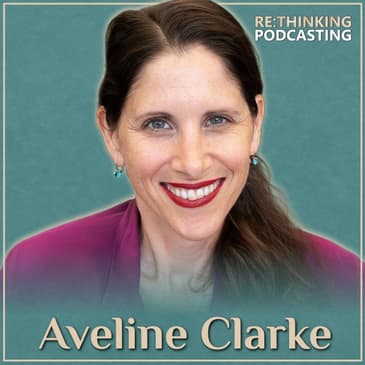

This year, Aveline Clarke undertook a rebrand and relaunch of what was previously the 6Star Business and 6Star Leaders podcast after she took a break. I asked her about the impact of the rebrand on her podcast performance, and the process she undertook to reflect on her own by asking three questions.
We also discuss her unique interview style that isn’t a blueprint for scripting an interview - instead, she prepares the constraints within which she can adapt and change the conversational flow while simultaneously reflecting with the guest to show how she listens.
In this episode, you’ll hear how Aveline tackles brilliant conversations, self-care, rebranding a podcast and how she stays in touch with her inner goals and avoids the external pressure. I always enjoy chatting with Ave, and I know you’ll enjoy our conversation.
Get in touch with Aveline:
LinkedIn: https://www.linkedin.com/in/avelineclarke/
Website: https://journeypoint.com.au/meet-aveline/
Podcast: https://journeypoint.com.au/mission-activated-podcast/
Let's Start a Dialogue
The Socratic Method is best done in dialogue, so if you'd like to respond to one of my episodes or send through an idea of your own, send it to:
📧 podcast@rethinkingpodcasting.com
🎤 rethinkingpodcasting.com and select "Send a Voicemail"
Make sure you share the name of your show, so I can include it in my response!
Support this Podcast:
Here are some of the services I use to create this show. Sign up for these services with the links below to support the podcast:
Use Brain.FM to stay focused while you podcast (30 Day Free Trial)
Sign up for Artlist.io to add Royalty Free Music to your Podcast (2 Months Free)
Use Captivate.FM to host & distribute your Podcast (30 Day Free Trial)
Create your Episode Transcript with GoodTape.io (€5 off when you sign up)
This podcast uses the following third-party services for analysis:
OP3 - https://op3.dev/privacy
Matthew Bliss
[00:00] I met Aveline Clarke through the nonprofit Kintsugi Heroes. She was hosting the conversations where people shared their adversity with the world, and I was a fledgling editor brought on board to refine their episodes.
[00:12] I didn't know at the time, but those episodes were a small window into the personality of someone who has their own podcast that would soon become a dear friend, and more importantly, has an abundance of empathy through experience and can guide a conversation like no one else. Welcome back to Rethinking Podcasting,
[00:35] where I take a Socratic approach to reflect on the podcasting world by myself or with others and help you build your own podcast philosophy. I'm Matthew Bliss, and this week I'm joined by
[00:46] Aveline Clarke, founder of 6Star Business, host of Mission Activated, and a podcasting peer with some amazing interviewing abilities that she'll share on this episode. This year, Av undertook a rebrand,
[01:01] relaunch of what was previously the 6Star Business and 6Star Leaders podcast. After she took a break, I asked her about the impact of the rebrand on her podcast performance and the process she undertook to reflect on her own by asking herself three simple questions.
[01:19] We also discuss her unique interview style that isn't a blueprint for scripting an interview. Instead, she prepares the constraints within which she can adapt and change the conversational flow while simultaneously reflecting with the guest to show how she
[01:34] listens. In this episode, you'll hear how Avalon tackles brilliant conversations, self-care, rebranding a podcast, and how she stays in touch with her inner goals and avoids the external
[01:48] pressure. I always enjoy chatting with Av, and I know you'll enjoy our conversation. And a quick note, this was recorded back in February of 2025 when this podcast was going to be Coffee with a Podcaster. This is only relevant for the intro, but I thought I'd let you know just in case anyway.
[02:03] Aveline Clarke, welcome to Coffee with a Podcaster.
Aveline Clarke
[02:15] Hello, thank you for having me.
Matthew Bliss
[02:16] My pleasure. Now, we've known each other for a while, but just for the listener who might be unaware of what you do, can you tell
Aveline Clarke
[02:27] us what being 6Star means? Oh, you, you've really floored me. The, the question, the golden $6 million question. It's different for everybody. So you're obviously asking me what it means for
Matthew Bliss
[02:40] me. Is that right? Yes. I'm kind of stealing a little bit of your technique as well. Anyone who goes over to listen to your podcast will realize, oh, hang on, he's stolen that question from your podcast. But nevertheless, let's go specifically with yours. What does 6Star mean to you?
Aveline Clarke
[02:56] 6Star means a number of things all wrapped around the central point of someone coming into alignment with who they really are. And that's not an ego or a mindset,
[03:11] you know, a left brain thing. It's an internal knowing. And being 6Star can only happen, I believe, when you are in that internal alignment of purpose, genius, and heart, and so on.
[03:25] And it means different things to different people. And I think that as we get older, we have a better chance of tapping into that because we've had more experience. We've been down a few different lanes, a few different journeys, through bumps in the road.
[03:40] We figure out who we are and who we aren't. 6Star is then bringing those gifts to the world.
Matthew Bliss
[03:49] And what made you think of 6Star as a way to describe that? Because it is your, your personal branding around this, what you've just explained, right?
Aveline Clarke
[03:58] Yeah. Because we have this notion, people, you know, we've got this rating, this measuring system of Five Star. And 6Star doesn't really exist in that realm and 6Star is beyond just a critical outside view. It's actually inside. It's almost like you never quite attain it and it's not, so nobody's perfect but we're always, as long as we're here on this planet, we're always evolving and therefore we're always growing whether we like it or admit it or not.
[04:32] And so 6Star is a way to describe all of that. It's, I can't really, I think the journey to get to this, the branding started with the idea of the podcast three and a half years ago,
[04:47] whatever it was. And at that point, it meant something very different. You know, it was nothing to do with the purpose and alignment. So it became more of a, it became more real to me over time as
[04:59] this more of a knowing. And if the sixth star is that that's within ourselves,
Matthew Bliss
[05:06] if you want to look at it that way. Well, I guess framing it that way is really interesting that most people would think five stars would be the thing. And what could the sixth star possibly be in the context that the potentially unattainable thing, but from what you described there, it is unobtainable.
[05:22] It's like a, it's like a goal almost. But I love the idea that the podcast that you ran previously, 6Star, now Mission Activated. You've undergone a rebrand that we'll talk about in a sec.
[05:36] I liked that the podcast informed you how 6Star changed to you. So I'd be curious to know, is it the guests that you've interviewed that kind of changed how you thought of 6Star? Or is it the way that the podcast has grown?
[05:49] What, what, what led to that evolution in your own mind of what 6Star became?
Aveline Clarke
[05:54] That's a great question. I think at first it was the guests, like, you know, every single guest, I would ask them the same question, like, what does 6Star mean to you? And they all would have a different view. And then there's me and my journey, uh, pondering, going out into the waves
[06:11] on a surfboard, trying to surf, not very well, and being stuck sort of paddling for a couple of hours, you know, and, and asking myself, you know, about 6Star and then bringing it back to the community, the
[06:24] 6Star community, the, the, the beautiful souls that are there bouncing things around and when you're in that magic cave, you know, things just pop out. And I think it was a mixture of both.
[06:35] And then over time, getting downloads and just this awareness and watching the unfolding, that's kind of where it came from.
Matthew Bliss
[06:43] Interesting. I think there's a lot of people who start a podcast who don't think about growth around it. I think there's a lot of centralisation on the podcast being the thing, the vehicle,
[06:56] the business, in some cases. Would you say that you thought of the podcast initially in that way when it was 6Star?
Aveline Clarke
[07:04] Yes, very much. Yeah.
Matthew Bliss
[07:07] Okay. But obviously 6Star, you know, offers a whole lot more and I've been fortunate to be invited to be part of the community and the regular meeting sessions that you do with people across the planet, which I think is excellent and a huge burden on you being in
[07:24] Australia where the time zone is either good or terrible to try and match up with people. But being able to access people from across the world for that six-star journey is really great as well. It really cracks open those opportunities.
[07:39] So let's have a quick talk about moving from six-star to mission activated then. So full disclosure, I've been working on this a little bit with you to get things rolling. All podcasters need a little bit of help and I help you out with the editing a tad.
[07:53] But what made you want to change the podcast from i think it was 6Star business and then it became 6Star leaders and then you took a bit of a break and came back with mission activated so has anything changed with how the podcast sits with you in
Aveline Clarke
[08:09] terms of its mission how you activated it perhaps let's get meta on it so over time the podcast, it became more of a chore and less of a desire. And this could be partly because I didn't have an overall goal for it. It was just something I was doing. And I did evolve from
[08:35] six-star business to six-star leaders because I realized that the people I was talking to were aspiring to be six-star leaders and we're all leaders in our own, in our own worlds and our own rights. And so that felt like a good adjustment at the time.
[08:49] And then I guess I was looking at the people that were coming. Did they stay in contact? You know, what was the relationships? Why were they putting their hand up to be a guest? And largely I saw that most of the guests were just on the podcast circuit looking for
[09:06] more promotion and exposure of their business. There's nothing wrong with that. However, I didn't want to be just another podcast where they could just talk about themselves and their business and try and sell themselves.
[09:21] I fell out of love with it. I think the day that I admitted that it was just such a relief because I'd been going for so long, doing it out of duty, you know, that sense of obligation. And then one day I kind of fell over my feet a little bit, you know, with things going on at home and I just
[09:39] didn't have the bandwidth to even get an episode out. And I went, well, it's my podcast. Maybe I'll just wait a week. Oh my God, you know, heaven forbid, I'm not going to publish on the day,
[09:51] you know, to have that consistency of weekly publishing. And I think I did that the first time and then I did it again another day. And then I sat back and I just went, okay, I actually think I need to have a break. That was a massive relief to myself. Even though I knew I'd miss it, it was great to just
[10:10] sort of go, actually, I need to pause. And it wasn't for lack of people lining up. I interviewed some amazing people in the last weeks of kind of when I was recording and those episodes had to wait. I think a couple of them had to wait 12 months, almost 12 months.
[10:30] It was probably what, 10 or 11 months from when I recorded them. Yeah. It just took time. I just needed the time. And I thought at first I'd just take, you know, a few months and I really needed to decide what I wanted to do with the podcast.
[10:47] But I gave myself permission to actually not think about it. Like literally, like have a holiday, not put any pressure on myself around what it needed to be. By doing that, I could just breathe, get on with things.
[11:01] And like I said, I had a lot of pressures at home that took up a lot of my time and energy. And when those pressures started to ease up, I realized, okay, I do want to look at the podcast again. And I took myself through my own process that I take clients through, to uncover who they really are, who their clients are, what
[11:23] their genius is, purpose, and what it is that they're doing in the world. What is the seed that they're, you know, planting in the world, what's the impact that comes from that seed. So I sat down and had sessions with myself around the podcast, and extracted a whole
[11:40] lot of stuff and realized that actually I do want to have a podcast. I do want to have a podcast. I do want to have an impact. I just didn't want to attract people that just wanted to sell their business. So I needed to have the right purpose for the podcast.
[11:55] And, you know, I sat back and said, well, what is a podcast? Why do a podcast? You know, who listens to podcasts and, you know, all that kind of stuff, really frank, open, deep questions.and I ended up saying, yes, I want to bring it, bring it back.
[12:17] And it needed to be right. And I knew it needed, it needed a new brand. And it took a little bit to land on those words, but when I did it, it just kind of, it was powerful. It was like zing, you know, and I knew that I had it.
[12:30] I think I reached out to you and I said, Matt, I think, I think I've got it.
Matthew Bliss
[12:34] Yep. Yep. You'd bro-tested a few cover art images and you mentioning moving away from the marketing kind of thing for people. You're kind of like on a table, like leaning across, going, looking wistfully into the
[12:49] distance with a few of those. So you were test, I could say that you were testing a few things, but yeah, mission activated that just, as soon as you wrote that down in, in our little chat thing, I thought that that was pretty strong for what you do.
[13:02] Now for everything you said there, there's so many questions that I want to ask you because a lot of people doing podcasts, which is the people that we're talking to with this podcast, and hopefully the listener is either in that position or doing it for other people.
[13:17] And just as an aside, if you wanted to skew into a podcast consultant, I'd say you'd do pretty well because all the things that you did for yourself is what podcasters need in terms of building their own. But with that in mind, the burning question in people's minds at the moment
[13:33] is probably to know what the impact of taking that break was and of the rebrand combined together. And knowing that Mission Activated has launched and there's a few episodes out there now, have you seen a significant impact in the uptake that you experienced before you stopped?
[13:50] Has the downloads dropped off? Have the listeners dropped off? Has things changed in any way?
Aveline Clarke
[13:56] That's a great question. Oh, great bunch of questions. Was the first one the impact of taking the break based on more about the impact on the podcast itself? Is that what you were trying
Matthew Bliss
[14:05] to get at? Just like the full logistical angle. When you look at the numbers and you saw mission activated, I think it was episode 158. Something like that. Yep. People will be scrolling their feeds now and tracking it down.
[14:20] Between that and when you finished with 6Star Leaders, was there an appreciable difference between the number of downloads in the analytics at all? Did you see everyone just flocking back because you jumped back on the podcasting wagon?
Aveline Clarke
[14:35] Look, I mean, I looked at the stats a couple of days ago, and I was surprised, actually, given it's been so long and you know, how many people might've left the database.
[14:48] I, I've sent a number of emails out just to allow people to unsubscribe because that's what they do. And I was surprised that the number of downloads wasn't dreadful, like for a first episode and then the second one, obviously the first week that is, is
[15:03] typically when most people listen and then over the weekend. So no, for, given how long I was out for. Yeah, no. And, and I had two people in the first two or three days, I think of the first
[15:18] episode going live, contact me and just say, oh my God, I'm listening to this episode with Hannah Bellamy and you, this is amazing, you know, wonderful. I love it. Love the fo- the format, the, you know, positioning, everything.
[15:31] And I was like, wow, thank you so much. And I had a bunch of people email me as well.
Matthew Bliss
[15:36] That's great.
Aveline Clarke
[15:37] I was blown away. So it just reaffirmed for me, not that I needed that, that affirmation or, or the validation. It just showed me, yep, you're on the right path. And that's the thing about being in alignment.
Matthew Bliss
[15:52] People see that.
Aveline Clarke
[15:53] Yeah. Yeah.
Matthew Bliss
[15:54] That's really great. I just know that the logistical stuff is a burning question for every person who has a podcast. So I figured getting that out of the way would be really great to start it off, especially because downloads are the most important thing, right? Is there a difference in the way that you approach mission-activated interviews
[16:10] compared to the way you did six-star leaders and six-star business?
Aveline Clarke
[16:14] A little bit, yeah.
Matthew Bliss
[16:16] And is that with a focus on finding out their mission and how they got to where they are, as opposed to putting them on display in a way which may have attracted all of those book publishers and product sellers and stuff that you mentioned?
Aveline Clarke
[16:31] Exactly. It's, it's more about getting them to talk and be, be able to identify where they are on their path, on their mission. You know, what's, what they're activated for and about at the moment.
[16:43] And I always ask them about the journey. That's a big part of the conversation and getting them comfortable to, to, you know, share that journey that's brought them to where they are. Because the truth is that
[16:56] we're all on different stages of our journey and being activated on whatever mission we're on. I'd like people who are listening to listen to these episodes and realize that, oh, that person
[17:08] seems to be kind of at the same point as me. And I thought that I wasn't, far along my path, and that's a very self-judgmental kind of view to measure you against someone else. But that's what the human mind does. And I would really love
[17:22] people to listen and understand that, hey, you don't have to have made it. You don't have to be an entrepreneur with 12 companies bought and sold, sitting on a beach, sipping Mai Tais. It's not about the amount of money that you've made, it's not about you know the number of companies you've
[17:38] set up or what fancy gizmo that you've created, it's simply about you being in alignment with the mission that you're on today. And that could be as simple as, well I'm just thinking about the
[17:52] lady that was joined us in 6Star this morning, she's completely, even though she and her husband have a business, she's always been a gardener and she's got this amazing garden and she'started to entertain the idea and she started to do it of cultivating seeds for these exotic flowers that she grows and people are reaching
[18:12] out to her on Instagram because they see pictures that she's put up of these things and it's a passion that she has. She loves the way it makes her feel and how it makes other people feel. She's in the zone, she is activated and here she is older than me, and just being activated in this really alive, passionate,
[18:33] purposeful way. So there's no set formula in life for when you land on the thing, you know, and it's not always just one thing as well. You could be on a path and feel like this is the path at the moment, you know, that
[18:47] I'm on, but we're evolving all the time. We're always evolving and we've got to bring everything, all the parts of ourselves to our lives in each moment and accept that we will evolve. And then it could be that next year or the year after,
[19:00] you go and do something else or something shifts in your life. So the path that you're on today, it'll shift. It'll be different. So that's my goal. It's to highlight different people, different stages of their journeys and how they got there and the magic of being activated on your mission, whatever that is today.
Matthew Bliss
[19:19] Brilliant. And what I love the most is the reflection that you engage people in when they come on the podcast or just talk to you generally. I've had the opportunity to experience this myself, but the practice of reflecting their
[19:33] thoughts back at the people that you're talking to, the people that you're interviewing is really powerful, but it can be hard sometimes for people with that skill to do it on themselves. That you did that successfully to realign your own mission for Mission Activated, I
[19:51] think is really important as well. So in fear of me pushing my own agenda with reflection with regards to podcasting, can you think of a couple of major questions that you asked yourself just in that break period
[20:03] when you were re-evaluating the podcast? Because I think getting an eye into that specific process. I say specific, but you know, it is different for everybody. Giving something of a framework of how you approached it. And then people can go off and study your episodes to find out a bit more about your
[20:20] process for other people. It will just give them a bit of an idea about how to re-evaluate their own podcasting journey. So yeah, what were the key things that you asked yourself in that reflective period?
Aveline Clarke
[20:30] Probably the first one is, am I doing this because I think that other people expect me or the world expects me to do it like this? So am I doing this out of a societal expectation based on my own perception,
[20:46] rather than what I really want to do? The other thing that I asked was, okay, you've got so many hours in the day and you've got the community, you've got this business, you've got the podcast,
[20:59] you're looking at doing this, you know, you're a mum, you've got a homeschooled kid, there's a lot on your plate. So to do a podcast, that's going to, that takes up so many hours of your week. Now you could allocate those hours somewhere else. And for a while I did, and I asked myself,
[21:20] how do I want to spend my time in a way that I am honoring the gifts that I have and the mission that I'm on and am I being, am I really living the fullness of, you know, what I'm, what I feel I've been brought here, why I'm here. You know, people think, well, I don't
[21:41] want to get into more spiritual stuff, but everything I'm talking about is spiritual and energy anyway, so. I've read it. You know, we're all here on the path and we've all got gifts and the second guest, the second Mission Activated episode, my guest, he said it brilliantly he said your gift is
[21:59] not your own it's not for you the gift is for the world and you've got to figure out what that gift is and bring it to the world so I asked myself what is my gift and would I be dishonoring that by not doing the podcast final
[22:16] question I asked myself fast forward to point in time in the future maybe when you know you're playing with your grandkids and holidaying or whatever you're doing, hopefully still doing some work. But you know, we're talking way down the track.
[22:31] And you look back on your career and your life, are you gonna regret not continuing this? And do you want to be known for impacting people in this way?
[22:44] So there's some key things I ask myself in that reflection period. And I didn't ask those questions all at once because they're big and they took days, if not weeks, to, you know, fully answer and understand. So it's not, it's not an instant kind of,
[23:02] oh, yep, I've got the answer. Right. All right. Tick. Okay. Next one. No, it's not,
Matthew Bliss
[23:07] that's not the process. Yeah. It's, I think people worry about that with reflection as well. And in our world of being incredibly efficient and making the most of our time, kind of like creativity. Taking the time for reflection is time that you spend that you
[23:22] may not have an outcome at the end. The outcome is kind of the journey.
Aveline Clarke
[23:26] Yeah.
Matthew Bliss
[23:27] You're engaging in the process and when you arrive at the answer or the many answers, it will reveal itself in a way.
Aveline Clarke
[23:36] And I just want to share, like, you think about what is podcasting and what does a podcaster do? Podcaster, many podcasters talk because they like, they have a lot to say. Other podcasters are more interviewers and, you know, hold the space for other
[23:51] people to talk, but there's a natural healing that takes place in, in the role of being a podcaster, the more that we speak and I, I know you probably understand this, Matt, from the years that you've done this and the many
[24:05] podcasts you've listened to and then the times that you've been in the chair, like you are now. It's quite a cathartic process and it can drive you nuts at times. If you do it well and you do it with presence,
[24:19] it's an experience that actually enables your own growth. It's a personal growth experience, whether you like it or not. Even though you think that it's all about growing your business and getting numbers of downloads and views, there's something else that occurs along the way.
[24:44] And people, I think, that have had a podcast longer than a year, maybe even two years,
Matthew Bliss
[24:46] would understand what I'm saying. Yeah, I think the important question there would be asking a podcaster who's done a business podcast or something to promote their business, them coming out the other side and you asking them, did you grow as a person as part of that podcast? And you can't imagine them saying no, right?
[25:03] Yeah. You learn more about yourself. You learn more about other people, the way that you connect with people. Like neuroscientific brain stuff aside, the connection that's enabled through podcasting is a huge thing.
[25:17] I enjoy reflection by myself. A lot. There's a lot of benefit to doing it with other people too. And a podcast is the best way to get that for free as well as getting a bit of content under you as well. But I love that. Uh, the other thing that I love about the reflective questions that you asked yourself, at no point did you say, what does the audience want from me?
[25:42] Like not specifically, but how many times should I be posting for them every week? Like a lot of podcasters think outwardly with what they can deliver for others.
[25:54] But I think there's going to be, if not already, there's going to be hopefully a secret movement of podcasts, some that I've seen already, including yours, that the entire value of
[26:08] the experience is for the host and the guest. Like 90% of that value is them just having a great time recording a conversation. You create a new relationship.
[26:20] That's how we met through Kintsugi Heroes when you were a host there and I was doing the editing. That was kind of an aside, more of a parasocial relationship on my point.
[26:31] You didn't see much of me, but I saw a lot of you editing your conversations. But yeah, I think it's a missed opportunity to think about the audience a lot and what you're giving them when you can enjoy the experience of creating the podcast for yourself.
[26:48] You can learn a lot. You can grow a lot. And the podcast evolves with you and the guests do. And creating your network is the biggest thing. And as part of that big thing, I think one of your unique talents is your ability to interview, taking that reflective practice to the next level.
[27:08] There's a way that you talk to people and the way that you structure conversations for the podcast that is, well, I mean, full disclosure, we put together a little workshop session a little while ago and you kind of gave me your handwritten notes and I distilled it into a
[27:24] PowerPoint presentation to kind of visualize that a little bit. The flow that you have through conversation and the way that you set up your guests to experience the conversation, I think is really great. Like you could, you could, you know, white paper that and
[27:39] then sell it as a product if you wanted to, but it's more about the experience of the person coming to the podcast with you that goes through that journey. And then the way that you structure it and how it adapts. Well, I'm talking a lot for you here. Can you tell me a little bit about that process, the process that you go through with your guests, both
[27:59] pre and during the podcast to do all the awesome things that you do.
Aveline Clarke
[28:03] Okay. And yeah, I don't mind sharing any of this because I didn't create this for the purpose of making money or getting downloads or, you know, being the next
[28:15] Joe Rogan, which some people do. And that's the reason for them doing podcasting. So for me, a podcast is a great opportunity to connect with another human. If I was to structure my podcast in a way where I've got set questions and each person turns up, kind of like the way that you might turn up to McDonald's and order, you know, a burger and fries and a drink, you get asked the same questions
[28:43] by different people every single time. But every person that comes is different. So, and yes, I worked at McDonald's when I was a teenager. So I did this over and over again. I didn't know that.
Matthew Bliss
[28:54] That was the start of the business journey. 6Star McDonald's.
Aveline Clarke
[28:58] Yet people are all different and everyone deserves, I believe, especially our guests deserve the space to share who they really are, not based on the six, you
[29:10] know, speedy six minute questions that you think that your audience wants. And somehow that's going to tell the audience about that person, because you've come up with the most amazing questions.
[29:23] You know, that's BS. Because each person is different. And I think I just knew from the start when obviously I was doing the 6Star Podcast and then Kintsugi came along. So for those that don't know Kintsugi, it's another podcast
[29:41] sits under a charity in Australia and their stories of people that have been through adversity in any kind of way. And yeah, somehow I fell into doing that from the beginning and did that for about 18 months.
[29:55] I think I can't remember the length of time. And I did a lot of interviews. I really enjoyed the process and the practice of that, because very quickly from the very first interview, I was asking people about their journeys of adversity and how
[30:12] they'd come back from that. And how do you do that in under an hour? Unless you've got some level of empathy, personal reflection, understanding of people, you know, and a few other things, that's going to be a really tough
[30:28] conversation and it would be surface level. It'd be like, tell us, tell us about your journey. You know, it doesn't matter if someone is, has come to a podcast interview or conversation
[30:41] to answer six questions about, you know, how they made a million dollars in business or the adversity journey they've been on. They're a human. And I believe it's our job as hosts to make a connection with that person because that is going to unlock them to be themselves
[31:01] and share who they are. We could go down a whole rabbit hole here about the whole business thing and how much I despise the whole, you know, the set questions interviews. So what I do with my guests is I just connect with them. I get to know them. I want to create a safe space for them. And I explain to them upfront and they get told this on an email.
[31:26] I meet with my guests, by the way, every single guest, doesn't matter who they are, how important they are in terms of their business and their companies. I meet every single guest for 15 minutes and that's before they book in for the recording.
[31:39] And in that time I share with them what the podcast is about and the structure. And I make sure it's a fit for them and I make sure that they know it's not the set questions and that they realize that they've got to share their journey that there's definitely
[31:54] a space for them to talk more about what it is they're doing now but under the context and the filter of being activated on a mission and at the very end if they want people they you know I do say you can share how people can get in touch with you so it's not a selling fest then when we get to the green room before recording, definitely I take the time to,
[32:15] you know, talk, make sure they're comfortable, talk about their day, you know, all those kinds of things. And then I, once we go through the tech setup, I make sure that they're clear again on the structure of the interview. So yes, it's structured, but it's structured from the
[32:30] perspective of there's phases and the diagram that Matt would put up, would have put up now already, you'll see a big wave. So what I do, yeah, it's about them.
[32:43] It's not about me trying to extract what I think the audience wants to hear.
Matthew Bliss
[32:51] The thing that will rub up against people who are hearing this is that there isn't, like you say, there isn't like a magic formula of questions.
Aveline Clarke
[33:00] Yeah.
Matthew Bliss
[33:01] So many people ask that question and it's the lowest level of it. And the thing that I always try to push people to do as well is think one level higher. You're asking these questions. Great. Where are the question answers going?
[33:16] They're going to you. What do you do with that information? You can add the extra layer of making it relevant to the audience in between that. But even if you do that, you're going through a bit of adaptation, like you're adapting to the conversation's needs to try and deliver that.
[33:31] But seeing the guests as a human and realizing that every story is different. And, uh, the other thing that people ask, like, do you do a pre-interview? Do you not do a pre-interview? I think it's a non-negotiable, but people get stuck in the binary
[33:45] question of do you, or do you not?
Aveline Clarke
[33:47] Yeah.
Matthew Bliss
[33:48] Whereas there is a lot of value that you can get or not get as part of it, but you have to be open to adapt to that. From editing the conversations with Kintsugi heroes, a few with six, six style leaders and seeing the mission activated ones and the
[34:04] number of episodes that you've got out now, like it's practice, all of that takes practice because in the same way that you're telling people to do it this way, or not to do it this way, but you know, that's the way you do it.
[34:16] And it's, it's about human connection. The way that people connect with you to create the content for their own connection, that's going to be unique as well because everybody's a little bit different. But asking that question at the meta
[34:29] level, like what's going beyond the question and setting up something similar to yours. If people take nothing away from this conversation, I want the listener right now to take that away. And sometimes it can feel like a lot of work too. I'd say that you've probably got the calloused fingers equivalent of, uh, emotional journeys.
[34:49] And if you check out Kintsugi Heroes, you can understand why. Like I've been present in those conversations as an editor and adversity, trauma, big experiences going on that emotional journey is huge as well.
[35:05] So yeah, it's, I would applaud, but I know our podcast editors listening will hate claps into microphones. So just quiet clapping in terms of the stuff that you do. I've, I've admired it for a very long time.
[35:18] It's really hard to ask. I think I would urge the person listening to go and listen to some of your content now to get an idea, to kind of frame the way that you just described the way you interview, but I'd really like to know in terms of the adaptation that
[35:37] you do throughout a conversation. Uh, I know you've tried it. How many conversations can you record for your podcast in a single day? And avoiding bad Australian slang, how tired do you get after doing all of those
[35:52] conversations tapping in so keenly to your guest?
Aveline Clarke
[35:57] Um, when I did Kintsugi, I think there was one day I did three. And these are hardcore, heavy, like, you know, I'd come out of that conversation and I'd probably need to go for a walk ground
[36:10] myself have a rest go and do something because it there's a lot of stuff and being an empath like I'd take on all that stuff and I even though I would deliberately try and protect myself and not hold on to the heaviness of what they've shared with me it was still really tough and that was
[36:27] I think there was one only one day I did three and I was like never In fact, I can only do one a day. And even that is, is a lot if you're doing one a day every day. And for a period of time there, I was doing, you know, five a week. So I
[36:43] don't do the practice of banking that up. Like some podcasters just go, right, we're going to record for a week. And then, you know, we've got content for the next six months or whatever it is. I don't do that. I, at the moment, just choose to do one a day. And obviously I've reduced my publishing schedule so I'm on a reduced frequency which
[37:02] means I don't have that issue anymore and I wouldn't recommend that you do more than one a day because you're just not going to be as present and you can't give the guest I believe that the
[37:17] purest space and be able to connect with them in the right way and you'll find that there's probably a little more judgment, tiredness, more surface level conversation happening and answers and the moment that you feel or you notice that your guest isn't
[37:35] really going to the depth or the level that you know that they could or should and you or you want to, something not right. You go, oh I've been there as well. So I think that's that's one of the telltale signs that you're not really connecting or you haven't created that space properly because
[37:51] they're not going down enough or the answer to certain questions are too short and clinical.
Matthew Bliss
[37:58] But just to jump in there as well.
Aveline Clarke
[38:00] Yeah.
Matthew Bliss
[38:00] While it is the host creating the space the way you're describing it, like there's, it takes a lot of effort to do that. It's also up to the guest to come to the table a bit as well. So I'm sure you've had the interview where you're like, you find that moment, that dip in their story that then
[38:17] rockets to a climax that you can see coming and they give you the clinical answer. And despite all your effort, you've ended up with very little and you kind of just have to move on. I guess the, what I'm trying to get there is don't put all the pressure on yourself.
Aveline Clarke
[38:32] Yeah.
Matthew Bliss
[38:33] If you're trying this way of going about it to, if you don't come up with a result that, you know, it's, it'll happen.
Aveline Clarke
[38:41] Exactly. And I think those situations occur more when you've got a more methodical kind of podcast where it's like the six questions, you know, that's where you will get the surface level answers because you have got surface level
[38:55] questions, whatever you put out to them is what you'll get back. And there's a lot to be said for creating that connection in a pre recording call, then spending the time beforehand. And there's probably
[39:09] more that, you know, I could do in terms of not just onboarding, but, you know, sharing with them, you know, what could be expected on the, on the call. But I think what I've, what I'm doing works and I haven't felt that I'm missing anything at this point. Certainly if someone gave me some
[39:26] feedback or you said to me, Hey, I've think, you know, what about this part of your of the conversation you know i'd be really open to that kind of feedback as well because i know you're really good at you've seen everything so yeah i am open to tweaking yeah but i think that's an important point too though some of the
Matthew Bliss
[39:46] great stuff that comes about as part of a podcast recording is the emergence that there's only so much preparation you can do until you land in that methodical space that you mentioned that lacks the heart, lacks the empathy,
[40:00] the emergence of things happening, unexpected diversions of conversations that you can't prepare for. I think being ready for those is probably some of the justification of what you
[40:12] mentioned there. You don't want to put too much more into the onboarding to prepare people, because if you prepare, it doesn't emerge. Some of the times you don't want them to be ready for it.
Aveline Clarke
[40:23] Yeah, exactly. The kind, that's exactly right. And I try to bring the guest in a, in a, to, to the recording in an excited way. I don't want to freak them out.
[40:34] I don't want to over produce my expectations of them. So I want them to feel comfortable. They know what I'm going to ask at the beginning, and then we go off in the flow and then I'm managing it.
[40:47] And I used to say to people when I did Kintsugi, I'd say to them, I'm wearing two hats. One hat is as a curious listener, and the second hat that I'm wearing is that of the producer or an editor,
[41:00] I guess, because I'm looking at the time, I'm looking at this, I'm looking at that. And I, and I'd tell them that and I, I'd say that and then I'll, I'll jump in because Kintsugi was more about just listening to their stories. Mm-hmm. And less of a conversation.
Matthew Bliss
[41:14] But that's a, like compared to Mission Activated and 6Star, Kintsugi Heroes is, it's a very unique case where you make space for people to be incredibly vulnerable with the stories they share.
[41:27] And there are some stories like that on your own podcast, probably with a focus on business, whereas Kintsugi was like anti-business quite a lot, for very good reason, it's, it would be a little bit different and I'd hope a little bit more
[41:42] lighthearted. Do you find that, I guess you've got, again, the calloused hands that I mentioned before from being practiced over time, but do you find that doing mission activated interviews now, you find it less taxing in terms of your
[41:55] previous experience with talking to people with adversity?
Aveline Clarke
[41:58] Yeah, definitely. Yeah. Because I know that they're not coming to the show to talk about adversity. There'll be a story. There's always, there's always, I mean, hey, let's remember life and being human means that there's pain and there's struggle and there's ups and downs and we
[42:15] all go through it. So there's going to be something in that bag in, in the journey. I,'ll be anything, but I don't, I try not to have any preconceived
[42:28] ideas about what is going to come. And I know that many podcasters go and do a lot of research. In the past, I haven't because I've wanted to allow them the opportunity to share a journey
[42:43] and talk about more about the mission that they're on. I do do a little bit of research now just to prepare and have a few questions there, but it's not extensive. Like I, I'm not trying to script and preempt how that, how the conversation goes.
Matthew Bliss
[43:00] Hmm. I think it would be, it would be incredibly difficult though, the way that you do it. You might be asking how empathic is this person? How prone to emergent content is this person? How, uh, strong is their connection and synchronicity with the people that they either host their
[43:20] own podcast or jump onto other podcasts with. Those questions you can research till the cows come home, but every podcast episode will be a little bit different and every situation different. So I'm sure you'd just burn yourself out trying to find out all that information.
Aveline Clarke
[43:33] That's right. And also remember that me researching someone, I'm only going to get the information that they want the public to know about.
Matthew Bliss
[43:40] Yeah. Yeah. That's the thing. Right. public to know about. Yeah. Yeah. That's the thing, right? I mean, podcasting gives people a unique eye into this stuff, but I haven't seen people put together a unique podcast portfolio kit for finding out who they
[43:53] are mostly because it would take like eight hours or 10 hours to get through
Aveline Clarke
[43:57] all that stuff, but it would be fun.
Matthew Bliss
[43:59] Yeah. Yeah, definitely would. One thing that I definitely want to dive into before, uh, we think about wrapping up is the self-care that you do as a podcast host for yourself,
[44:12] because of course, self-care is about the self. So how do you take care of yourself between immediately after, immediately before interviews, and how do you prepare yourself
Aveline Clarke
[44:24] to be ready for the space that you create that you've just talked about in your podcast recordings? I make sure there's half an hour of nothing beforehand and I try and get on at least 15
[44:37] minutes early and I will read anything that they've sent me just so that it's fresh then. And I do it right before because then I'm not ruminating on it for a day or, you know,
[44:51] a morning or whatever and I'm not applying any judgment to it. So it's more just very briefly beforehand and I look at what they answered in the initial onboarding form and I then prepare my questions. So I have a set of questions and then I'll prepare
[45:10] those. I have a practice I do before I go on and it's a very, very simple like 10 second kind of thing. And it's just, I have these two words that describe, I guess, my personal brand and how I show up. And I just do that,
[45:27] and that's just to center myself within who I am. And then I'm ready for them. After they've finished and said goodbye, depending on the conversation, I might need, I might go for
[45:39] a walk, I'll drink some water, you know what I mean? I might, but there's a couple of little things that I do just to either, depending on how heavy it is, shake it off or I take notes if I need to.
[45:54] And sometimes I'll record something as well straight away. So it does depend on the conversation. Yeah, that's kind of it. And I typically then go and have a drink or something to eat after all
Matthew Bliss
[46:08] that. Probably a good idea. Bit of refuel. That's a good thing. Yeah. Cool. I didn't expect that there'd be any secret formulas there, but I think talking about self-care is super important because I imagine you might've felt this early on when you started
[46:22] the podcast as well, the existential dread of now you've got the recorded conversation and the clock starts and it's time to do the socials and it's time to write the show notes and record the intro and edit the episode and get it out there and tell everybody and put it on the
[46:36] newsletter, tell all your friends and tell your mom and taking the time for yourself to just go, hey, you've got your timeframe. You've just had a great experience with a new person. That might be enough of a reward for you. But if not, you've got the process in place to care for yourself and take the time to
[46:53] approach the podcast in a way that's sustainable.
Aveline Clarke
[46:56] Yeah, exactly.
Matthew Bliss
[46:57] Really draws that value.
Aveline Clarke
[46:59] Yeah. I just want to draw on a thread, a couple of things that you've said repeatedly, and that is about the silver bullet. And I chuckle because you know my other businesses in marketing and I ran a marketing automation agency digital agency for many years we would constantly
[47:20] get customers that just wanted the silver bullet the silver bullet exists everywhere and it's not just marketing it's not just you know in business it's everywhere in podcasting too if you think there's a silver bullet, then you'll be constantly chasing your tail.
[47:34] Like in the Roadrunner cartoons and it, it doesn't exist. So there's, there's no perfect formula for the podcast. Your podcast should always be aligned with who you are and what is it that
[47:50] you want to bring to the world? What's the impact you want to make through your podcast? Finding that is going to be so much more valuable and powerful than trying to find the silver bullet.
Matthew Bliss
[48:04] I fear sometimes that the thing that people look for, that connection with people, which podcasts do incredibly well, they also try to do trying to find the silver bullet. They ask other people, what has your experience been? What can you tell me in a really Alex
[48:21] Hormozy kind of way? What's my road to 10K a month with my podcast? And how do I do that in 10 months with 10 people or whatever iteration of the number
[48:34] 10, which seems to be the hot button number for anything. There is no silver bullet. And something I try to talk about on the internet a lot, which falls on deaf ears is context is important. And the answer, it depends, applies to more than 90% of the questions that come up with podcasting.
Aveline Clarke
[48:54] Totally agree.
Matthew Bliss
[48:55] I love that you said that. Take heed, dear listeners. Yeah, it takes a bit of work sometimes. Thank you so much for sharing all you did. I want to be conscious that you might have, I mean, you mentioned the silver bullet just then, but you might have some questions for me or things that I might know that you could
[49:13] be curious about. I mean, we talk a lot anyway off the podcast. Is there something you wanted to ask me that, you know, definitely you might think the person listening to this might be interested in, or that you're curious about yourself in terms of what I do as an editor or
[49:28] producer or podcaster in general?
Aveline Clarke
[49:30] Oh, for sure. Because I think you're in such a unique position being a producer of a number of podcasts and being doing, you know, having done this for a number of years, I, you would have such insights into the good, the bad, and the ugly.
[49:48] Also combined with the, just, just the passion and who you are, your genius. And I'm like, I would love to, and this is not in this, this conversation, but I just
[50:01] think that you, there's so much that you could give podcasters back because you're, you're observing them for all that time and doing the work to make them sound and look really good. And I am sure there's so much that you could give input on that would make them sound and look even
[50:19] better. Do you have those moments where you're editing or you're producing and then you go, if only they did this, if only, I reckon this would be amazing if they just asked this or
Matthew Bliss
[50:31] they said it this way. Do you have those moments? Absolutely. Yes. Sometimes to my detriment. The thing that I bring up with most people is that I, cause I started in audio and I hyper-focused on improving every aspect of what
[50:47] the listening experience for podcasters can be. That has inevitably led me to a place of just pure unadulterated criticism and detail orientation that isn't constructive for podcasters. It's great for audio engineers,
[51:05] people who are like, I even find it when I listen to films now that I'll hear a scene or on a TV show, I'll hear a scene and I'll be like, oh yeah, that was a bit of a windy day. Ooh, they put the
[51:16] lapel the wrong way on that person's shirt that time. Or boom guy was a bit sore from the gym that day. The shoulders were a little bit closer. He couldn't hold the pole as steadily as he could. Someone sneezed in the background and they had to remove that.
[51:33] Like that kind of stuff reveals itself quite a lot in the audio editing aspect of this. But what I find most revealing in the stuff that I do and interacting with so many podcasts, as you said, that you kind of create patterns, like for most
[51:46] podcasters, they experience one and it's their own and otherwise they're a listener. There was someone I was talking to yesterday as an example of this that I've kind of built as sort of in my brain, the blueprint of what every new podcaster goes
[52:01] through. The relationship with an editor, if you hire one and you haven't tried editing your podcast before, it always goes through the same journey as if you were doing it by yourself. The idea that you will record yourself, you'll be self-critical for a while about how that
[52:16] conversation went, and then you'll listen to it, or it'll go through an edit, and you'll be editing it, and you'll be self-critical about everything, and you'll hear every time you say um, every time you breathe, every time you have a weird facial tick if you're
[52:30] doing a video podcast, every time the dog barked in the background, and those things will stack up and stack up until you get to the stage where you just want to sanitize the entire thing. Everybody goes through it. As an
[52:44] editor, I have done this for people where I've started with them as a client and gone through like three, four, five, sometimes six revisions to remove all the bits that they feel like need to
[52:59] disappear. Yeah, it's a longer conversation. I might record a solo episode about it, but suffice to say that initial journey is the same for everybody. And the internet doesn't yield that for you. As many Facebook communities as you might be a part of, as many podcast networks that
[53:15] you have that you talk to people for, it's the kind of reflection on their own behavior that you can't see while you're doing that journey. And it becomes irrelevant as soon as you become an experienced podcaster because you never
[53:27] have to do it again. It's really unusual. But those are the things that I see most often. And that, you know, if someone wanted to have a chat about it with me, I'd be happy to reveal. But yeah, no, you're absolutely spot on. And I think with the podcasting economy, the way it is at the moment, the editor is becoming less in demand because people can use AI to do whatever editing for their show.
[54:02] currently who are doing it the old way can be more efficient with their editing and offer more value. And I think the value I'm talking about here for myself that I've seen, sharing those patterns can be a great way for podcast producers and, you know, whoever works on podcasts really to try and deliver more value for people. And I think that the thing that's never changing is that more
[54:20] podcasts are being created. It might slow down, it might speed up, but there's always more people who want to start a podcast.
Aveline Clarke
[54:26] Yeah. Yeah. Well, I look forward to seeing you come out with something and offering it to the podcast community, because I think you've got such amazing skills and insight and ability to like, okay, the audio you're out of this world,
[54:42] but even everything else, like there's a package, it'd be amazing. Yeah. So I just want to position you and just, just sort of like plant a seed for you because you do have an incredible gift, many
[54:54] gifts, and that's got to be one of them. And I think as a podcaster, I could become even better through the feedback and the insights that you could bring. And I'm sure many others could too.
Matthew Bliss
[55:07] Definitely.
Aveline Clarke
[55:08] Would you like to do that?
Matthew Bliss
[55:10] Oh yeah. Yeah? I mean, we, we can, we, I feel like we do a little bit of that already. I think if we're getting real, I think when I say very little, and if you see me saying
[55:22] very little, because you're wondering what I'm thinking, sometimes it's because there's nothing to say. I think it's because you already do an incredible job of all these things that we talk about. Like just before recording, we repositioned your microphone because I've been editing
[55:38] a few episodes and listening to it. And I'm like, probably dive that in a little bit. And you weren't like, what's wrong with my microphone? Like, what do you mean? You were like, okay, let's just bang it in place, chuck it in front of you, make sure the front's facing you and we're golden.
[55:54] That kind of stuff. If you hear nothing from me, specifically you, it's because you're doing a great job. And I think the people that have been listening to this, they'll know that as well. So I think they should check out Mission Activated, which, uh, launched a few weeks ago, releasing fortnightly.
Aveline Clarke
[56:10] Yep.
Matthew Bliss
[56:11] Check out Av's work that she's done in the past. You've been a guest on many shows before. Probably talked about what we talked about here, but you can never talk about it enough times, right? If you're curious as well, join the 6Star Community, which is a great place.
[56:27] I mean, we're both Australian. I'm based in Ireland and I joined these sessions. Yep. Australian, I'm based in Ireland and I joined these sessions and AV creates a session for the US and AU folk and the EU and AU folk, which is a great way to get multiple perspectives on many things, catching people at the optimum time for them, which is great. Is there anything I've missed that people should check out from you?
Aveline Clarke
[56:50] No, that's, that's enough.
Matthew Bliss
[56:52] Perfect.
Aveline Clarke
[56:53] I think that they've got tons from this, from everything that you've asked and shared. So thank you.
Matthew Bliss
[56:59] Great stuff. Well, if you'd like to see part two of this conversation, because you probably felt Av trying to wrestle the hosting stick away from me towards the end there, we might do a Mission Activated episode at some point and get reflective on my business, my six-star business.
[57:17] I can't wait. There you go. It's a tease.
Aveline Clarke
[57:21] There you go.
Matthew Bliss
[57:21] We'll see you next time. There you go. It's a tease. There you go. We'll see you next time.
Aveline Clarke
[57:23] See you.
Matthew Bliss
[57:23] Aveline is an amazing human being, and I'm so thankful she could come on to Rethinking Podcasting. We heard about her interview techniques, her new goals, her podcast rebrand, and the effective purpose of reflective practice.
[57:42] It might be worth taking those three questions she used for her own introspection and see if they can help you as well. If you'd like to follow up on anything Av had to say on this episode, send me an email to podcast at Reththinkingpodcasting.com
[57:56] or head to rethinkingpodcasting.com and send a voicemail via the prompts. If you're keen to take me up on the offer I've put forward at the end there of sharing my podcast observations with you for your podcast, head to mbpod.com and set up a consultation with me to see how I can help.
[58:15] Thanks for listening. Keep rethinking and I'll see you in the next episode.