
Reflecting on the Podcasting Industry today, it’s easy to wonder how we got here. AI rollouts, Social App take-downs, video podcasting as the new-old trend… its easy to think we couldn’t have predicted it. And yet, we have experts like my guest today who has their finger on the pulse of podcasting to help give us a guiding light in times of uncertainty.
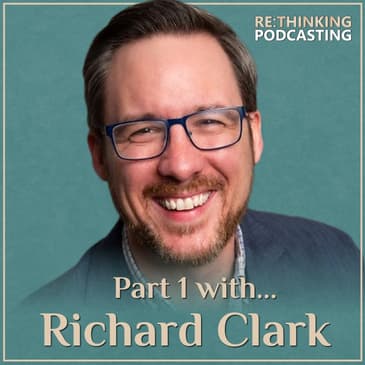
Welcome back to Rethinking Podcasting, and this week I’m joined by Richard Clark: Founder & Owner of Area Code Audio based in Chicago, Illinois, helping nonprofits and mission-driven organizations drive meaningful change through podcasting. He is (or was) the author and voice behind “Podcasting For Humans”: a newsletter/podcast that talked to podcasters about their podcasting goals, and shared his thoughts about podcasting - and, of course, I was an avid enjoyer at the time!
It’s currently on a hiatus, but back in March when I recorded this conversation with Richard, he had only months prior sent his last newsletter with his predictions for the podcasting industry in 2025 - which is why I brought him on for a chat.
Across this two episodes, we’ll be unpacking Richard’s Five Predictions for Podcasting this year and exploring the big changes that have rocked podcasting and marketing. In this Part 1 we’ll get Richard’s background in podcasting, his business and the first two predictions about AI replacing podcasts, and how people will find the human connection in podcasting.
Next week in Part 2, we’ll hear about podcast production funding, companies creating well-resourced, engaging podcasts and how marketing dollars will be spent differently.
Get in touch with Richard:
Let's Start a Dialogue
The Socratic Method is best done in dialogue, so if you'd like to respond to one of my episodes or send through an idea of your own, send it to:
📧 podcast@rethinkingpodcasting.com
🎤 rethinkingpodcasting.com and select "Send a Voicemail"
Make sure you share the name of your show, so I can include it in my response!
Support this Podcast:
Here are some of the services I use to create this show. Sign up for these services with the links below to support the podcast:
Use Brain.FM to stay focused while you podcast (30 Day Free Trial)
Sign up for Artlist.io to add Royalty Free Music to your Podcast (2 Months Free)
Use Captivate.FM to host & distribute your Podcast (30 Day Free Trial)
Create your Episode Transcript with GoodTape.io (€5 off when you sign up)
Chapters:
- (00:00) Industry Reset & Episode Setup
- (00:36) Meet Richard Clark & Area Code Audio
- (03:00) Podcasting for Humans: From Pod to Newsletter
- (05:01) Do Podcasters Care About Podcasting? (And Why That’s OK)
- (08:39) Producer vs Talent: The Film Analogy
- (11:02) Going Daily: Writing, Marketing, and Connection
- (14:38) Refocusing on Nonprofits & Audience Fit
- (17:51) How the Newsletter Primed Clients for Trust
- (23:10) Predictions #1: Why AI-Made Podcasts Will Fail
- (33:56) AI’s Best Use Cases: Audiobooks & Accessibility
- (36:59) Prediction #2: Craving Human Connection & Safe Spaces
- (42:45) Outro, Part Two Teaser & Contacting ReThinking Podcasting
This podcast uses the following third-party services for analysis:
OP3 - https://op3.dev/privacy
Reflecting on the podcast industry today, it's easy to wonder how we got here.
Speaker:AI rollouts, social media app takedowns, video podcasting as the new old trend.
Speaker:It's easy to think we couldn't have predicted it.
Speaker:And yet, we have experts like my guest today, who has their finger on the pulse of
Speaker:to help give us a guiding light in times of uncertainty.
Speaker:Welcome back to Rethinking Podcasting, where I take a Socratic approach to reflect
Speaker:podcasting world and help you build your own podcast philosophy.
Speaker:I'm Matthew Bliss, and this week I'm joined by Richard Clark, founder and owner of Area
Speaker:Code Audio based in Chicago, Illinois, helping nonprofits and mission-driven
Speaker:drive meaningful change through podcasting.
Speaker:He is, or was, the author and voice behind Podcasting for Humans, a newsletter slash
Speaker:podcast that talked to podcasters about their podcasting goals and shared his own
Speaker:thoughts about podcasting. And of course, I was an avid enjoyer at the time. It's
Speaker:hiatus, but back in March when I recorded this conversation with Richard, he had only
Speaker:prior sent his last newsletter with his predictions for the podcasting industry in
Speaker:I brought him on for a chat. Across these two episodes, we'll be unpacking Richard's
Speaker:podcasting this year and exploring the big changes that have rocked podcasting and
Speaker:part one, we'll get Richard's background in podcasting, his business, and the first two
Speaker:predictions about AI replacing podcasts and how people will find the human connection in
Speaker:Next week in part two, we'll hear about podcast production funding, companies
Speaker:Suffice to say, under the veneer of kindness and amiability, Hyde's an expert
Speaker:Time to hear from the man himself.
Speaker:And also a final note that this is the last conversation I recorded for a previous
Speaker:Coffee with a Podcaster.
Speaker:From now on, you should only hear of Rethinking Podcasting in the conversations.
Speaker:Richard Clark, welcome to Coffee with a Podcaster.
Speaker:Hey, Matthew.
Speaker:Great to be here.
Speaker:Thanks for having me.
Speaker:Thanks for coming.
Speaker:Yeah.
Speaker:I've been meaning to talk to you for a little while because you ran a little
Speaker:or started what was an experiment at the time, I think, the newsletter and kind of
Speaker:podcast, Podcasting for humans.
Speaker:Yeah.
Speaker:That started at the end of 2023.
Speaker:So I've been meaning to ask you for a while, how did that go?
Speaker:Or how is it going?
Speaker:Yeah.
Speaker:I mean, it was, uh, I'll say this, let me start by saying there's so much I could say
Speaker:about it.
Speaker:So I'm trying to sort out my thoughts.
Speaker:The first thing I'll say is I am a podcaster first.
Speaker:I am not a writer.
Speaker:And so the writing portion of things, anytime I sort of get myself into a
Speaker:It's like, it feels like a chore.
Speaker:And so it became really hard to keep up doing it.
Speaker:One of the, so I think it's been through a few phases.
Speaker:I think it started as a podcast, which based on what I just said is probably
Speaker:Makes sense.
Speaker:Yep.
Speaker:And then as everyone listening to this knows, podcasts are a lot of work.
Speaker:Writing weirdly is less work.
Speaker:If you just are writing something relatively basic and short, um, depending on
Speaker:And so I turned that into like a weekly newsletter where I was like getting, and I,
Speaker:I don't remember the order of events here.
Speaker:So I know that I've tried the podcast where I would have podcasters on.
Speaker:I know at one point, I think originally probably I launched this as a newsletter
Speaker:that was like an advice newsletter for podcasters, the problem with that advice
Speaker:newsletter for podcasters was I just wasn't getting a lot of questions.
Speaker:And so I would have to sort of make up things to write about or come up with
Speaker:things that was a lot of mental energy, you know, and so podcasting for humans,
Speaker:I actually really loved doing it.
Speaker:Um, it was a really cool opportunity to talk to a lot of podcasters.
Speaker:I really love and admire.
Speaker:Um, I talked to Kirk Hamilton of strong songs.
Speaker:I talked to the host of buffering the vampire Slayer, one of the hosts
Speaker:of buffering the vampire Slayer.
Speaker:I talked to a lot of podcasts that are just really great and those conversations
Speaker:were really sort of wide-ranging the thing that i struggled with as i was talking to
Speaker:podcasters was one of the things i realized about podcasting was like and this is like a
Speaker:deeper really deep conversation and matthew i'm sure you have thoughts on this but like
Speaker:it doesn't feel like a lot of podcasters care very much about podcasting and i don't
Speaker:idea. But oftentimes what would happen in these conversations were that they would
Speaker:the marketing or they would talk about the thing the podcast is about a lot of times.
Speaker:Or I would invite people to come on and they just weren't interested in talking
Speaker:right? Because they're busy thinking about the thing their podcast is actually about.
Speaker:So when people start podcasts, a lot of times it's sort of like the default,
Speaker:like, this is the medium I can do.
Speaker:People like me who don't love writing, they're like, I want to talk about it
Speaker:instead, and this is the easiest way to get on, to get in front of an
Speaker:audience and talk about something.
Speaker:So that was a lot of the issue with Podcasting for Humans, the podcast.
Speaker:Well, can I offer you a quick reflection?
Speaker:Yes, please.
Speaker:Just on that, because, because we're kind of both in the
Speaker:same position, like we offer podcasting services to people who need them.
Speaker:Right.
Speaker:And generally we offer them in the circumstance they don't have the time to
Speaker:things that we're an expert in.
Speaker:And from that, you would infer that the people who are successful podcasters who
Speaker:like us probably don't know or aren't interested in learning the things that we're
Speaker:talk about.
Speaker:Like we are all about pacing, structure.
Speaker:Yes. Editing. editing, putting it together, layering the audio well,
Speaker:improving the audio well, all of these things.
Speaker:And part of the journey of this podcast as well, Coffee with a Podcaster, people who
Speaker:because I kind of lost steam the same way that we'll probably talk about with you with
Speaker:podcasting for humans, that I kind of crept up and up and up and up,
Speaker:and then I fell off a cliff with it because it didn't feel like I was reaching anybody.
Speaker:No one was contacting me about it. And I think the other side of it, successful
Speaker:wanting to concentrate on the things that they do well and not what we do, the other
Speaker:that there's a lot of optimism, a lot of activity around the beginning. And once
Speaker:It's kind of like once they have what they need, they've got a paddle and they can row
Speaker:Absolutely.
Speaker:Yeah, that feels right.
Speaker:I don't know about like, I think people want to set up a structure that they can set
Speaker:The infrastructure to do this thing.
Speaker:And I think that's best.
Speaker:I think that's best for podcasting, frankly. I mean, what we're not really
Speaker:style, like heavily produced thing.
Speaker:That's a totally different thing.
Speaker:And I, you know, I still have a lot of admiration for those podcasts, but
Speaker:increasingly for all sorts of reasons, those are less common, less popular,
Speaker:just less attractive to people, especially producing podcasts.
Speaker:And so when you come to these dialogue, conversational podcasts, it really is
Speaker:about forgetting your recording podcast.
Speaker:That's like half of the battle is just forgetting that this is
Speaker:something that is a piece of media.
Speaker:But it still has to be produced as a piece of media.
Speaker:And so I do, part of me feels like the best way to pull it off is, I mean, you can be
Speaker:me who is really passionate about the medium and loves being a host or a talent or
Speaker:And talking to people, or you can be someone who is the second thing.
Speaker:And I really like, I think about general media a lot.
Speaker:And I think often about the illusion to like film.
Speaker:So film is like this auteur thing and the directors are often really famous and well
Speaker:known and you'll watch a thing for the director.
Speaker:Podcasting just hasn't gotten there yet.
Speaker:I don't know if it ever will, but what it has in common is this distinction between
Speaker:the director and the actor or the producer and the talent on air and how those two
Speaker:really don't need to be the same.
Speaker:There's almost no benefit.
Speaker:It's almost weird if they're the same person and you have to almost work around
Speaker:That has been my experience is that if people are freed up to have these
Speaker:to know, just like an actor, like an actor knows I can do multiple takes.
Speaker:And if I trust the director, I'm in good hands.
Speaker:I can just live my truth.
Speaker:It it's very similar in that way is where it's like, be yourself, do what comes
Speaker:naturally or truthfully in the moment.
Speaker:And then,
Speaker:just don't step over that line of masking tape.
Speaker:We've told you is what off camera is.
Speaker:Exactly.
Speaker:Stay in, stay in the square.
Speaker:We're all good.
Speaker:Pay attention to your staging, all the technical things, but, um, and you have
Speaker:to, it's balancing those things.
Speaker:It's like the whole art of it is being real and truthful while also being aware
Speaker:of all of the technical things that are hopefully mostly taken care of for you,
Speaker:but you have to be aware of them.
Speaker:Do not step on them.
Speaker:Don't hit the boom mic.
Speaker:Things like that, you know?
Speaker:The stuff you're talking about is like the whole discussion of podcasting on a
Speaker:podcast about podcasting for podcasters is like so many layers deep.
Speaker:And I love the analogy you made to the film industry compared to podcasting.
Speaker:There's something really interesting in depth there that I think we could dive into
Speaker:have time at the end.
Speaker:I think we could dive into if we have time at the end, but particularly for podcasting
Speaker:Yeah.
Speaker:The way that the newsletter run, you were saying that you started as a podcast, then
Speaker:You had moved it from a weekly advice podcast. And I think all podcasters who then
Speaker:and create a podcast for podcasters always go through the journey you went through too
Speaker:us questions and that's the perfect way to start but no one asks us questions at the
Speaker:have to decide what questions people should be asking us and then we kind of have to
Speaker:our perfect client to try and figure out what's what's what they would want to know
Speaker:moved the newsletter to a daily newsletter which i think know, thinking about it was
Speaker:exercise for you that you had to come to a daily with a podcasting idea.
Speaker:How did that go for you knowing that the newsletter kind of came
Speaker:to a stop at the end of 2024?
Speaker:The idea of a writing exercise was kind of the point.
Speaker:It was kind of an attempt to see, can I get used to writing?
Speaker:Um, can I get used to communicating ideas?
Speaker:And some of this, it was also a marketing exercise. Like some of this was an attempt
Speaker:media, to, to, to sort of use this in multiple different ways, because again,
Speaker:if I'm not required to do it, I'm not going to do it.
Speaker:So having an audience, like my brain works based on what's the audience think.
Speaker:Outside expectations.
Speaker:It is very hard for me.
Speaker:It's probably ADHD to set internal expectations for myself and then follow
Speaker:I need people that are going to be disappointed in me or whatever, or more
Speaker:can regularly delight with fill in the blank. So I went daily for that reason. I
Speaker:by a guy named Josh Spector, who is like this. Um, he, he writes a daily newsletter
Speaker:entrepreneurs and I've been following that podcast, that newsletter for a long
Speaker:time and the thing I noticed was it was the only newsletter I actually read.
Speaker:I would get these weekly newsletters that were filled with content and
Speaker:I would be like, I just can't.
Speaker:The newsletters I read personally are daily newsletters that are relatively
Speaker:short or extremely skimmable and so I, that one is just like mine was a few
Speaker:sentences and it's over usually like a link that's and his thing was like really
Speaker:actionable, that was the idea. For me his thing was like really actionable.
Speaker:That was the idea.
Speaker:For me, I'm less like actionable than trying to build a connection with someone.
Speaker:I'd say ponderous.
Speaker:You're, you're pondering things.
Speaker:Yeah.
Speaker:Ponderous and, and, and, um, personal, like trying to be as honest as possible
Speaker:as well, uh, so that maybe someone would connect with that.
Speaker:And so that was the idea.
Speaker:And honestly, it had some things in common with podcasting and what I love about
Speaker:podcasting it's because it's a regular thing you subscribe about and forget.
Speaker:You are building relationships with people over time.
Speaker:You also talked about, you know, ownership of your audience.
Speaker:That's a big thing.
Speaker:The newsletter is a big thing with podcasts that you can do this and
Speaker:you will never lose that audience.
Speaker:No one can, uh, like what's the word?
Speaker:No one can like shadow man you from your audience.
Speaker:Well, there is the spam folder.
Speaker:There's yeah, I guess Gmail technically can spam shadow ban you, but, um, yeah,
Speaker:that is relatively rare and, and somewhat fixable.
Speaker:Um, yeah, yeah, yeah.
Speaker:And usually when it happens, it's your fault for whatever reason.
Speaker:But, um, I, yeah, that, that went relatively well from all those perspectives.
Speaker:The bottom line for me was it became again, another energy suck, huge amount of mental
Speaker:am I going to write about each day?
Speaker:It was a good exercise to do that.
Speaker:The ultimate real reason was that toward the end of the year, cause yeah, I ended
Speaker:this at the end of the year with all my year and stuff toward the end of the year,
Speaker:I started thinking even more deeply and honestly about my priorities as a business.
Speaker:And, and Matthew, you alluded to this a couple of times, what I do as a business
Speaker:is make podcasts for people.
Speaker:And as we just talked about, those people are not interested in podcasting.
Speaker:They're interested in having someone make a podcast for them.
Speaker:And they're interested in talking about their thing and having other
Speaker:people to talk to about whatever.
Speaker:And so I was like, I'm not reaching my audience here.
Speaker:I'm sort of proving my expertise and that's great.
Speaker:But I, I really struggled with that.
Speaker:The thing that pushed me over the edge was determining my sort of core client base.
Speaker:The people that I like working with the most that appreciate my work the most
Speaker:are nonprofit organizations.
Speaker:Those organizations, the last thing they're doing is subscribing to some
Speaker:arbitrary podcasting newsletter.
Speaker:And so I just sort of determined I'm going to need to focus on
Speaker:other things besides this thing.
Speaker:And, uh, yeah, purely sort of a marketing priority oriented
Speaker:decision, something, the ultimate reality is that I really enjoy doing that
Speaker:newsletter if I had infinite time.
Speaker:And if I, my focus was more on podcasters, I would probably do that more, but
Speaker:the payoff was not there.
Speaker:I had some, like my audience was great.
Speaker:I heard from people like you and others who I could tell regularly followed the
Speaker:and would respond often.
Speaker:And I started to get that kind of feedback we talked about where people were asking
Speaker:I started to feel like my expertise was being valued.
Speaker:That was all great.
Speaker:Sometimes I look back on that and go, why did I end that?
Speaker:I feel that way about a lot of things that I ended and it comes down to priorities and
Speaker:trying to build out something new.
Speaker:And so that, yeah, that was the bottom line.
Speaker:And I also had another idea that I wanted to try and implement, which I'm still
Speaker:on getting off the ground.
Speaker:That is more in the wheelhouse of like a podcast for nonprofit or leaders and stuff
Speaker:So
Speaker:Okay.
Speaker:So more from the business perspective for them.
Speaker:Yeah.
Speaker:And, and again, because I'm focused on connection, it is, it is more around
Speaker:It's a personal podcast, essentially, about nonprofits, because there are a lot of
Speaker:And I really wanted to talk to nonprofits.
Speaker:I have a person that I'm trying to make this with.
Speaker:We both work with nonprofits, and we're both communications people.
Speaker:And so for me, the payoff is I'm
Speaker:modeling what I can do for them, you know?
Speaker:But it sounds like it wasn't a waste of time for you.
Speaker:No.
Speaker:Yeah.
Speaker:In fairness, you've spent over a year on this experiment.
Speaker:Yeah.
Speaker:Which is more than anyone in their right mind who is fleeting would do.
Speaker:Like clearly.
Speaker:Right.
Speaker:Right.
Speaker:You've put the effort in to try and get the most out of this that you could.
Speaker:You found something you enjoyed, you realized it didn't offer stuff for your
Speaker:So you've kind of pivoted and you've like drilled down to the audience that you know,
Speaker:get. And the other thing I heard is that you're doing it with someone. Yes. Doing it
Speaker:creates that accountability, even if there's no accountability from the people
Speaker:directing it to. Yes. And so it, it paid off, not just in the sense of learning a
Speaker:learning direction, but it also, I do think like
Speaker:there was a period where, you know, the, the business area code audio was new
Speaker:and I needed to establish myself as someone who knew what he was talking about.
Speaker:So at that moment, I think I did that really well, but I also have that out
Speaker:there now, like people can see that stuff.
Speaker:The other thing I'll say is that this was a really useful tool for
Speaker:clients to, to, to find and look at.
Speaker:I did have a few clients that once they.
Speaker:Thought they were probably going to work with me, would dig
Speaker:into this or subscribe to it.
Speaker:And honestly, it was extremely useful to the point where I'm
Speaker:probably going to miss it.
Speaker:It was extremely useful for having them understand where I'm coming from.
Speaker:I had many conversations and consultations with clients where it was clear to me
Speaker:that they were keyed in to what I felt was important.
Speaker:They understood that connection is the number one thing for a important. They
Speaker:is the number one thing for a podcast.
Speaker:They understood, you know,
Speaker:I'm trying to think of anything else I talk about.
Speaker:I'm blanking for some reason.
Speaker:It's terrible.
Speaker:I was going to step in and say that
Speaker:those podcast episodes are essentially a consultation
Speaker:because you had me on quite early on
Speaker:when you started it
Speaker:to talk about my previous podcast,
Speaker:Dead Drop Game News.
Speaker:And you kind of asked me some questions about it and I told you what I was doing.
Speaker:And funnily enough, you suggested maybe it should be a newsletter instead of a podcast.
Speaker:Right.
Speaker:And I was like, yeah, probably.
Speaker:And then I didn't touch it again for like ever.
Speaker:It's hard.
Speaker:Cause like a lot of times when I talk to people, I'm, I feel like I'm talking them
Speaker:out of podcasting on accident sometimes.
Speaker:But I think that the, what I was getting to there is that the consultation,
Speaker:the discussion with you, that those episodes aren't
Speaker:just a reason to do or not to do a podcast. They were also not quite Socratic. They were
Speaker:literal questions. You were asking them thoughtfully about what they were doing and
Speaker:that could be improved for podcasters. It was either for the person who was in the
Speaker:with you, or it was for us listening to learn from what they're doing so
Speaker:haven't. Those two things together, they do equally great jobs at either marketing you
Speaker:marketing the people that are in your circle. And that's kind of what I'm looking
Speaker:Like I've had the same journey as you. I've gone from solo trying to do interviews
Speaker:me that accountability. But I think talking to people for the most part that are in the
Speaker:that you're looking for, that's the best way to show your consulting skills,
Speaker:the things that you can ask about, the things that you're curious
Speaker:about that you can reflect on.
Speaker:It's not just the advice or just doing a podcast.
Speaker:I think, I think we're well beyond that at this stage.
Speaker:Yes.
Speaker:I mean, one of the reasons I believe so strongly in podcasting is it's a way
Speaker:for people to build trust with you.
Speaker:I see it as networking, but like deeper, you know what I mean?
Speaker:When you go and you network with people, you get to know them and they're like, I
Speaker:that guy.
Speaker:Maybe I'll work with him.
Speaker:But I think when you start listening to a podcast, it almost becomes essential that
Speaker:you work with them if you need their services, right?
Speaker:It becomes a lot more likely that you're going to go to them as opposed to someone
Speaker:else at that point.
Speaker:go to them as opposed to someone else at that point.
Speaker:And a lot more likely that you're going to stick with them over time because you're
Speaker:reflects on what they do, that's a big deal.
Speaker:And one of the reasons, frankly, that I wanted to work with nonprofits,
Speaker:because who gives to a nonprofit they don't trust and who stops giving to a
Speaker:nonprofit they are fundamentally invested in and what they're doing and is excited
Speaker:doing, you are a lot less likely to sort of pull your recurring giving or whatever it is
Speaker:nonprofit. And so I think that's incredibly valuable for really any organization whose
Speaker:main currency is trust. Yep. And podcasts being easy for businesses and organizations
Speaker:with something that they're doing. And they just kind of lift and shift that onto the
Speaker:And then on top of bolting that into an intimate relationship with people who will
Speaker:support the not-for-profit, it just makes sense. It just makes sense how that all kind
Speaker:together. Exactly right. So yeah, I said it. I don't think you said it. Technically
Speaker:episode, we did talk about it pre-recording, but, um, the
Speaker:podcasting for humans is currently dormant, potentially sleeping until, uh, such
Speaker:time as you choose to come back to it.
Speaker:That's right.
Speaker:There was a, I can't remember if it was the final one, actually.
Speaker:You had a few tailing off of your top 10, uh, podcasts at 2024 that
Speaker:you'd like people to recommend.
Speaker:But there was one that you did that had some predictions and that's
Speaker:why I brought you here today.
Speaker:Really?
Speaker:Nice.
Speaker:Yeah.
Speaker:Now I think that was my last one, actually.
Speaker:That was my Swan song.
Speaker:Like, yeah.
Speaker:Uh, here's something to look forward to in the new year, whatever
Speaker:these predictions are.
Speaker:Yeah.
Speaker:That was the, the Marvel's infinity war before we got in game.
Speaker:Yeah.
Speaker:Just as eventful.
Speaker:Everyone was excited about it.
Speaker:Yeah.
Speaker:They cheered when they read it.
Speaker:Yeah.
Speaker:So in that, in that particular piece, you made five predictions for 2025 on the
Speaker:will go. And in some cases, how dreadfully it will turn out because of whatever it is.
Speaker:So we are going to go through five of those predictions today in lieu of doing it on
Speaker:for Humans, because I think that they are good things for people to think about. And
Speaker:it's at the time of recording, it's the beginning of March 2025. Yeah.
Speaker:And some things have already happened that have started leaning in this direction.
Speaker:Yeah, we can check my work a little bit, see if we're on that trajectory or not.
Speaker:Yeah, that's it.
Speaker:Yeah.
Speaker:That's it. So, number one prediction for 2025.
Speaker:You said, overhyped AI-produced podcasts with AI hosts and or one-click editorial
Speaker:will fail extravagantly.
Speaker:Would you like to expound on that a little bit?
Speaker:Yeah.
Speaker:I mean, there has been talk of, I mean, this really hit a peak when Google released.
Speaker:Notebook LPM thing?
Speaker:Notebook LM.
Speaker:Yep.
Speaker:LM.
Speaker:There it is.
Speaker:I don't know why I added P in there.
Speaker:Um, notebook LM, where you can put a bunch of information into a thing and notebook LM
Speaker:It does a lot of things, but one of the things that also does is a podcast.
Speaker:Now, fine.
Speaker:That's great.
Speaker:To me, that feels like an audio book.
Speaker:I don't know why they did it the way they did.
Speaker:So like, this is the thing.
Speaker:They made it feel, they tried to make it feel personal.
Speaker:Like it's two people talking like we're talking and you immediately see through it.
Speaker:It's like, it has this wow factor to begin, but I feel like what they
Speaker:should have done is make it an audio book.
Speaker:They should have framed it as an audio book because that is what it is.
Speaker:And I think this actually hits on a deeper thing about podcasting that I feel strongly
Speaker:about, which is that podcasts don't serve the same function and should not have the
Speaker:same aesthetic as an audio book.
Speaker:They are personal, they are connection oriented.
Speaker:And so when they're not about information dump, because if you want a bunch of
Speaker:or you can listen to a book.
Speaker:Like these are straightforward.
Speaker:Now, a lot of this is semantics.
Speaker:Like, are there podcasts that basically function as an audio book?
Speaker:Sure.
Speaker:But the thing with that Google LM thing is that they split the difference a little bit.
Speaker:And I think a lot of people got scared because, okay, it felt like a podcast.
Speaker:The reality for me is there is no world where people are going to start
Speaker:listening to those types of things.
Speaker:There have been a number of podcasts now at this point published on Apple
Speaker:podcasts that are created by AI.
Speaker:You can immediately tell they're terrible.
Speaker:They're not good.
Speaker:And no one's listening to those on a regular basis, right?
Speaker:They're really not accomplishing anything.
Speaker:I think a lot of people tried to pull it off as some kind
Speaker:of like get rich quick thing.
Speaker:I don't know how that works.
Speaker:Like, do you sell sponsorships to this?
Speaker:No, because you're not going to gain a consistent audience.
Speaker:You're not even going to gain like a quick viral audience.
Speaker:You can pull this off on Amazon.
Speaker:Like you can write a book with AI and sell it to some suckers and probably make
Speaker:enough money to make that worth the trouble because people are looking to
Speaker:solve a specific problem with a quick ebook or something.
Speaker:That is not how people browse the podcast ecosystem.
Speaker:So as of March, like I haven't seen any AI podcasts blow up.
Speaker:I also haven't seen it like fail extravagantly because people seem to know
Speaker:better, but I suspect, I mean, Matthew, maybe, you know, something about something
Speaker:I don't, but like, I guess eventually maybe someone will try this, but I think
Speaker:fundamentally it's such a
Speaker:blatantly flawed concept at this stage that I just don't see it panning out in
Speaker:any, that sort of way, you know?
Speaker:Yeah.
Speaker:It was, it was a meme for a little while.
Speaker:Yeah, exactly.
Speaker:I think everyone got excited.
Speaker:It was a research tool.
Speaker:And then everyone started saying about how they could do their
Speaker:99% AI produced podcast.
Speaker:Nothing needed from me.
Speaker:Automate the upload, automate the upload, automate the artwork, automate
Speaker:the voice, automate the content.
Speaker:Get that pipeline through and you barely have to touch it.
Speaker:Uh, I want to say friend of the show at this stage, we're a little bit early,
Speaker:but Brianna Anzaldo of Bambi Media in Australia, she did a video where
Speaker:she'd listened to 250 different podcasts created through Notebook LM.
Speaker:And I read that newsletter.
Speaker:Yes.
Speaker:It was a newsletter, right?
Speaker:Yeah.
Speaker:Yeah.
Speaker:I read that.
Speaker:The newsletter, LinkedIn podcast, YouTube video.
Speaker:Like she is everywhere.
Speaker:She does all the things, crazily enough.
Speaker:But yeah, she got pretty sick of it after a little while.
Speaker:And it's what you say.
Speaker:With podcasting, you're looking for a connection.
Speaker:It's kind of like a newborn baby being swaddled by a robot.
Speaker:Like it's looking to imprint on something.
Speaker:And as a listener, we can't imprint on the same man and woman talking about the same
Speaker:things in the same way, like, you know, interrupting
Speaker:each other as human-like as possible.
Speaker:And, you know, it'd be great to get paid as a podcast host to use your voice and your
Speaker:talents across 250 different thousands of different podcasts now, probably.
Speaker:But you'd still feel the human there, whereas here you don't.
Speaker:And let's say, like, you did feel the human.
Speaker:Let's say they were extremely good, because I think this will happen.
Speaker:Like, at some point, they would be extremely good at presenting as a human.
Speaker:Yep.
Speaker:One of two things will happen.
Speaker:It will be a novelty.
Speaker:So that exists like AI pop stars exist.
Speaker:People follow them.
Speaker:They're obsessed with them.
Speaker:Yep.
Speaker:I think there's chat bots and friends and yeah, you know, those are, those exist.
Speaker:The, the AI pop star, like you don't get to do multiple AI pop stars.
Speaker:You don't fall in love with multiple AI pop stars.
Speaker:People follow them because fundamentally they're AI and that's the gimmick, right?
Speaker:Yep.
Speaker:With AI podcasting, that will be seen as a gimmick.
Speaker:Maybe someone crafts like a really good AI, like a max headroom type situation
Speaker:where it's like, okay, we're, we, we think this is funny and totally interesting,
Speaker:but people crave human relationships, especially now, and we're not getting
Speaker:them as much as we're used to.
Speaker:And that will be an interesting thing. especially now, and we're not getting them
Speaker:And that will be increasingly like valuable to people.
Speaker:And so let's say they're like trying to pull off, like presenting as human
Speaker:in a way that is untruthful.
Speaker:So they're not saying it's AI upfront.
Speaker:People will find out and that's going to create senses, us a feeling of betrayal
Speaker:or just they'll move on really quickly.
Speaker:People fundamentally want real human backstory. They want real human perspective
Speaker:It's that it makes you feel stupid to relate to a computer.
Speaker:No one wants to feel that way.
Speaker:I'll be honest and say, I don't know what to make of the chat bots that people are
Speaker:I mean, I've heard a few stories of this.
Speaker:My hunch is that that is, I want to be careful here.
Speaker:That is a specific type of person who has a specific type of like, um, brain
Speaker:chemistry that makes them want to engage in that.
Speaker:I don't like think that that is the average human experience to want to
Speaker:engage with a robot in that way.
Speaker:You make a very good point about the connection of people. Yeah. Being the
Speaker:part of podcasts. Yeah. I don't think the AI friends and people who marry robots or
Speaker:MSN bots or whatever, I don't think that's about the thing they're connecting with. I
Speaker:entirely about the person and their need for certain needs to be met. That is so well
Speaker:Yeah. Like I've, I've, I've done a bit of viewing on stuff and um i think i'm just
Speaker:to be name dropping all the way through this episode so forgive me if i do um mike
Speaker:of renaissance periodization he also does a bit of a youtube channel on his thoughts and
Speaker:philosophies about the world and he talked about the ai chat friends kind of thing
Speaker:characterizing them as being very agreeable they are not disagreeable. And humans
Speaker:arrive in conflict, they want things to be agreeable for the most part. There are
Speaker:disagreeable people who seek disagreement, but more than usually in a intimate
Speaker:with someone, you want to be agreeable together. And if the easiest way for you to
Speaker:jump off Call of Duty, whip out your phone and have a look at, you know,
Speaker:Hatsune Miku version two and, you know, have a sexually charged conversation
Speaker:with this person that's intimate and makes you feel good.
Speaker:I think that's, that's what these people are driving at.
Speaker:That is a really good point.
Speaker:And it frames for me this idea that probably the most successful
Speaker:implementations of AI are fundamentally interactive.
Speaker:I think where people are going wrong.
Speaker:Now you can have opinions about that and I have strong negative opinions about that.
Speaker:But that is the most successful implementation.
Speaker:What is not successful is people trying to create content, create creative works
Speaker:of art with AI, because then they publish that and no one is connecting with that.
Speaker:No one is interacting with that.
Speaker:I can't listen to an AI podcast and it agrees with me because it doesn't know what
Speaker:It's not engaging with me.
Speaker:It's engaging with something else.
Speaker:And so I think you raise a really good point, which is like the fundamental value
Speaker:Yeah.
Speaker:And that has to know who yourself is.
Speaker:Yeah.
Speaker:And we need with podcasts, there's a performative aspect to it, but we know it's
Speaker:Yeah.
Speaker:You don't want to see the stage play of Wicked on the West End and see it being done
Speaker:Like, you know, the nuance comes from the humans who play the characters in the piece.
Speaker:Like, that's what you want to see.
Speaker:Completely agree with you here.
Speaker:I think it's been a thorn in the side of a lot of podcast producers for a long time
Speaker:I did want to point out as a bit of a massage to a further point that Eleven Labs
Speaker:with Spotify to have submitted AI-generated voices
Speaker:for audiobook content available on their platform.
Speaker:Yeah.
Speaker:And I think a lot of people as podcasters have started jumping on that bandwagon
Speaker:just a little bit again, kind of tentatively, not nearly as many as it was
Speaker:with Notebook LM came out, but people are asking themselves questions like, I'm not
Speaker:comfortable on the mic, but I do want to have a podcast.
Speaker:Can I just do my audio book with 11 labs and have it be cheaper and easier and
Speaker:I'll be honest, that feels like a great implementation of AI, to be honest.
Speaker:I mean, maybe it's not as good as a voice reading, but frankly, I just want it to be
Speaker:If I'm listening to an audio book, I'm putting on like 1.5 speed anyway.
Speaker:I just want it to be clear.
Speaker:It's definitely a little bit of a value add if like the original author is reading and
Speaker:That's great.
Speaker:I've enjoyed some that way.
Speaker:It's like good versus great in my opinion.
Speaker:But if your audio book is not going to exist unless you have that happening, do it.
Speaker:You know, and I, the same thing, honestly, I
Speaker:would apply to podcasts that are created by people who aren't able to create
Speaker:podcasts, otherwise an accessibility issue.
Speaker:I'm all for that.
Speaker:It's like a Stephen Hawking type thing.
Speaker:Like that guy talks with a computer.
Speaker:I'm not mad at him for doing that.
Speaker:That's great.
Speaker:We should do more of that.
Speaker:And I'm kind of excited about the potential of what that can bring to podcasting.
Speaker:The difference is that there are real people and a real intention, real human
Speaker:So I think that fundamentally the question is, are there real people involved?
Speaker:And can you tell, you know?
Speaker:Yeah, definitely.
Speaker:Just on a quiet note too, a thought I keep having to myself maybe over the last week
Speaker:or two is when we'll get the first video only podcast without audio, thinking about
Speaker:that accessibility thing, that there, there could be successful podcasts
Speaker:that are entirely video only for people who, uh, perhaps can't hear for whatever
Speaker:and be entirely like, you know, 4k sign language, non-vocal communication.
Speaker:I think that's an avenue that, that people could explore that kind of pushes podcasting
Speaker:in that, that video podcasting direction where it makes sense.
Speaker:I kind of love that.
Speaker:Such a brilliant idea.
Speaker:And that's gotta exist, right?
Speaker:That's gotta be a thing.
Speaker:Maybe they're not calling it a podcast, but.
Speaker:Yeah.
Speaker:I think, I mean, I really don't want to have the discussion today cause
Speaker:we could have it for like six hours, but you know, the definition of podcast,
Speaker:what is podcast, I think that's a boring conversation anyway, but yeah.
Speaker:Anytime someone starts asking what is a fill in the blank media, like that whole
Speaker:game in the games world, you're familiar probably with this.
Speaker:Like there was conversations for years about what is a game anyway?
Speaker:This is not a game.
Speaker:It's so boring to me.
Speaker:Like mediums are a starting point.
Speaker:They're not a box you limit people with, you know?
Speaker:So, and I think we even got closer to what the definition of what a podcast, at least
Speaker:an aspect of it would be by talking about AI and its contribution to the discussion
Speaker:for a recording.
Speaker:So I think that was really good.
Speaker:Number two, audiences will gravitate towards podcasts in search of real human
Speaker:This will grow all the right shows and those who lean into this trend will benefit
Speaker:I think that probably tacks onto the end of what we talked about there.
Speaker:Right.
Speaker:That people will be seeking human connection.
Speaker:But I'm wondering if there's like a exterior effect that you saw coming in 2025
Speaker:We know that we're in a culture at the moment that is growing increasingly isolated
Speaker:Was it something like that?
Speaker:Or was it something else that you're seeing around podcasting, perhaps, that shows that
Speaker:that might be the case?
Speaker:Yeah, a perfect storm of a few things.
Speaker:One is the AI piece.
Speaker:The AI thing, the more you start to question, I think by the end of the year,
Speaker:be a pretty common thing, is asking, is this real?
Speaker:year, this will be a pretty common thing is asking like, is this real?
Speaker:You know, even in the Oscars, like there was some talk around the brutalist and like,
Speaker:They use some AI stuff.
Speaker:I think that's over hyped that idea, but like you couple that with just the
Speaker:scenario we're in where, okay, a couple things, but the bottom line of all of
Speaker:this is we are feeling isolated to your point, we're feeling isolated as a human
Speaker:race, right?
Speaker:Like we are not building the relationships and the community
Speaker:foundations that we had in the past.
Speaker:I think churches served a large function in this, at least in the United States.
Speaker:I don't know how it is internationally, but in general, like institutions and
Speaker:religious institutions were a part of this, however you feel about it.
Speaker:They were a community center where you would interact with
Speaker:people on a weekly basis.
Speaker:Those are less common.
Speaker:People are ordering their stuff online.
Speaker:They're not going to stores and interacting with people on a daily less common, people
Speaker:They're not going to stores and interacting with people on a daily basis.
Speaker:Just people know all of this.
Speaker:This is not new.
Speaker:You add onto that, like the increasing polarization between, and again, US
Speaker:centric, but like the increasing political polarization, which I think is happening
Speaker:everywhere for the most part, where if you do not agree politically with someone,
Speaker:they, they sort of become your enemy.
Speaker:That tends to be how that pans out.
Speaker:If someone has a certain flag in front of their house, you know, around here, there
Speaker:are certain houses that have like Trump flags and it feels fundamentally aggressive
Speaker:you know, and I don't know if that is right.
Speaker:I don't know if that's a correct impression, but it just, it's not a person
Speaker:go and try to talk to.
Speaker:It's not a person I'm going to go and try to talk to.
Speaker:We're also normalizing fundamentally polarizing political opinions.
Speaker:I'm talking mainly about racism, but also like anti-LGBTQ rhetoric.
Speaker:All of these things are creating a scenario where more and more people are feeling
Speaker:Alienated from each other, and then as a result, feeling alone.
Speaker:And they're trying to find their people, all of these things.
Speaker:And so I feel strongly, and I think we're seeing this this year, a lot of the most
Speaker:successful podcasts are ones that are doing one of two things, either they're just
Speaker:really good at creating a personal connection or they're creating safe spaces
Speaker:for people to exist.
Speaker:I'm going to use the example of Joe Rogan as a safe space for a certain type of
Speaker:person who feels a certain way.
Speaker:They are agreed with.
Speaker:They are given a feeling of like, I'm a part of this.
Speaker:And they are, uh, they come away from that podcast feeling really good about
Speaker:There are other podcasts that are creating safe spaces for people who are actually on
Speaker:the minority and need those safe spaces even more.
Speaker:And I think those types of podcasts will be really successful for someone like me.
Speaker:It's an extremely uncomfortable time in some ways because I don't really feel like I
Speaker:Right.
Speaker:And so some of that, like making those struggles universal, I think is going to be
Speaker:Making the feeling that like, I was just, I can't tell you the number of podcasts
Speaker:I listened to that are for women or like there it's clear to me that their
Speaker:fundamental core audience is women.
Speaker:I make a podcast locally here in Batavia, like a local podcast,
Speaker:which I can go on about that.
Speaker:But like that is listened to primarily by women.
Speaker:I think most of the podcasts I create are for women really like the, a
Speaker:large portion of the audience is women.
Speaker:And I think a lot of that has to do with just some of the things women
Speaker:struggle with, I really relate with, I relate to, um, imposter
Speaker:syndrome and stuff like that.
Speaker:And so, yeah, all of that said, I think we're all just trying to find our people.
Speaker:And by that, I mean, people they relate to and connect with and who are nice to
Speaker:them and kind to them and embrace who they are and what they're going through.
Speaker:There's so much to unpack there, but we're going to run out of time. Maybe we could
Speaker:subsequent, like, you know, supplemental episode where we talk about the nature of
Speaker:reality around podcasting as an industry and what people engage with.
Speaker:Sure.
Speaker:But the idea of safe spaces, I really like, I really enjoy that as a thing because
Speaker:won't listen to a podcast that they don't like. At the same time, the way that you
Speaker:Whereas before it was just people who won't argue their point with them, like people not
Speaker:And that's how a lot of stuff kind of went down.
Speaker:Right.
Speaker:Maybe 2020 through to 2023, not naming anything specifically.
Speaker:We're going to cut the conversation short there just
Speaker:to leave you tantalized for the episode next week. Richard has a lot more to say,
Speaker:more to ask. So make sure you're subscribed to hear when part two drops next week. If
Speaker:got questions for Richard, send him an email at richard at area code audio.com or
Speaker:podcast at rethinkingpodcasting.com. You can also head to rethinkingpodcasting.com
Speaker:via the prompts. If you'd like to work with me to produce and edit your podcast, or just
Speaker:chat about where you're going as a podcaster, head to mbpod.com and set up a
Speaker:Stick around for part two next week. Thanks for listening. Keep rethinking,
Speaker:and I'll see you in the next episode.